Water Damage Restoration Cost Guide: What Paradise Homeowners Pay in 2026
Water damage restoration in Paradise, NV typically runs $2,800 to $7,500 for a Class 2 event affecting a single room, with per-square-foot rates landing between $4.50 and $9.00 depending on contamination category and drying complexity. Those national averages you see quoted online ($3,000 or so) rarely survive contact with Clark County’s actual labor market, summer storm patterns, and the cost of certified crews when three houses on your block flooded the same night. If you’d rather not sort through the math while water seeps into your baseboards, call (844) 716-1094 and we’ll walk you through a real estimate built for Paradise, not national medians.
Here’s the thing most cost guides gloss over: the national average number assumes a normal Tuesday. In Paradise, water events cluster. A July monsoon hits, three streets in the same zip code take water, and suddenly every IICRC-certified crew with commercial drying equipment has a queue. That scarcity is real, it moves pricing, and understanding it gives you a better negotiating position than memorizing some generic dollar figure.
What Actually Drives Water Damage Restoration Costs in Paradise
The cheapest variable to control is response speed, and the most expensive variable to ignore is contamination category. Water damage pricing in Paradise breaks down across four factors, and none of them are the color of the truck.
Damage class is the industry’s way of measuring how much water moved through your structure. It’s not how wet things look, it’s how much absorption happened. A Class 1 event means minimal absorption: water pooled on tile, maybe a few feet of drywall wicking. Class 4 means water saturated hardwood, plaster, and structural cavities. Each class steps up drying time, equipment count, and labor hours.
Water category is the contamination scale. Category 1 is clean water from a supply line. Category 2 is gray water: washing machine discharge, sump pump overflow, anything with biological or chemical contaminants. Category 3 is black water: sewage, flood water from outside, anything carrying pathogens. Category 3 jobs legally require full PPE, controlled disposal, and often more aggressive material removal. Labor cost jumps because the protocols change, not because anyone’s inflating the invoice.
Square footage and materials affected matters more than total water volume. Fifty gallons on tile in a bathroom is a extraction and drying job. Fifteen gallons that ran under laminate into a hallway void is a demolition and reconstruction job. The water found the expensive path.
Response timing is the silent multiplier. A water event caught in the first 48 hours with drying equipment already running rarely becomes a mold remediation project. A water event that sits for four days while you gather bids is often two projects: the water damage you started with, plus mold growth behind baseboards and in wall cavities. In Paradise’s heat, especially in summer months, mold colonization can start in 48 to 72 hours. That’s a structural reality of our climate, not contractor scare tactics.
Cost by Damage Class: Paradise-Specific Ranges
These ranges reflect what we see across Paradise service calls in 2026, factoring in Clark County labor rates, equipment transport, and the reality that most water events here happen during summer storm surges when demand spikes.
- Class 1 (minimal absorption): $1,200 to $2,800. Small water volume, non-porous surfaces, extraction and targeted drying. Typical for a supply line leak caught quickly on tile or concrete.
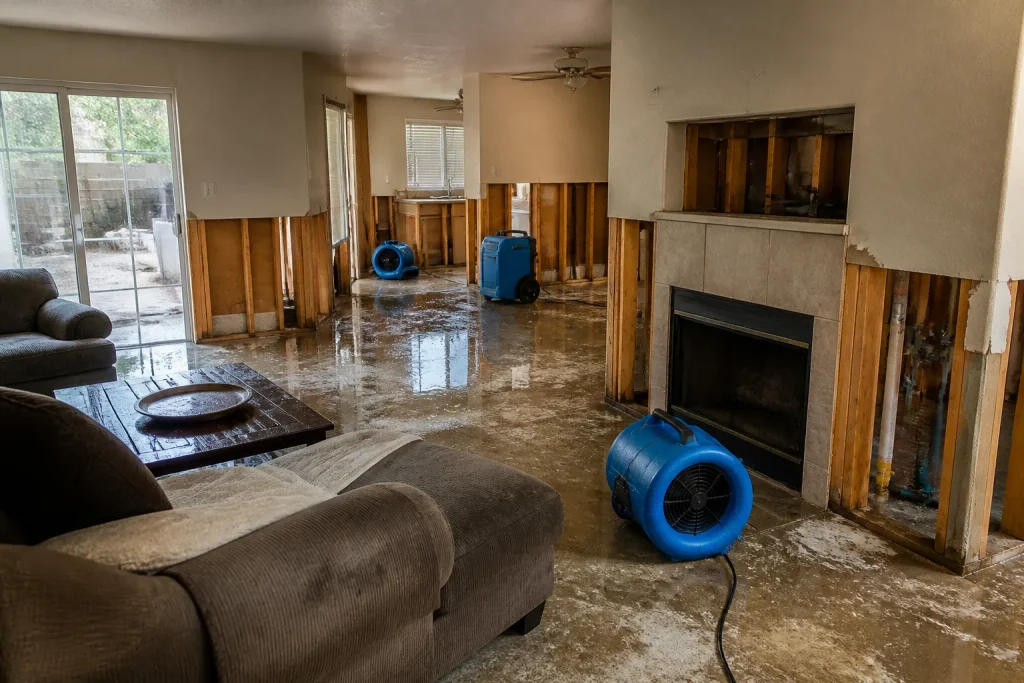
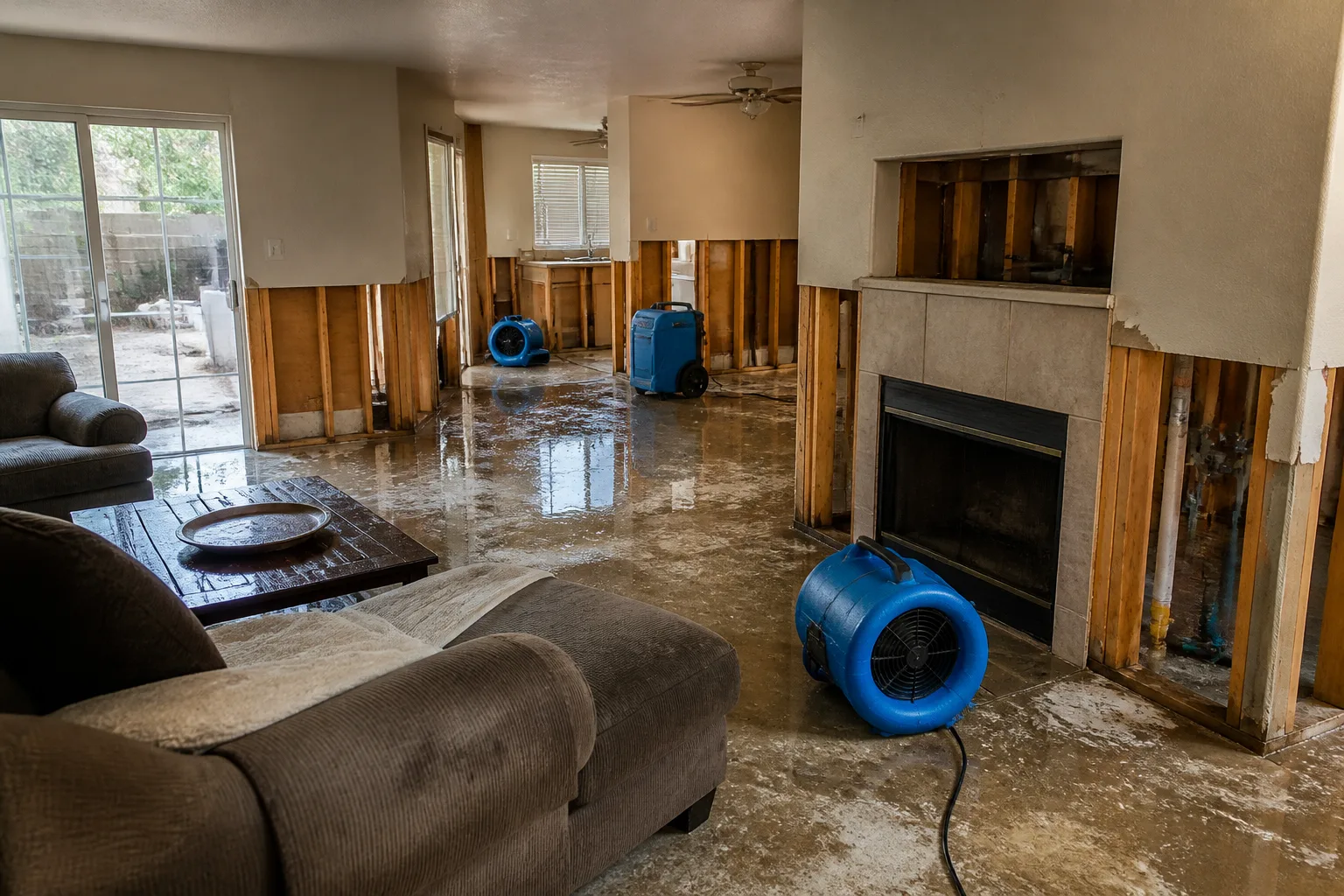
- Class 2 (moderate absorption into carpet, drywall wicking): $2,800 to $7,500. This is the most common residential call in Paradise. Carpet pad replacement, baseboard pulling, drying equipment runs 3 to 5 days.
- Class 3 (extensive saturation, water running down walls or through ceiling): $6,500 to $15,000. Multiple rooms, wall cavities saturated, possible ceiling damage. Requires aggressive extraction, large-scale drying, and substantial material removal.
- Class 4 (deep saturation of hardwood, plaster, structural materials): $12,000 to $30,000+. Specialty drying systems, longer equipment deployment, significant reconstruction. Often involves Injectidry-style systems for behind-wall and under-floor drying.
One note on these numbers: Class 3 and Class 4 work in Paradise often overlaps with the valley’s older housing stock. Homes built decades ago in neighborhoods like Huntridge or Paradise Crest frequently have plaster walls and solid wood subfloors. Plaster holds water differently than modern drywall, and solid wood subfloors absorb more than plywood. Your house’s construction year is part of the cost equation, even if it doesn’t show up as a line item.
The Three Invoice Line Items Homeowners Fight With Insurance Most
In our experience working with Paradise homeowners and their adjusters, the disputes cluster around three specific charges. Understanding them before you sign anything prevents most of the conflict.
Emergency mitigation vs. reconstruction split. Insurance policies typically categorize extraction and drying as mitigation (covered under emergency services) and material replacement as reconstruction (covered under dwelling coverage, often with different deductibles or limits). The invoice that lumps them together creates confusion. Ask for the split itemized. It’s not about squeezing the bill, it’s about filing a clean claim.
Contents handling and manipulation. Moving furniture, packing undamaged items, and storing contents while drying happens is real labor with real cost. But it’s also the line item insurance adjusters push back on most because it’s easy to inflate with vague descriptions. A detailed contents log with photos, room-by-room, and hours tracked takes the argument off the table.
Monitoring visits. Drying equipment runs for days. Technicians return daily to check moisture readings, adjust placement, and document progress. Those visits are billable and necessary, but the dispute starts when monitoring visits aren’t documented with actual moisture readings. A restoration company that hands you a daily log with numbers and photos never has to argue this line.
The pattern here is documentation. Photo-documented assessments, written scopes, itemized splits. The fight with insurance is almost never about the total dollar amount, it’s about whether the work performed is provable.
Why Three Bids Is the Wrong Move After Water Damage
Conventional wisdom says get three quotes for any home service. That advice is for roof replacements and water heater installs, not active water damage. Here’s the problem: every hour you spend collecting competing bids is an hour water wicks further into porous materials and behind baseboards. In Paradise’s climate, particularly May through September, mold can establish itself in 48 to 72 hours. Three bids might take you three to five days if crews are busy.
What you should prioritize instead of price comparison is certification and equipment. An IICRC-certified crew with commercial-grade extraction and drying equipment deployed the same day will almost always cost you less in total than a cheaper crew that shows up in 72 hours with box-store fans. The mold remediation bill, if it comes, dwarfs any savings from bargain restoration pricing.
The RIA affiliation matters here too. Companies that participate in the Restoration Industry Association are held to elevated benchmarks for documentation, ethics, and technical standards. That matters when your insurance company is reviewing every line item. A restoration company with professional affiliations and verifiable certifications makes your claim easier to settle.
If you’re comparing anything, compare response capability, equipment inventories, and whether they’ll give you a written scope before work starts. Two of those three are checkable in a phone call.
Nevada Contractor Licensing and the Unlicensed Pricing Trap
Nevada requires restoration contractors performing work over a certain dollar threshold to hold a license through the Nevada State Contractors Board. There’s a category for damage restoration and mold remediation. Unlicensed operators know this, and they price accordingly: low enough to attract homeowners in crisis, high enough to make a quick profit before disappearing.
The liability lands on you. An unlicensed operator who causes further damage, performs improper drying that leads to mold, or simply abandons the job leaves you with no recourse through the Contractor’s Board. Your homeowners insurance may also deny a claim for remediation work performed by an unlicensed party. That’s not a gray area in the policy language, it’s a standard exclusion.
Legitimate restoration companies in Paradise carry licensing, insurance, and verifiable certifications. We’re IICRC-certified, which means our technicians train to the restoration industry’s recognized standard. We’re affiliated with the RIA. When a property manager or adjuster refers us, they know the paperwork will hold up. That reliability is part of what you’re paying for, and it’s invisible on a cheap bid.
One practical check: ask for the contractor’s Nevada license number on the first call. A licensed contractor answers immediately. An unlicensed operator deflects. That ten-second question has saved Paradise homeowners tens of thousands of dollars in abandoned jobs and denied claims.
How Equipment Choice Affects Your Final Bill
The drying equipment on your job directly shapes the invoice. Professional-grade machines move more air, extract more moisture per hour, and dry structures faster than rental units. Faster drying means fewer monitoring visits, fewer equipment rental days, and less chance of secondary damage. The equipment pays for itself in reduced total cost, even though the daily rate looks higher.
We run Dri-Eaz, Phoenix, and B-Air equipment. These are the brands you’ll find on large commercial losses and hospital remediation projects. The Injectidry system is particularly relevant for Paradise homes where water travels into wall cavities and under flooring. Traditional drying with air movers and dehumidifiers can’t reach those spaces without opening the walls. Injectidry creates targeted negative air pressure that pulls moisture out of cavities without demolition. Precision drying, less demolition. That distinction can be a $5,000 swing on a job where a cheaper crew would tear out drywall and rebuild.
This is where the cost conversation gets honest: you can pay less per day for equipment that takes longer and requires more tearout, or you can pay for professional-grade tools that dry faster and preserve materials. The total cost usually favors the professional equipment.
What Insurance Typically Covers in Paradise
Most Paradise homeowners policies cover sudden and accidental water damage from burst pipes, supply line failures, and storm-related intrusion. Sudden is the key word. Gradual leaks that happen over weeks or months are typically classified as maintenance issues, and coverage gets denied or heavily limited.
Category 3 water, like sewage backups or flood intrusion, may require a specific endorsement depending on your policy. Standard homeowners insurance covers sewage backup only if you’ve added that rider. Flood water from outside, the kind that rises during Paradise’s summer monsoon events, generally falls under separate flood insurance, not standard homeowners coverage.
What you need from your restoration company is documentation that supports the claim: moisture readings from the day of arrival, photos of damage before any work starts, a written scope separating mitigation from reconstruction, and a daily drying log. Every legitimate restoration company in Paradise should provide this as standard practice. If they don’t offer photo-documented assessments and direct adjuster coordination, keep looking.
We handle direct adjuster communication on most Paradise insurance jobs. That means sending documentation to your adjuster, answering their questions, and ensuring the work scope matches what they’ll approve. You don’t have to become a restoration expert mid-claim. That’s the point of hiring a full-spectrum restoration specialist instead of a general contractor who dries water on the side.
Category 2 vs. Category 3: The Labor Cost Difference Is Real
Gray water and black water are separated by contamination level, but the practical difference on your invoice comes down to protocol. Category 2 water, from washing machines or dishwasher overflows, contains significant contamination and requires antimicrobial treatment, PPE for technicians, and controlled disposal of affected porous materials. Category 3 water, from sewage or outdoor flood events, carries pathogens and requires full PPE, specialized extraction equipment, and disposal as regulated waste in many cases.
Those requirements are not optional add-ons. They’re standards set by the IICRC and enforced through industry best practices. The labor cost difference between Category 2 and Category 3 remediation can run 30 to 50 percent higher on the mitigation side because of the PPE, disposal, and decontamination steps. A cheaper bid that treats Category 3 water like Category 2 is cutting corners on safety protocols, and the health risk lands on your family.
This is where we lean on our IICRC certification. Training matters most when the water is contaminated. Knowing which materials can be dried and saved versus which must be removed is a judgment call backed by standards, not guesswork. For Paradise homeowners, the distinction matters most during summer monsoon events when storm water carries whatever the streets accumulated: oil, road runoff, and sometimes sewage from backed-up lines.
When to Call a Pro
You should call a restoration professional any time water extends beyond a small, containable area you can dry completely within 24 hours. That threshold sounds generous, but in practice it means a sink overflow on tile with a mop and a fan might be DIY territory. Standing water in carpet, water running along baseboards, ceiling staining, or any water from Category 2 or 3 sources is a professional job, no exceptions.
We pulled a job out of a garage near the Paradise-Silverado border last month where a water heater had been slowly leaking behind drywall for weeks. The homeowner could see the puddle, but the real damage was the saturated wall cavity wicking into the shared wall with the living room. By the time we extracted and opened the wall, mold was already established. That job went from a $1,800 extraction to a full water and mold remediation project because the leak sat long enough to change the contamination category.
If you’re looking for related services in Paradise, we handle Water Damage Restoration in Paradise alongside Mold Remediation in Paradise and Fire Damage Restoration in Paradise. One call covers water, mold, and fire, which matters when a single event creates multiple damage types.
The Bottom Line
Water damage restoration in Paradise costs more than national averages suggest, and the gap is real market force, not contractor inflation. Clark County labor rates, the clustering of storm events, the age of housing stock, and the licensing requirements that separate legitimate operators from unlicensed undercutters all shape what you’ll pay. The controllable variables are speed of response, the certification level of your crew, and the quality of documentation they provide.
You can’t negotiate with mold. The fastest way to keep your total cost down is to get certified technicians and professional equipment on site the same day you discover water. In Paradise, that means calling a restoration specialist who stocks commercial-grade equipment and carries IICRC certification. When damage strikes, Valiant answers.
If you’re in Paradise and need help, Valiant Water Damage offers free estimates. Call (844) 716-1094 and we’ll give you an honest assessment of what you’re dealing with and what it’ll cost to fix it right.
Frequently Asked Questions
For Class 2 water damage (the most common residential scenario), expect $4.50 to $9.00 per square foot in the Paradise area. That range covers extraction, drying equipment, monitoring, and material replacement for standard carpet and drywall. Class 3 and Class 4 jobs run higher per square foot because they require more equipment days and often substantial demolition. The contamination category matters too: Category 3 water adds 30 to 50 percent to labor costs because of PPE and disposal protocols. Call (844) 716-1094 for a free estimate specific to your situation.
Yes, for sudden and accidental events like burst pipes, supply line failures, and storm-related intrusion. Gradual leaks are typically denied as maintenance issues. Flood water from monsoon events usually requires separate flood insurance. Sewage backups need a specific endorsement on most policies. Your restoration company should provide photo documentation and direct adjuster coordination to support your claim. We handle that for every Paradise insurance job.
Same-day dispatch is standard for active water events. The critical window is 48 to 72 hours before mold establishes itself, shorter in Paradise’s summer heat. A restoration company with in-house equipment and certified technicians can typically be on site within hours of your call. Every hour of delay means more water wicked into porous materials and a more expensive total restoration. Call (844) 716-1094 the moment you discover standing water or active leaking.
Technically yes, but practically no. Your policy requires you to mitigate further damage as soon as reasonably possible. Waiting days while water sits in your structure creates secondary damage (mold growth, material degradation) that insurance may classify as your failure to mitigate, which can reduce or deny coverage. Document the damage immediately, make temporary repairs to stop the active water source, and call a restoration company the same day. The earlier documentation starts, the cleaner your claim settles.
Written by the team at Valiant Water Damage, serving Paradise since 2016.
Need Damage Restoration Help?
Call Valiant Water Damage — licensed & insured, here with fast after-hours help in Paradise.
(844) 716-1094