Last updated October 30, 2026
 Water damage drying
 Fire & smoke cleanup
 Mold remediation
 Storm response
 Sewage cleanup
 Reconstruction
Free visual inspection and a written scope of work before any mitigation begins - photos, moisture readings, and drying logs go in your claim file
The scope we write is the scope we bill. Anything new gets shown to you, in writing, before we touch it.
Get your free estimateThe Complete Water Damage Restoration Guide for Paradise Homeowners
Most water damage guides assume a temperate climate. Paradise sits at an average humidity under 20%, which sounds like good news until you learn that rapid surface drying masks moisture trapped in wall cavities. Homeowners see a dry carpet and assume the problem is solved, while mold colonies establish behind drywall where no one is looking. This guide will teach you how water damage actually behaves in the Las Vegas Valley, what timeline you’re really working against, and how to make decisions that protect your home and your insurance claim. We’ll cover everything from the first wet sock discovery to the final clearance test, with the Paradise-specific details most national guides get wrong.
Quick Answer
Water damage restoration in Paradise, NV requires immediate action because desert heat accelerates the mold growth timeline beyond the standard 24 – 48 hour window. Homeowners should document all damage, shut off the water source, contact a restoration team equipped with professional-grade meters and drying equipment, and begin mitigation within hours, not days. The biggest local risk is a “false dry” effect where surface materials appear dry while hidden cavities retain enough moisture to feed mold within 36 hours in summer temperatures.
Restoration work we handle
Table of Contents
- How Water Damage Is Classified: The Class 1 – 4 System
- Why Paradise’s Desert Climate Changes the Restoration Playbook
- What to Do in the First 24 Hours: A Step-by-Step Timeline
- Insurance Documentation: What to Capture Before Restoration Begins
- HOA Rules and Exterior Water Intrusion in Paradise Communities
- Professional Drying: Equipment That Actually Removes Trapped Moisture
- Mold Prevention During Nevada Summers: Compressed Timelines
- When to Call a Professional
How Water Damage Is Classified: The Class 1 – 4 System
Before any drying equipment gets placed, restoration professionals classify water damage into one of four categories established by the IICRC. This classification isn’t about job size or water volume. It determines equipment load, drying strategy, and how aggressively the structure must be treated. Understanding this system helps Paradise homeowners evaluate whether a contractor is taking the right approach or cutting corners.
Class 1 is the least severe: a small area of a room, minimal water absorption, and only low-porosity materials like concrete or tile affected. A slow drip from a sink onto a tile floor would fall here. Equipment needs are minimal, often just air movement and dehumidification in a localized area.
Class 2 involves an entire room with water that has wicked up walls less than 24 inches. Carpeting, cushion, and drywall have absorbed water. You’re now looking at multiple air movers, a dehumidifier, and removal of baseboards in many cases. Most toilet overflows and washing machine leaks in Paradise reach Class 2 by the time homeowners notice them.
Class 3 means water has saturated ceilings, walls, insulation, and flooring across the greatest amount of the room. This is common when an upstairs supply line bursts while the homeowner is at work. Water raining through ceiling fixtures, saturated drywall on multiple walls, carpet that squishes. Class 3 requires the most aggressive equipment load and often involves opening wall cavities for drying.
Class 4 is the classification most homeowners never hear about, and it’s the one that matters most in Paradise. Class 4 means water has been absorbed into materials with very low permeability: hardwood, plaster, brick, concrete, and structural framing. These materials hold water deep inside and release it slowly. Standard air movers won’t touch it. Class 4 requires specialty drying systems like the Injectidry panel system that pushes dry air directly into cavities. Without Class 4 equipment, a hardwood floor can look dry on top while cupping and warping steadily underneath.
A reputable restoration company in Paradise will explain the classification before starting work. If a contractor skips this conversation and just sets up a few fans, you’re not getting professional restoration. You’re getting air circulation.
Why Paradise’s Desert Climate Changes the Restoration Playbook
The national guides say moisture leads to mold within 24 to 48 hours. In Paradise, that window compresses dramatically from May through September. When outdoor temperatures exceed 100°F and indoor humidity sits below 20%, the physics of drying changes in ways that actually work against you.
Here’s what happens: water from a leak or flood saturates drywall, subfloor, and framing. The dry Nevada air immediately begins pulling moisture from surfaces. Within hours, carpet may feel dry to the touch. Drywall may show no visible staining. This is the false dry effect. The surface has dried, but the cavity behind it, between studs or under the flooring, is still holding water in an enclosed, warming environment.
That enclosed space becomes an incubator. Summer temperatures inside a wall cavity in Paradise routinely exceed 110°F. The trapped moisture creates exactly the warm, humid microclimate mold spores need. We’ve seen mold germination begin within 36 hours in Paradise during July and August. That’s 12 hours faster than the national standard window.
Standard moisture checks with a non-penetrating meter only read the surface. A penetrating moisture meter with extension probes measures moisture deep inside materials. Without these proper tools, a homeowner can be honestly convinced their house is drying fine while a hidden mold colony establishes behind the drywall. By the time visible signs appear, the damage is far more extensive than the original leak.
This is why professional equipment matters in Paradise. It’s not about having fans. It’s about knowing where the water actually went and verifying it actually left.
What to Do in the First 24 Hours: A Step-by-Step Timeline
The decisions you make in the first day determine whether you’re dealing with a manageable restoration or a full remediation plus reconstruction. Here’s the sequence that protects your home, your health, and your claim.
- Stop the water at its source. Shut off the supply valve to the fixture, or close the main water shutoff if you don’t know where the water is coming from. In Paradise, many homes have the main shutoff near the water heater in the garage or exterior front wall. Know where yours is before you need it.
- Cut power to affected areas only if safe to do so. Water and electricity don’t mix. If the water has reached outlets or the panel, call NV Energy to shut down power before anyone enters standing water. Don’t touch the breaker panel with wet hands or standing in water.
- Document everything before moving anything. Use your phone to photograph and video every affected area, including the water source, visible damage, and standing water levels. Open drawers under sinks, photograph baseboards, and get wide shots of rooms. This is your insurance baseline.
- Remove what you can safely move. Small area rugs, throw pillows, shoes, and low-value items that are wet. Do not move heavy furniture that is saturated, and do not attempt to remove carpeting yourself. You can cause secondary damage and complicate your claim.
- Call your insurance company and report the loss. Let them know the source of the water, the affected areas, and that you’re contacting a restoration company. Ask about your policy’s mitigation requirements and whether they have preferred vendors. In Nevada, you have the right to choose your own restoration contractor. You don’t have to accept a referral you don’t want.
- Call a water damage restoration company, not a handyman. Ask about IICRC certification, the specific equipment they use for Class 3 and Class 4 damage, and whether they’ll document with a written scope before starting work. This call should happen the same day, not after a weekend.
- Begin air movement immediately if you own fans. Any air movement helps move moisture out of surfaces while you wait for professional equipment. Don’t use your HVAC system to dry if there’s any chance the ducts or unit came into contact with water.
- Keep a log. Note the time you first noticed the water, when you called insurance, who you spoke to, and when the restoration team arrives. Insurance adjusters respond better to records than to recollections.
During a Paradise summer, each hour between step one and step six matters more than any other season. The heat isn’t slowing down while you decide.
Insurance Documentation: What to Capture Before Restoration Begins
Once mitigation starts, evidence starts disappearing. Baseboards come off, carpet gets removed, drywall gets cut. The photographs you take before a restoration crew arrives are often the difference between a fully covered claim and a disputed one.
Start with the source. If a pipe burst, photograph the pipe before anyone touches it. If a water heater failed, get the serial number and date of manufacture in the photo. Insurance companies want proof of cause, not just proof of damage.
Photograph every affected room from multiple angles. Get close-ups of water stains, swollen baseboards, buckling flooring, and any visible mold. Photograph the path water traveled, even areas that look only slightly affected. Water travels down and sideways. A stain on a first-floor ceiling might mean the second-floor bathroom was leaking for days.
Document contents, not just structure. Open cabinets and drawers. Photograph the contents, especially anything porous that got wet. Books, clothing, furniture, electronics. Your policy likely covers personal property damage, but only what you can prove was affected.
Measure and record standing water depth if present. A ruler in a photograph gives adjusters scale. Record the square footage of affected flooring.
Keep a written inventory. Photographs tell part of the story. A list with approximate values and ages of damaged items tells the rest. Don’t throw anything away until your adjuster or restoration professional confirms you can. Moldy items especially, since disposal before documentation can complicate a claim.
In Paradise, many homeowners have HOAs that require additional documentation for exterior water damage. We’ll cover that in the next section.
HOA Rules and Exterior Water Intrusion in Paradise Communities
Paradise is not a single jurisdiction in the way unincorporated Clark County is. When we say Paradise, we’re talking about the densely populated residential areas directly south and east of the Las Vegas Strip, including many master-planned communities governed by HOAs. Those HOAs create a layer of complexity for exterior water damage that most national guides ignore entirely.
If water enters your home from the exterior, a leaking window frame, a roof penetration, a compromised stucco wall, or a failed irrigation line, the responsibility for the repair may not be entirely yours. Many Paradise-area HOAs maintain common walls, roofs, and exterior building envelopes. In condo and townhome communities especially, the HOA may own the exterior membrane and be responsible for the source repair even if you’re responsible for interior restoration.
Here’s what that means for you practically. If you notice water staining around windows or on ceilings below the roof line, document it immediately and notify your HOA in writing. Many HOAs in Paradise have specific reporting windows for water intrusion. Missing that window can shift liability to you, even when the damage started in a common area.
Get the HOA’s maintenance responsibility document. In Nevada, HOAs are required to maintain a schedule of common area maintenance responsibilities. Ask for it before you assume you’re paying for everything. If the water migrated from a common wall, roof, or pipe, the HOA’s insurance may be primary for the source repair.
Also understand that HOA approval can be required before exterior work or stucco repair begins. If a restoration company tells you they can start tomorrow without checking HOA rules, you may be setting yourself up for a violation notice. Most HOAs in Paradise have architectural review requirements for any exterior work, even emergency repairs. Emergency repairs are often allowed first with retroactive approval, but only if you document the emergency.
The bottom line for Paradise homeowners: read your HOA documents before you file an insurance claim. The order of operations matters. Knowing who owns the wall that leaked changes everything about how the restoration gets paid for.
Professional Drying: Equipment That Actually Removes Trapped Moisture
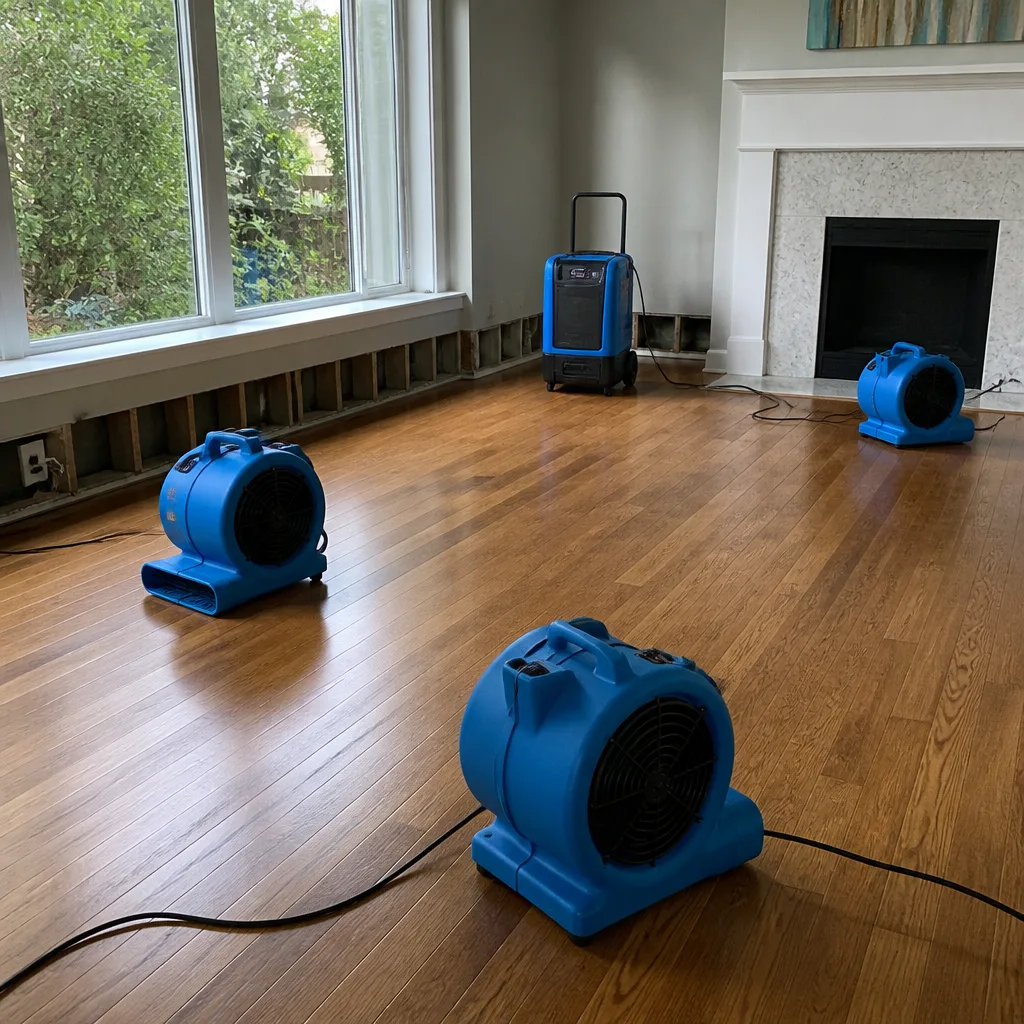
Box-store fans and rental dehumidifiers are not restoration equipment. They’re fine for drying a spilled drink or ventilating a paint project. They cannot remove water trapped inside wall cavities, under hardwood, or within concrete slab. That requires professional-grade equipment engineered specifically for structural drying.
The brands that actually perform in real-world restoration conditions are names like Dri-Eaz, Phoenix, XPOWER, and B-Air. These are the workhorses commercial restoration companies deploy on large-loss commercial jobs. The difference between this equipment and consumer-grade options is measured in cubic feet per minute of air movement and pints of moisture removed per day. A single commercial-grade dehumidifier can remove 130 pints of water per day in optimal conditions. A rental unit from a hardware store might remove 30 pints on its best day.
The most important tool for Paradise’s specific drying challenge is the Injectidry panel system. This system attaches to walls, ceilings, or floors and pushes dry air directly into cavities. Instead of waiting for moisture to migrate outward on its own, which can take weeks or never happen at all in Nevada’s low ambient humidity conditions, the Injectidry system actively flushes trapped water vapor out of enclosed spaces.
Here’s why that matters to a Paradise homeowner. Without a system like Injectidry, the standard approach for a saturated interior wall cavity is to cut out the drywall and remove affected insulation. That works, but it means demolition, reconstruction, and an insurance claim that includes thousands of dollars in rebuild costs. With Injectidry, we can often dry the cavity in place, preserving the walls and flooring. The homeowner gets their house back faster and with less disruption. That’s precision drying, less demolition.
If a restoration company shows up with a few box fans and a residential dehumidifier, you’re not getting professional restoration. Ask what classification of water damage you have and what drying plan matches that classification. Ask about penetrating moisture meters and where they’ll be checking moisture levels over the next several days. A professional will explain the plan. An amateur will tell you the fans will handle it.
For those dealing with larger water events, our Water Damage Restoration in Paradise page covers the full scope of what a professional mitigation looks like from start to finish.
Mold Prevention During Nevada Summers: Compressed Timelines
The IICRC’s 24 to 48 hour mold window is based on average indoor conditions across varied climates. In Paradise from June through September, the window tightens. We’ve already covered why: ambient heat pushes wall cavities above 110°F while the exterior humidity below 20% masks the danger by drying surfaces quickly. The result is a deceptive environment where homeowners think they’re safe and actually are not.
The practical implication for Paradise residents is this: if water damage happens in July, you need professional drying started within 12 to 24 hours, with penetrating moisture verification within 48 hours. Waiting until Monday because the leak happened Saturday night is not acceptable in this climate. What would be a manageable cleanup in Portland becomes a mold remediation project in Paradise because the heat accelerated everything.
Mold spores exist everywhere, indoors and out. They don’t need to be introduced to grow. They need moisture, warmth, and an organic food source. Drywall paper, wood framing, carpet backing, and even dust in wall cavities are all food sources. When a wet wall cavity stays above 100°F for 36 hours, mold begins colonizing. By 72 hours, colonies are established enough to produce spores that circulate through the home.
The visible mold you see is already a colony. By then, it has released spores that may have spread to other areas. This is why mold remediation in Paradise often involves not just cleaning the visible growth but testing the surrounding air to determine whether remediation boundaries need to expand. If you’re dealing with mold that’s already visible, our Mold Remediation in Paradise page explains what professional remediation actually involves, including containment and clearance testing.
For homeowners in the acute water damage window, mold prevention is inseparable from competent drying. The same equipment that removes water is the equipment that prevents mold. Speed plus professional verification is the entire strategy. In Paradise, there is no secondary strategy that works.
Common Mistakes to Avoid
- Trusting the surface dry. In Paradise’s low humidity, carpet and drywall surfaces dry fast. The moisture behind them does not. A penetrating moisture meter is the only way to know if a wall cavity or subfloor is actually dry. Skipping this verification is the single most common mistake we see.
- Using box fans and expecting professional results. Consumer-grade fans move air but don’t create the focused airflow required to extract water from porous materials. They also don’t dehumidify. Without dehumidification, that moved moisture just relocates in the home.
- Delaying the call because it’s a weekend or holiday. Water doesn’t observe business hours. In Paradise summers, a 48-hour delay can mean the difference between drying and mold remediation. The cost of the call is far less than the cost of the delay.
- Not documenting before cleanup begins. Once you start pulling up carpet or cutting drywall, the evidence degrades. Insurance adjusters rely on the documentation you collect before mitigation. Take the photos before the mop comes out.
- Assuming the HOA handles everything. In Paradise condos and townhomes, the HOA may own the exterior membrane, but the interior restoration is typically the homeowner’s responsibility. Knowing the split before you start work prevents an expensive surprise.
- Throwing away damaged items before the adjuster sees them. Even moldy items should be photographed and documented before disposal. An adjuster who never sees evidence of the loss has no reason to authorize payment for it.
- Hiring a generalist contractor instead of a restoration specialist. Water damage restoration is a distinct discipline with its own certification body, equipment standards, and documentation practices. A handyman with a shop vac is not a restoration professional, no matter how skilled they are at other things.
When to Call a Professional
Some water situations you can handle yourself. A spill on a tile floor, a leak you caught immediately with no wall or floor penetration, a small area under a sink that dried within hours. These are cleanup tasks, not restoration projects. But when water has moved beyond the surface, into drywall, subfloor, framing, or insulation, you need professional equipment and professional verification. If standing water covered more than a small area, if you can feel moisture under flooring or behind drywall, if you smell mustiness even after drying, or if water came from a contaminated source like a sewage backup or exterior flood, call a professional restoration team. Water from these sources carries bacteria and pathogens that require professional sanitation, not just drying. Valiant Water Damage offers free estimates in Paradise, call (844) 716-1094 and we’ll assess the damage with penetrating meters before recommending any work.
See the difference
 Before
 After
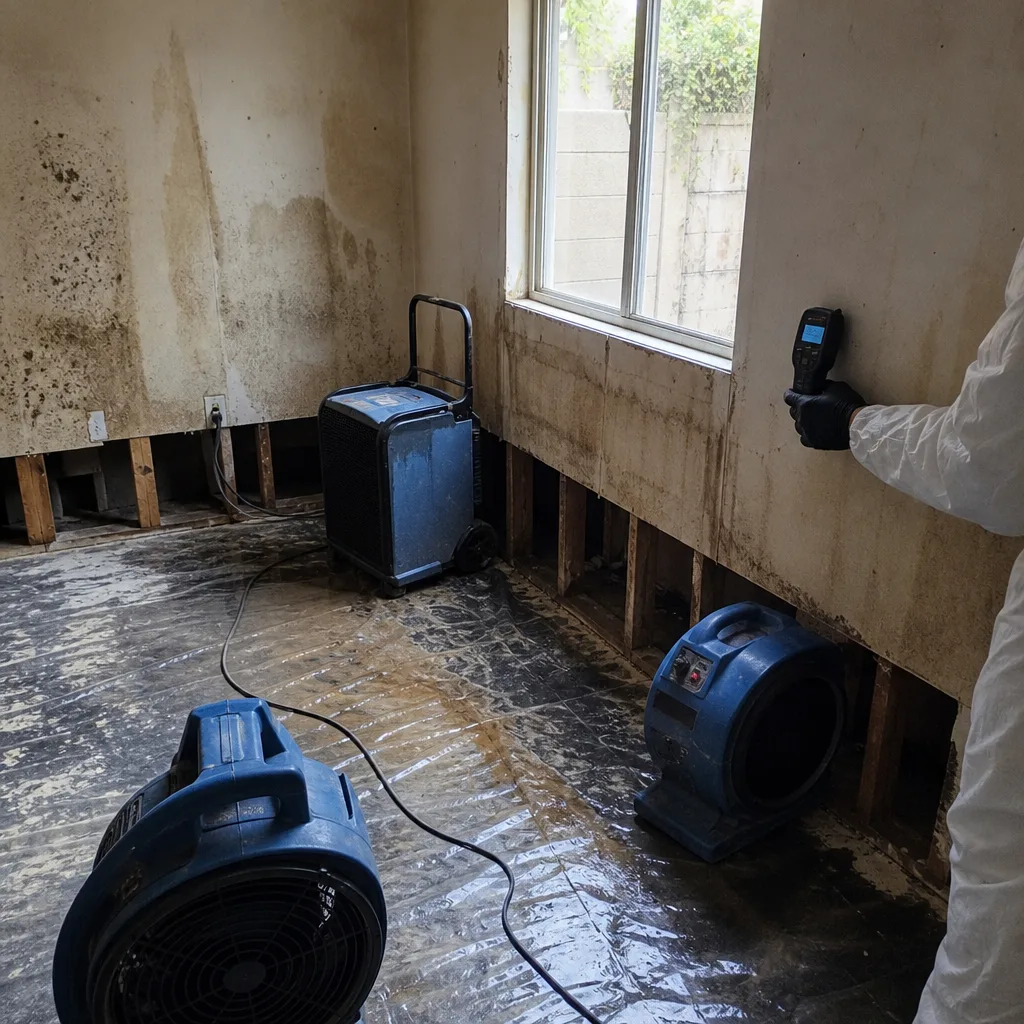 Before
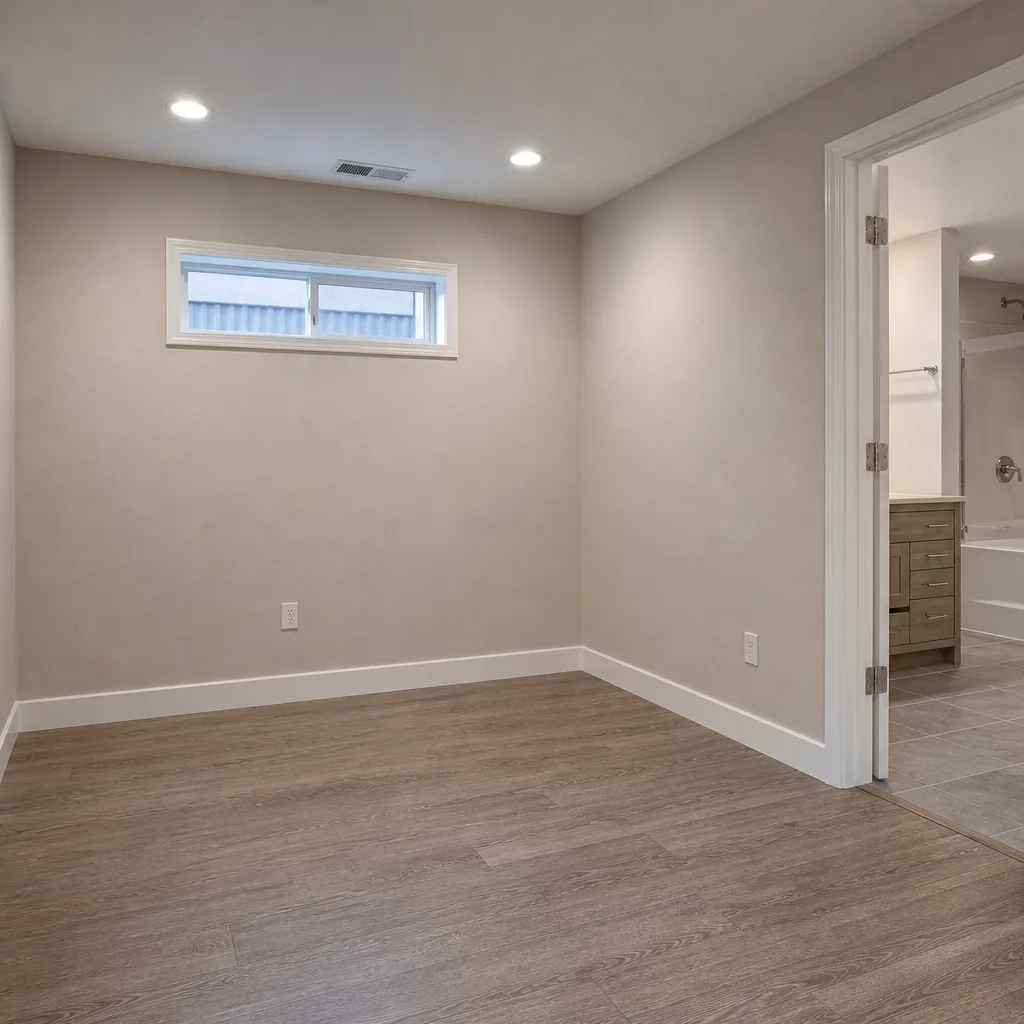 After
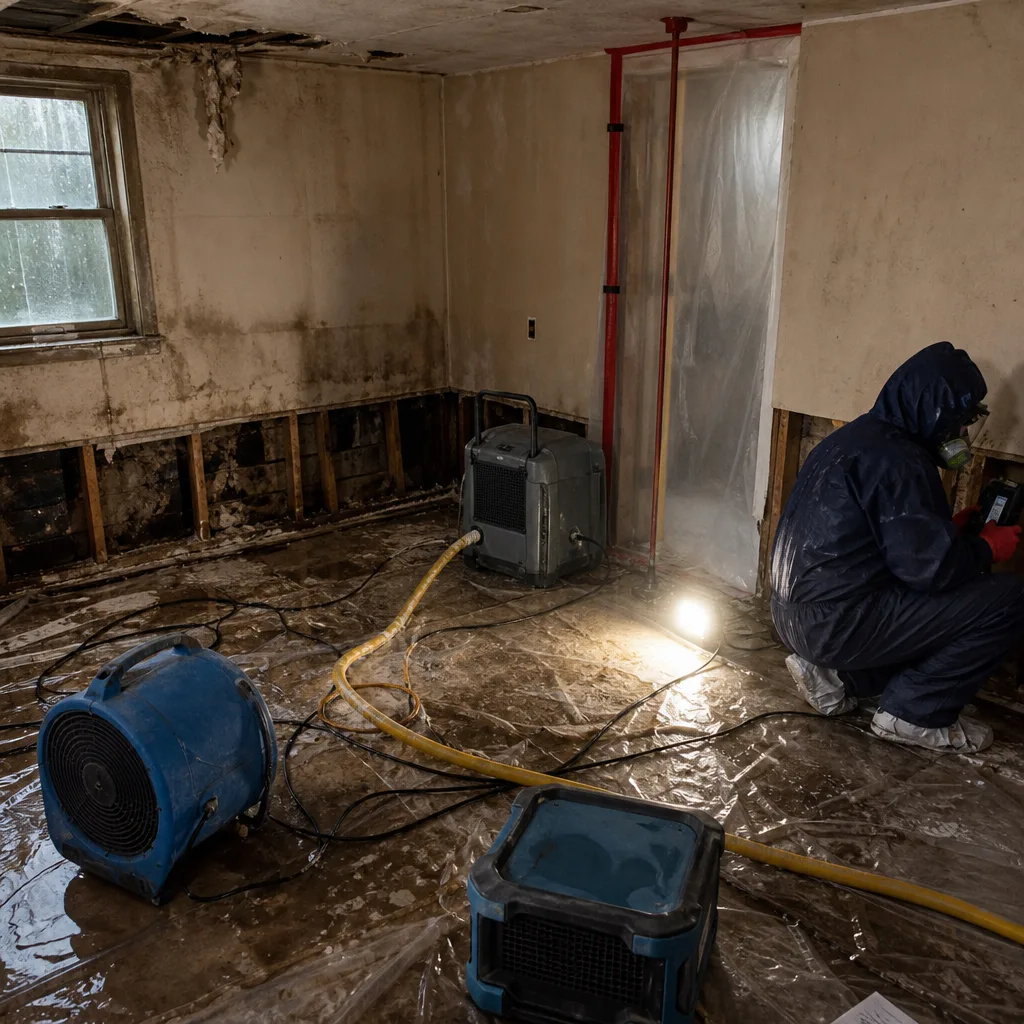 Before
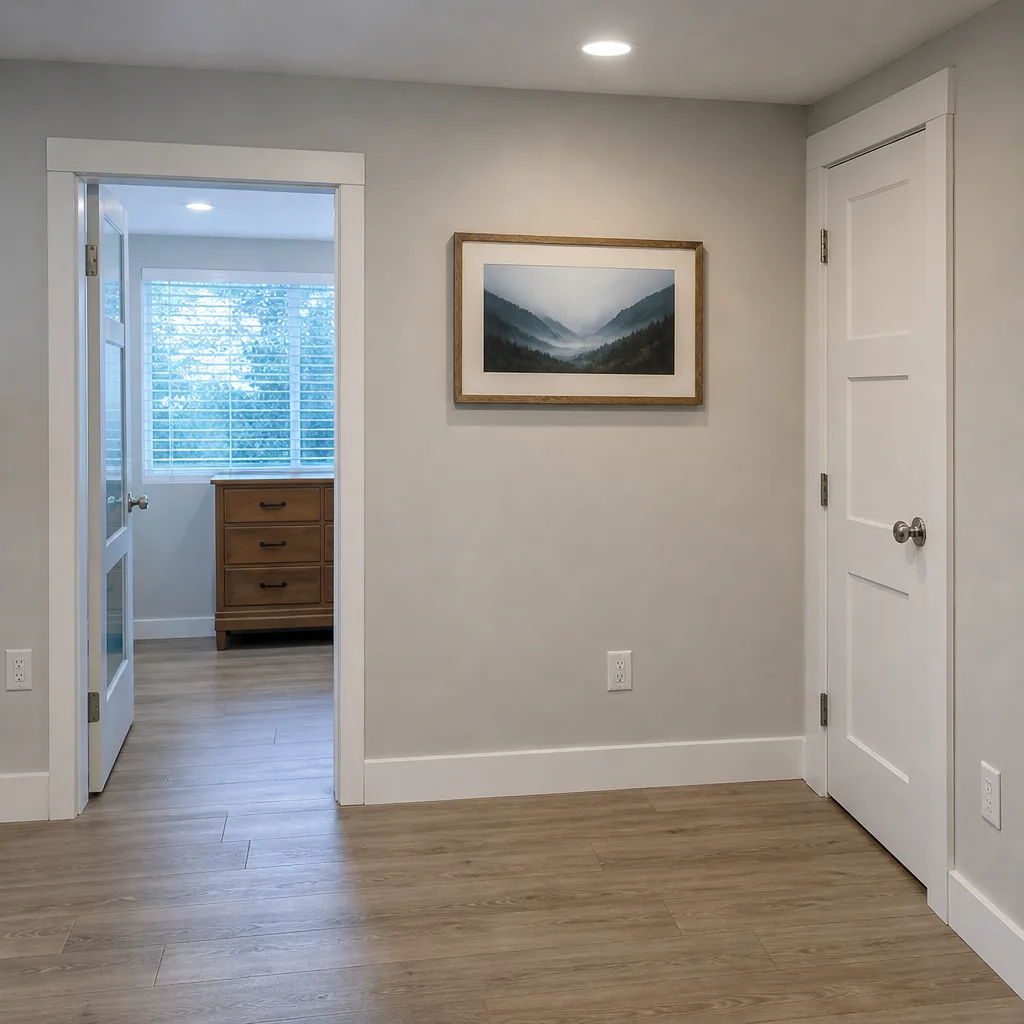 After
Frequently Asked Questions
In Paradise’s summer heat, mold can begin germinating in wall cavities within 36 hours when moisture is trapped and temperatures exceed 100°F. The IICRC standard window of 24 to 48 hours is compressed locally because desert heat accelerates biological growth while low outdoor humidity masks the moisture problem. Call (844) 716-1094 for an immediate assessment if you suspect trapped moisture.
Restoration costs in Paradise vary by classification, affected square footage, and whether structural drying or demolition is required. Class 1 damage can run under $1,000, while Class 3 or Class 4 damage involving multiple rooms often ranges from $3,000 to $15,000 or more. Insurance typically covers Restoration, and Valiant Water Damage provides a written scope before any work begins so you know exactly what’s included. Estimates are free.
Most Nevada homeowner policies cover sudden and accidental water damage, including burst pipes and appliance failures. Gradual leaks, flooding from outside, and negligence are commonly excluded. Document everything, report promptly, and keep records of all communication. Your restoration company should be willing to work directly with your adjuster and provide photo documentation to support your claim.
If water penetrated beyond surface materials, into drywall, subfloor, or insulation, professional drying with penetrating meters and commercial equipment is the only way to verify the structure is actually dry. Consumer fans cannot extract water from enclosed cavities, and in Paradise’s heat, false surface drying creates a mold risk you’ll discover too late.
The homeowner is ultimately responsible for communicating with the HOA, though a restoration company familiar with Paradise communities can help document source issues that involve common elements. Notify your HOA in writing immediately when exterior water intrusion is discovered, and request their maintenance responsibility schedule to determine who owns the repair.
Mitigation and structural drying typically takes 3 to 5 days for Class 1 and Class 2 damage, and 5 to 7 days or longer for Class 3 and Class 4. Paradise’s dry air can speed surface drying, but verification with penetrating meters is what determines when equipment comes out, and that timeline depends on where the water went, not how the surface looks.
Water damage restoration addresses active water and begins drying structures before mold establishes. Mold remediation addresses established mold colonies, requiring containment, specialized cleaning, and clearance testing to verify air quality. In Paradise, the window between the two is often under 48 hours in summer. If you already see or smell mold, visit our Mold Remediation in Paradise page for specifics.
Fire damage restoration almost always involves water damage because the firefighting water saturates the same materials the fire didn’t consume. The two processes are integrated: water extraction and drying happen alongside smoke and soot removal. If you’re dealing with fire aftermath, our Fire Damage Restoration in Paradise page covers the full scope of what a combined fire and water response looks like.
The Bottom Line
Water damage in Paradise behaves differently than it does anywhere else in the country. The same dry heat that makes Nevada livable also masks moisture problems and accelerates mold growth. Your job as a homeowner is to act fast, document everything, verify with penetrating meters, and work with restoration professionals who understand the local conditions. The equipment matters. The verification matters. The timeline matters. When water finds its way into your home, the decisions you make in the first 24 hours determine whether you’re looking at a few days of drying or a full remediation followed by reconstruction. Make the call early, document thoroughly, and demand professional verification at every step.
If you’re facing water damage right now, start with our Water Damage Restoration in Paradise page for the detailed process, or go straight to the Valiant Water Damage home page to see how a full-spectrum restoration specialist responds. When damage strikes, Valiant answers. Call (844) 716-1094 for a free estimate.
Written by the team at Valiant Water Damage, serving Paradise since 2016.