Last updated October 30, 2026
 Water damage drying
 Fire & smoke cleanup
 Mold remediation
 Storm response
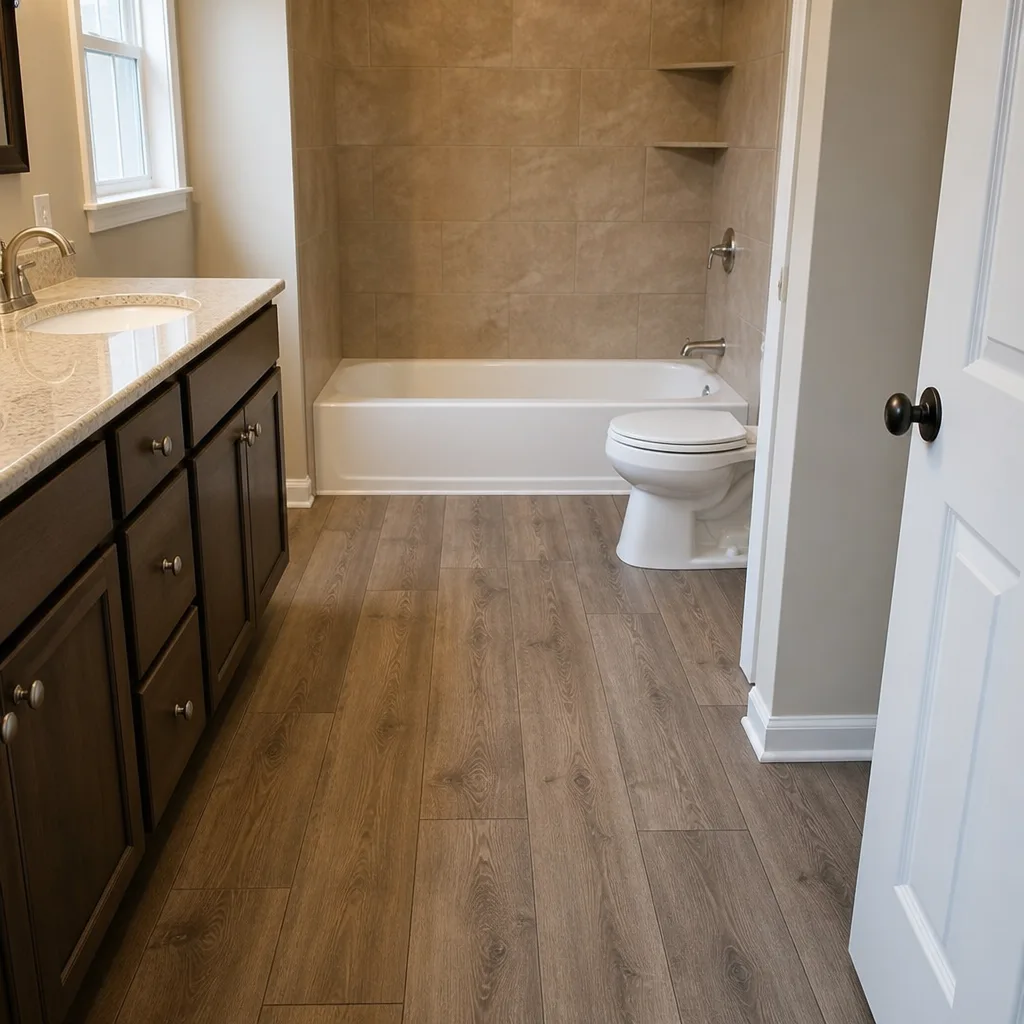 Sewage cleanup
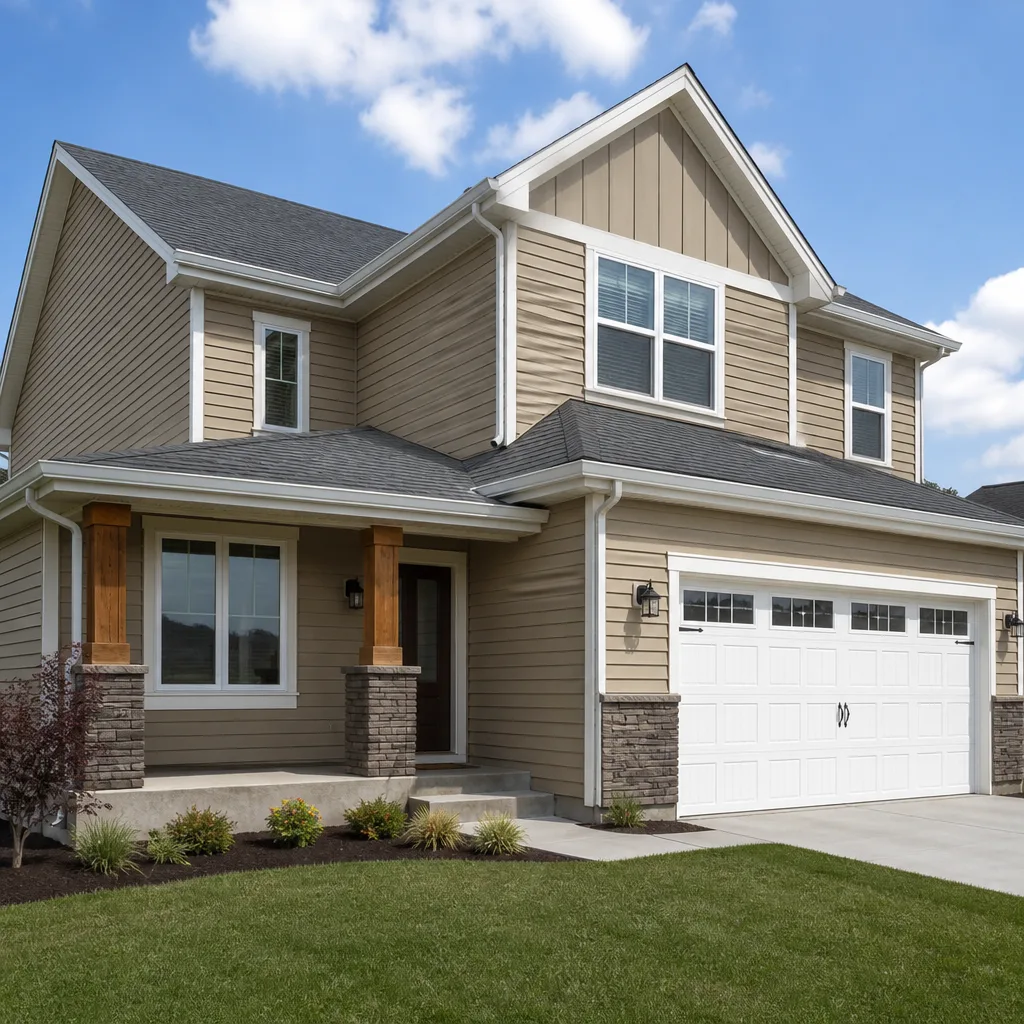 Reconstruction
Free visual inspection and a written scope of work before any mitigation begins - photos, moisture readings, and drying logs go in your claim file
The scope we write is the scope we bill. Anything new gets shown to you, in writing, before we touch it.
Get your free estimateThe Complete Guide to Damage Restoration in Paradise
Most Paradise homeowners don’t realize that low desert humidity actually masks moisture trapped inside walls. Drywall can read “dry” on the surface while the framing behind it stays saturated for weeks, quietly feeding mold in the wall cavity. This guide – alongside our Complete Water Damage Restoration Guide for Paradise Homeowners – walks through the full damage restoration sequence the way it actually unfolds in Paradise, NV, from the first emergency call to the final insurance walkthrough. You’ll learn why the desert creates a false sense of drying security, what each restoration phase involves, where homeowners get burned by cutting corners, and what “done” really means when your insurer asks for documentation.
Restoration work we handle
Quick Answer
Damage restoration in Paradise, NV typically follows a five-phase sequence: emergency mitigation, moisture mapping and extraction, structural drying, controlled demolition and rebuild, and final clearance documentation. In Paradise specifically, professional moisture mapping is non-negotiable because the arid climate hides trapped moisture behind walls and under flooring that surface readings miss. A full restoration from water or fire damage usually takes five days to three weeks depending on scope, with mold remediation timelines varying by colony size and location.
Table of Contents
- Why Paradise’s Climate Changes the Restoration Playbook
- The Five Phases of Damage Restoration, Step by Step
- Moisture Mapping: The Step Most Crews Skip
- HOA Rules and Permits in Paradise-Area Communities
- Paradise Flood Risk: Water Tables, Aging Infrastructure, and Casino Corridor Pressure
- What Damage Restoration Costs in Paradise
- What ‘Restoration Complete’ Actually Means
- Common Mistakes to Avoid
- When to Call a Professional
- Frequently Asked Questions
- The Bottom Line
Why Paradise’s Climate Changes the Restoration Playbook
Paradise sits in the Mojave Desert, where average outdoor humidity rarely climbs above 20 percent during summer months. That low humidity creates a dangerous assumption: that wet materials will simply air-dry on their own. In a humid climate like Houston or Miami, you see the moisture. Walls sweat, floors buckle, and the problem announces itself. In Paradise, the top layer of drywall can feel bone-dry to the touch within 24 to 48 hours while the framing behind it holds moisture for weeks.
We’ve pulled baseboards in Paradise homes where the drywall face read 8 percent moisture content – technically within normal range – but the stud cavity behind it read 38 percent. That’s the sweet spot where mold colonizes. A restoration crew using only surface-level readings would have walked away from that job. A crew using professional moisture mapping equipment from Dri-Eaz or Phoenix sees the full picture.
The second Paradise-specific factor is how homes are built. Most single-family homes here are wood-frame construction over concrete slab foundations, with stucco exteriors. Stucco is a great material for dry heat, but when water gets behind it – from a leak, a burst pipe, or monsoon-driven roof damage – it traps moisture against the framing. The only reliable way to dry that cavity is through targeted injection drying systems like Injectidry, which push dry air into wall cavities and under floors without tearing everything apart.
The third factor is timing. Because Paradise residents rarely think about water damage the way homeowners in wetter climates do, leaks often go unnoticed longer. A slow under-sink leak can run for months before anyone notices the cabinet warping. By the time we arrive, mold has often established itself behind the vanity. That compressed discovery timeline is exactly why professional moisture mapping matters more here than in climates where water announces itself loudly.
The Five Phases of Damage Restoration, Step by Step
Restoration work follows a sequence, and every phase depends on the one before it. Skip phase two, and phase three fails. Rush phase three, and you rebuild over active mold. Here’s how the process unfolds on a typical Paradise water or fire damage job.
Phase 1: Emergency Mitigation
Mitigation means stopping the damage at its source and preventing it from spreading. For water damage, that starts with identifying and shutting off the water source – a ruptured supply line, failed water heater, or appliance overflow. For fire damage, mitigation includes boarding up openings, securing the property, and starting soot cleanup before acidic residues etch surfaces permanently.
In Paradise, mitigation often means working around HOA security gates and property management protocols, especially in master-planned communities. The clock matters: mold colonization can start within 48 to 72 hours in the warm, dark cavities of a desert home where daytime attic temperatures exceed 120 degrees.
Phase 2: Extraction and Assessment
Standing water comes out first, using truck-mounted or portable extraction equipment. Then the assessment begins. Technicians map affected areas by material type: drywall, carpet, pad, hardwood, laminate, insulation, and framing all dry at different rates and require different approaches.
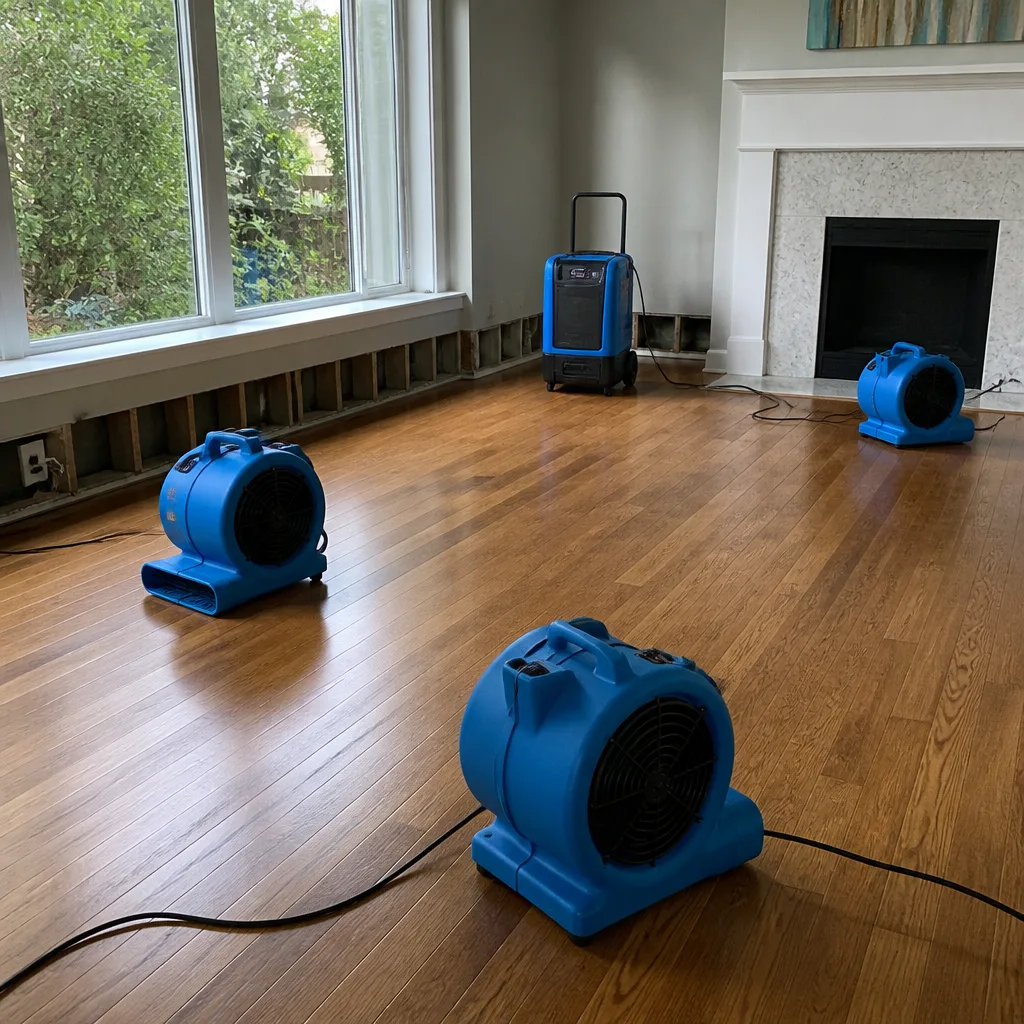
Assessment also means determining what’s salvageable. Professional-grade equipment changes that equation. A Phoenix axial fan and dehumidifier setup can dry hardwood that a box-store rental blower would leave waterlogged and warped. The equipment matters more than most homeowners realize, and it’s one reason we run Dri-Eaz and Phoenix systems on every job, not just the large commercial losses.
Phase 3: Structural Drying
Once extraction is done, the drying phase begins. This is where the skill lives. Proper drying involves calculating cubic footage, choosing the right dehumidifier capacity, positioning air movers at the correct angles, and monitoring moisture levels daily with penetrating and non-penetrating meters.
For wall cavities and under-floor spaces, Injectidry systems force dry air into tight spaces without removing drywall or flooring. That’s the “precision drying, less demolition” approach. A basic restoration crew without this capability will often cut out and replace drywall that could have been dried in place. That means more demolition, more dust, more downtime, and a higher final bill.
Phase 4: Controlled Demolition and Rebuild
Some materials can’t be saved – saturated drywall, carpet pad, and insulation typically come out. The key word is “controlled.” Every cut should be planned around drying boundaries and rebuild efficiency, not just rip-and-tear speed. Once demolition happens, the rebuild process starts: framing repair, drywall replacement, texture matching, painting, and flooring installation.
One call covers water, mold, and fire at Water Damage Restoration in Paradise – that full-spectrum approach means you’re not coordinating three contractors while living in a construction zone.
Phase 5: Clearance and Documentation
The final phase is the one homeowners rarely see coming: proving the job is actually done. Your insurer will want moisture readings, photo documentation, and for mold jobs, post-remediation clearance testing from an independent lab. Skipping this phase is how homeowners end up fighting claim denials months later. More on this in the “Restoration Complete” section below.
Moisture Mapping: The Step Most Crews Skip
Moisture mapping is exactly what it sounds like: creating a detailed map of where moisture exists in your home, how deep it goes, and how it’s moving. A proper map uses readings from multiple points in every affected room, taken with penetrating meters that read through surfaces and non-penetrating meters that scan for anomalies.
Here’s what a proper moisture map tells you:
- Actual affected square footage – not just what’s visibly wet, but everything behind and beneath it
- Moisture class and category – clean water, gray water, or black water, each requiring different handling
- Drying boundaries – where to place air movers and dehumidifiers for maximum efficiency
- Salvage vs. replacement decisions – data-driven calls on what can be dried and what must go
- Progress benchmarks – daily readings that prove drying is actually progressing, not stalling
In our experience, the crews that skip moisture mapping are the ones that get callbacks for mold six months later. The homeowner sees dry walls, the adjuster sees dry walls, and everyone signs off – but the stud cavities never actually dried. Then Paradise’s summer heat does what heat always does to dormant mold: accelerates it. The homeowner now has a bigger, more expensive problem than the original leak.
Moisture mapping also protects you during the claims process. When you can show your adjuster a date-stamped moisture map with readings that declined from 42 percent to 9 percent over five days, the claim moves faster. When you can’t, you’re arguing from a position of weakness.
HOA Rules and Permits in Paradise-Area Communities
Paradise is unusual among Las Vegas Valley communities in its patchwork of HOAs and master-planned developments. Many neighborhoods have architectural review committees that require approval before exterior work begins – even emergency board-ups and roof tarping in some cases. That’s a wrinkle restoration crews unfamiliar with Paradise miss.
The permitting picture is more straightforward. Clark County requires building permits for structural repair work, including:
- Framing replacement or repair beyond cosmetic patches
- Electrical work tied to water or fire damage
- Plumbing line replacement or rerouting
- HVAC ductwork replacement
- Roof structural repair after storm or fire damage
A restoration company should handle permitting or clearly coordinate with a licensed general contractor who will. If you’re told permits aren’t needed for structural work, that’s a red flag. When you sell the home later, unpermitted repair work shows up in disclosure documents and becomes your problem.
Check your specific HOA’s governing documents before restoration begins. Some require contractors to be pre-approved, carry specific liability coverage amounts, or follow noise and truck-access rules. Working with a restoration team that’s handled Fire Damage Restoration in Paradise across multiple HOA communities means those logistics are already familiar.
Paradise Flood Risk: Water Tables, Aging Infrastructure, and Casino Corridor Pressure
Most people think of Paradise as flood-proof desert. That’s only half true. Paradise sits on the Las Vegas Wash drainage basin, and while flash floods do happen during monsoon season, the bigger quiet risk is infrastructure age and groundwater pressure.
Older Paradise neighborhoods – think the residential pockets east of the Strip, built in the 1960s and 1970s – run on cast iron and galvanized pipes that are now 50 to 60 years old. Those pipes corrode from the inside out. A pinhole leak in a galvanized supply line can run inside a wall for months, saturating insulation and framing before anyone sees water. By the time it shows up as a stain on the ceiling, the damage is structural, not cosmetic.
Casino corridor development adds another layer. The Las Vegas Strip pumps enormous amounts of water through aging municipal infrastructure, and pressure fluctuations ripple through surrounding residential zones. Homes near major resort construction or renovation zones sometimes see water pressure spikes that stress old pipe joints. The result is a slow leak that never announces itself until the drywall fails.
Then there’s the water table reality. Parts of Paradise sit over relatively shallow groundwater, especially along the Flamingo Wash corridor. Homes with basements – rare but present in some older Paradise neighborhoods – can see groundwater seepage through foundation cracks that standard homeowner insurance doesn’t cover. Foundation drainage and sump pump systems become critical in those specific spots.
The takeaway for Paradise homeowners: don’t assume “desert” means “dry.” The risks just hide better here. For broader context on how water damage works in this specific environment, see our guide to Water Damage Restoration in Paradise.
What Damage Restoration Costs in Paradise
Restoration pricing in Paradise tracks the Las Vegas Valley market, with modest variation based on material costs and labor availability – see our Damage Restoration Cost Breakdown: The Paradise Homeowner’s Reference for 2026 for deeper context. Here’s what homeowners can expect based on typical scopes we see.
Water Damage Restoration Cost Ranges
| Service | Typical Range in Paradise |
|---|---|
| Emergency water extraction (single room) | $500 – $1,200 |
| Full mitigation and drying (multi-room) | $2,500 – $6,500 |
| Sewage backup cleanup and sanitization | $3,000 – $8,000 |
| Structural drying with Injectidry (per wall cavity) | $150 – $400 |
| Full restoration including rebuild (per square foot) | $15 – $35 |
Mold Remediation Cost Ranges
| Service | Typical Range in Paradise |
|---|---|
| Containment and air scrubbing (single room) | $800 – $1,800 |
| Mold removal behind walls (bathroom or kitchen) | $1,500 – $4,000 |
| Full remediation with clearance testing (multi-room) | $4,000 – $12,000 |
| HVAC system cleaning after mold contamination | $600 – $2,000 |
Fire Damage Restoration Cost Ranges
| Service | Typical Range in Paradise |
|---|---|
| Soot and smoke cleanup (contained kitchen fire) | $1,500 – $4,500 |
| Full fire restoration with structural rebuild | $20,000 – $75,000+ |
| Content cleaning and pack-out | $2,000 – $8,000 |
These figures reflect Paradise market conditions, not national averages. Labor rates in Clark County run moderate compared to coastal metros, but material costs – sheetrock, lumber, flooring – are subject to the same supply chain pressures as everywhere else. Insurance typically covers restoration when damage is sudden and accidental; gradual leaks and pre-existing mold are where coverage gets contested. A restoration company that documents everything from day one makes the claims process dramatically smoother.
For a fuller breakdown of water-specific costs and what drives them, read Water Damage Restoration in Paradise.
What ‘Restoration Complete’ Actually Means
“Restoration complete” is a phrase that gets thrown around loosely. Here’s what it should mean on every job, and what you should demand before signing off.
Documentation You Should Receive
- Initial moisture map – date-stamped readings from the day work began
- Daily drying logs – moisture content readings showing progression toward dry standards
- Equipment placement diagram – where air movers and dehumidifiers were positioned
- Demolition photo log – images of every area opened up, before and after
- Final moisture verification – readings confirming affected materials reached dry standard
- For mold jobs, third-party clearance testing – air and surface samples analyzed by an independent lab, not the remediation company’s own testing
- Repair scope documentation – written list of what was removed and what was replaced
If a restoration company can’t or won’t provide this paperwork, your insurance claim is at risk. Adjusters rely on this documentation to process claims. Without it, you’re asking the insurer to take your word for the scope of damage – and insurers don’t work that way.
Clearance Testing for Mold
For mold remediation, the gold standard is post-remediation verification (PRV) performed by a third-party industrial hygienist. The hygienist takes air samples inside the contained area and compares them to outdoor control samples. If indoor spore counts equal or fall below outdoor levels, the job passes. If not, more remediation is needed.
We’re an IICRC-certified operation, and one of the standards we hold to is never performing our own clearance testing. Third-party verification protects the homeowner and the restoration company. It’s also what your insurer wants to see.
Common Mistakes to Avoid
- Trusting surface dryness in the desert. Paradise’s low humidity makes walls feel dry while framing stays wet. Get professional moisture readings, not finger tests.
- Hiring a general handyman for water damage. Handyman crews don’t run dehumidifier calculations or moisture maps. They mop, patch, and leave – and you inherit the mold problem six months later.
- Skipping HOA notification before exterior work. In Paradise’s master-planned communities, emergency exterior work can trigger fines if the HOA wasn’t notified within the required window.
- Letting the insurance company pick the contractor without question. You have the right to choose your own restoration company. Insurer-preferred vendors work for the insurer’s metrics, not necessarily your best outcome.
- Waiting to file the claim. Most policies require prompt notification after damage. Waiting weeks to call can give the insurer grounds to deny based on “failure to mitigate.”
- Assuming “mold is just mold.” Some Paradise homes have construction dust in HVAC systems that looks like mold but isn’t. Others have Stachybotrys behind shower surrounds. The difference is a lab test, not a visual guess.
- Skipping the written scope before work starts. Any restoration company should provide a written scope and estimate before the first fan gets plugged in. If they won’t, walk away.
When to Call a Professional
Water spreading beyond a single towel-soak, any visible mold growth larger than a dinner plate, any fire or smoke event that leaves residue – these are professional restoration situations, not weekend projects. If water has sat for more than 24 hours, you need structural drying equipment and moisture mapping, not a rented carpet cleaner. If mold is visible in multiple rooms or you smell musty odors that don’t go away, containment and air scrubbing are required before any cleanup starts. And after any fire, soot residue is acidic and will permanently etch glass, metal, and stone surfaces within days if not treated properly.
If you’re facing any of these situations in Paradise, stop and make the call. Valiant Water Damage offers free estimates in Paradise – call (844) 716-1094 and we’ll walk you through what you’re dealing with and what it will take to fix it right.
Frequently Asked Questions
Water damage restoration in Paradise typically runs $2,500 to $6,500 for a multi-room mitigation and drying job, while mold remediation ranges $1,500 to $12,000 depending on colony size and accessibility. Fire restoration spans from $1,500 for contained soot cleanup to $75,000+ for structural rebuilds. The final number depends on the moisture class, affected square footage, and whether rebuild work is required. Call (844) 716-1094 for an exact quote – estimates are free.
Emergency mitigation for active water intrusion in Paradise should arrive the same day you call. Every hour water sits, it wicks further into walls, floors, and framing. During peak summer months, Paradise attics reach temperatures that accelerate mold growth, so the 48-to-72-hour mold window shrinks considerably. If you have active water damage, call (844) 716-1094 now – the sooner extraction starts, the less demolition you’ll need.
Insurance typically covers sudden and accidental water damage, like a burst pipe or appliance overflow, but excludes gradual leaks and seepage that occurred over time. Your policy’s specific language matters more than anything else, and your restoration company should document everything from day one to support your claim. Photo documentation and moisture mapping are what adjusters look for when processing Paradise claims.
If mold covers more than 10 square feet, professional remediation with containment is the standard, not surface cleaning. Surface cleaning without containment sends spores airborne and spreads the problem through your HVAC system. In Paradise’s warm homes, mold colonizes quickly once established, and surface treatments fail because the roots remain in the drywall. A professional assessment tells you what you’re actually dealing with. Call (844) 716-1094 and we’ll tell you straight whether you need full remediation or a targeted cleanup.
A full-service restoration company should coordinate directly with your adjuster, providing the moisture maps, drying logs, photo documentation, and itemized scopes the claim requires. You shouldn’t be the go-between translating restoration terminology to your insurance company. At Valiant Water Damage, we document every phase and coordinate with adjusters throughout the process – because a well-documented job gets paid faster and contested less.
Frequently, yes. Precision drying systems like Injectidry dry wall cavities and under-floor spaces from the inside, without removing drywall or flooring. The key is starting drying before materials hit the saturation point where drywall loses structural integrity. Professional-grade equipment from Dri-Eaz and Phoenix makes salvage possible in situations where box-store equipment can’t keep up. We’ll tell you honestly what can be saved and what should go.
The Bottom Line
Damage restoration in Paradise is a process with a sequence, and that sequence matters more than most people realize. The desert climate hides moisture, HOA rules complicate logistics, aging infrastructure creates leaks where no one’s looking, and the paper trail is what determines whether your insurer pays. The restoration company you choose changes the outcome at every phase – from how much gets demolished to how clean the air is when the crew leaves. Make the call before the damage spreads. Call Valiant Water Damage at (844) 716-1094 for a free estimate, or browse our other Valiant Water Damage home resources to understand your specific situation better. When damage strikes, Valiant answers.
Written by the team at Valiant Water Damage, serving Paradise since 2016. Explore more guides & resources.
See the difference
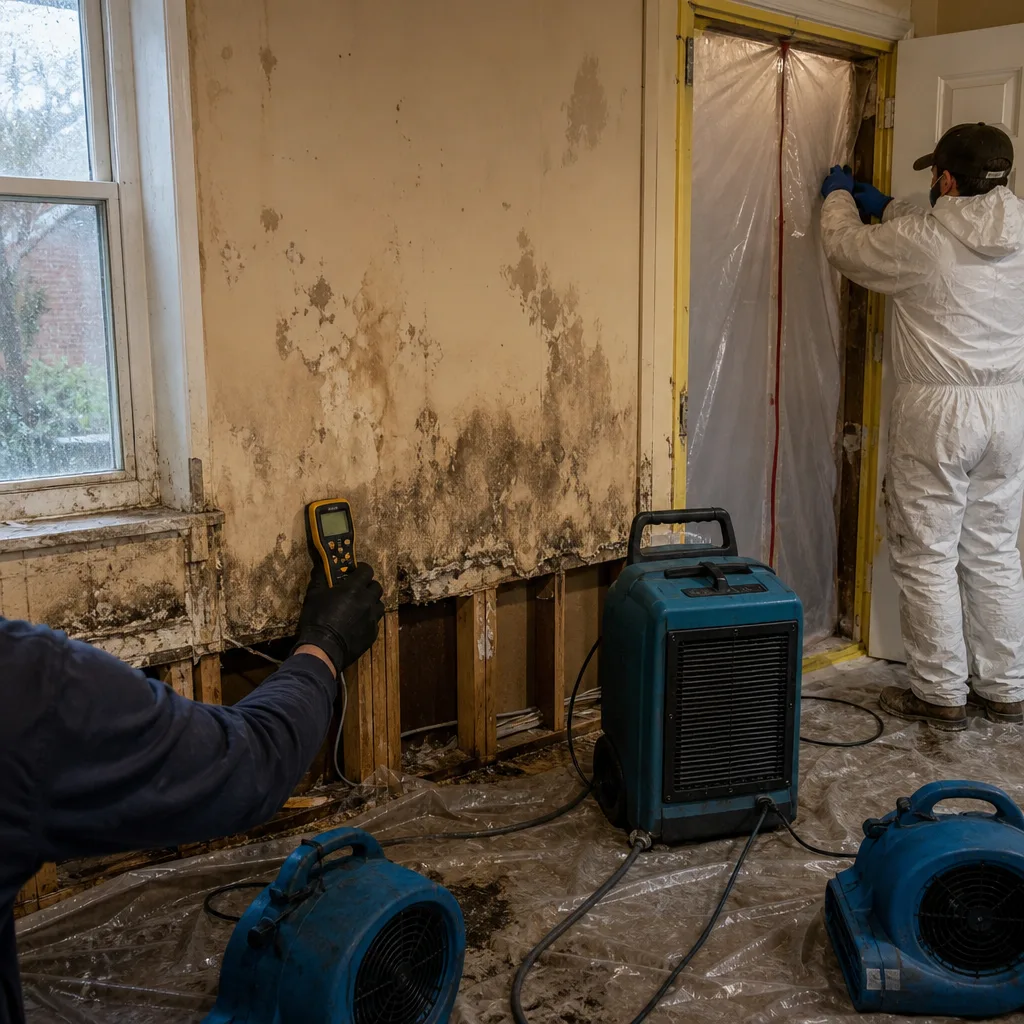 Before
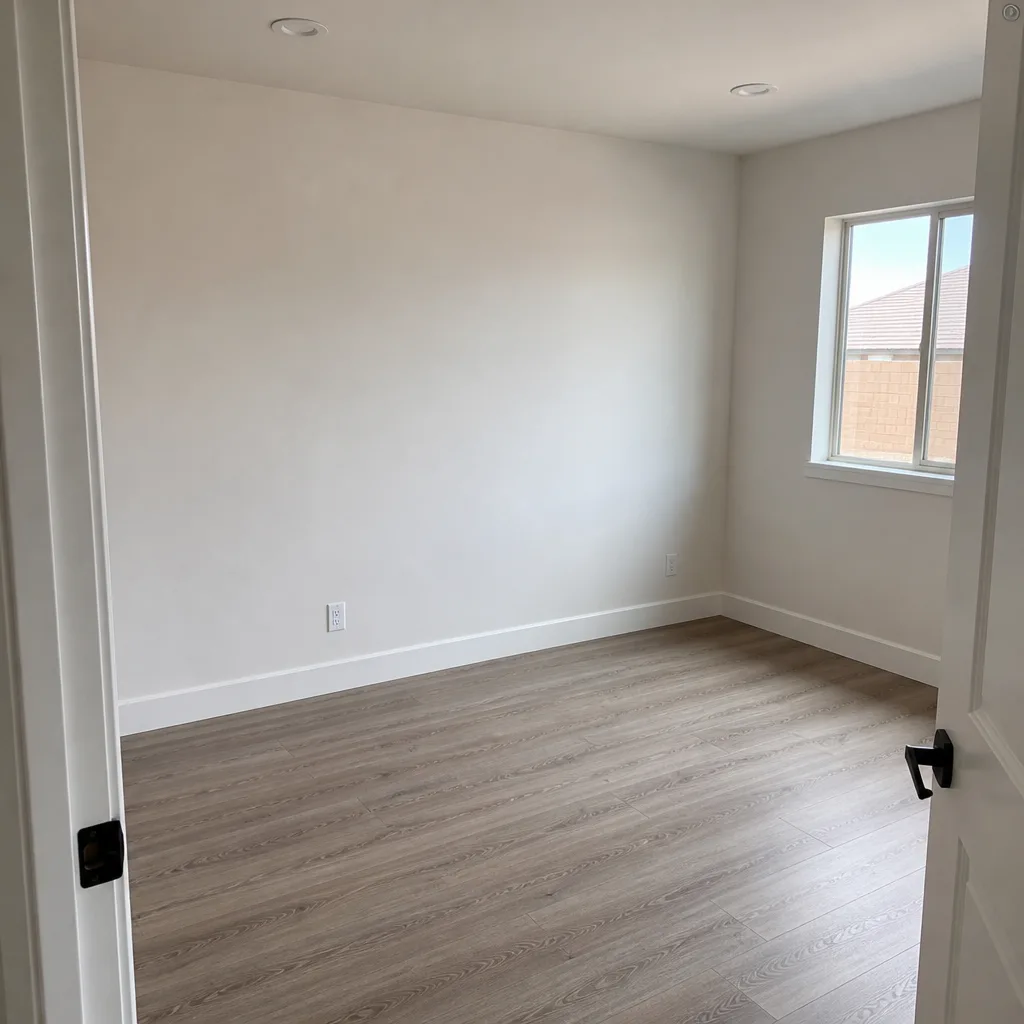 After
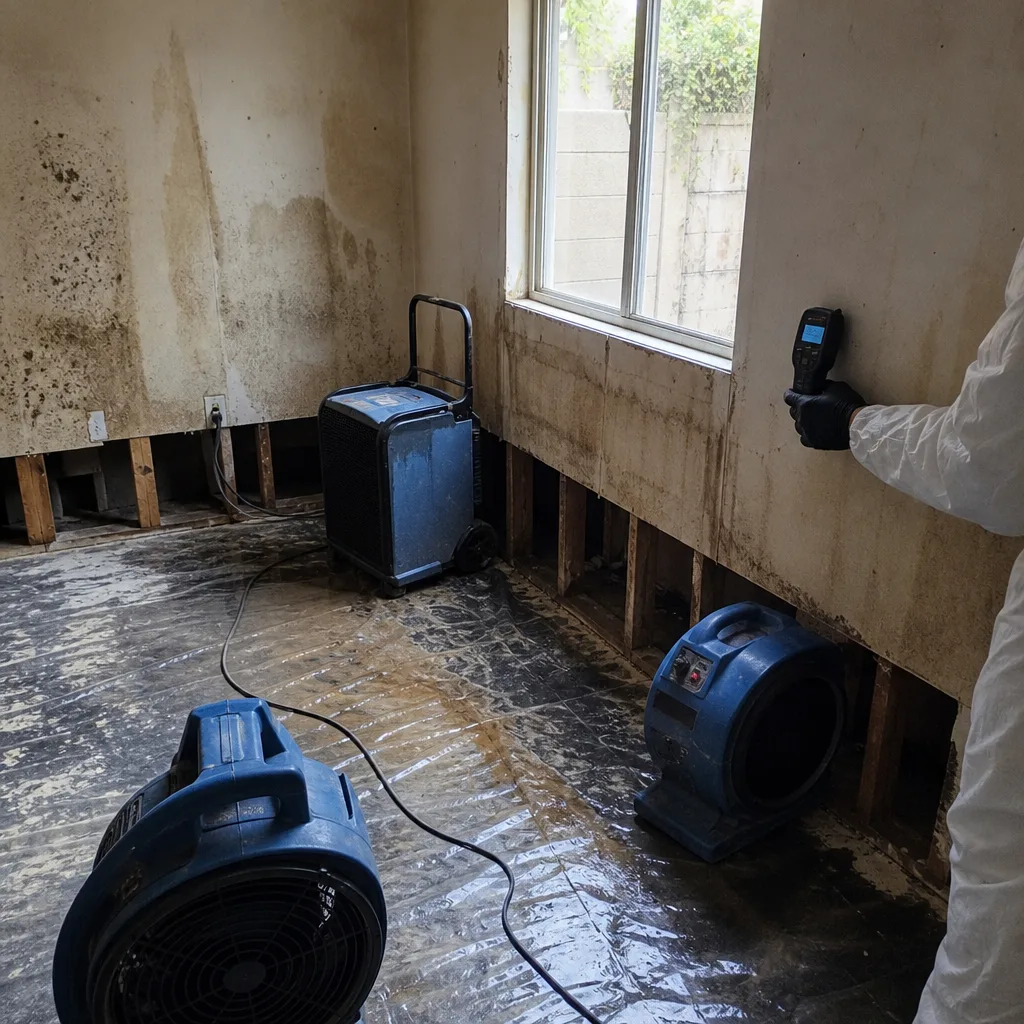 Before
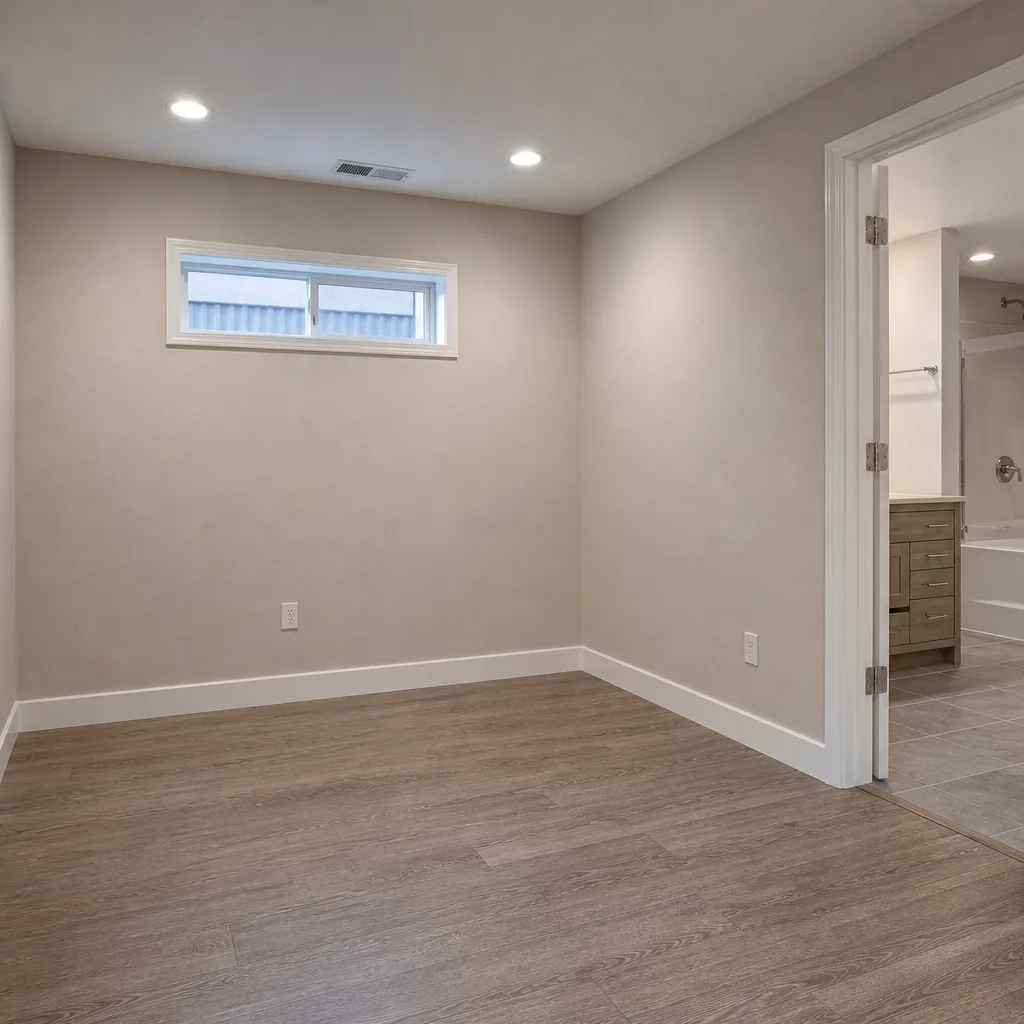 After
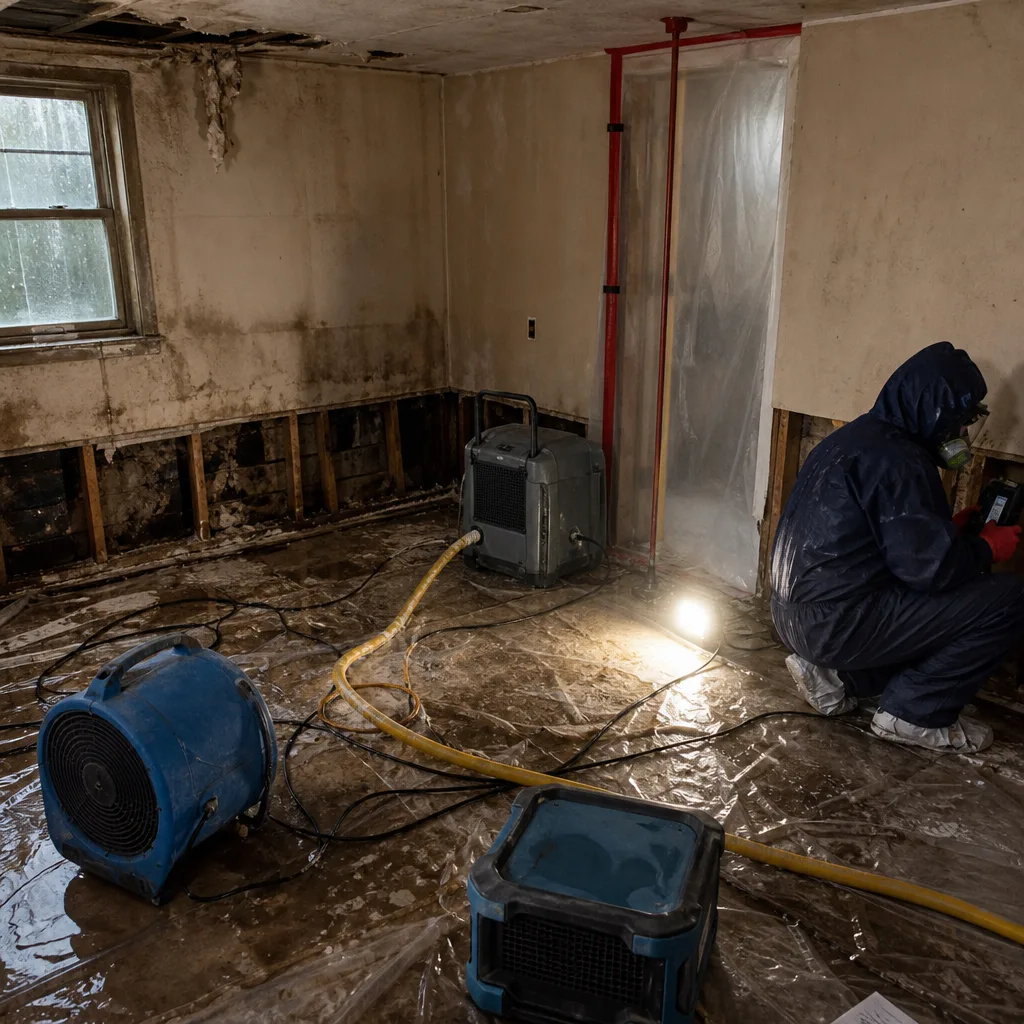 Before
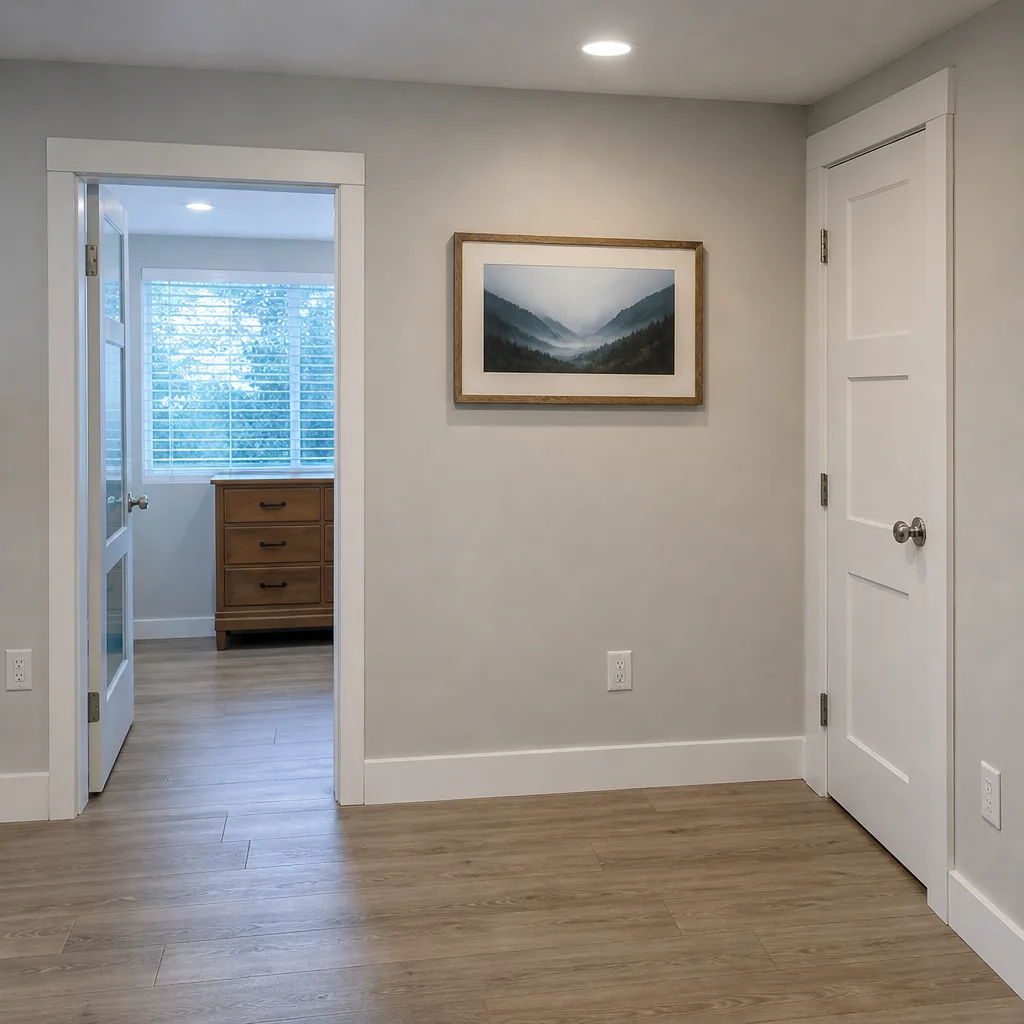 After