Last updated October 30, 2026
 Water damage drying
 Fire & smoke cleanup
 Mold remediation
 Storm response
 Sewage cleanup
 Reconstruction
Free visual inspection and a written scope of work before any mitigation begins - photos, moisture readings, and drying logs go in your claim file
The scope we write is the scope we bill. Anything new gets shown to you, in writing, before we touch it.
Get your free estimateChoosing the Right Damage Restoration Brand: A Buyer’s Guide for Paradise
In Paradise, Nevada, the difference between a restoration company that saves your home and one that costs you months of dispute often comes down to what’s inside the van, not what’s painted on the side of it. A nationally franchised restoration company and a locally owned certified specialist can both roll up in clean, branded trucks with polite technicians in uniform. The franchise name might feel safer because you’ve seen it on television. But that national brand is essentially a licensing agreement. The actual work, the actual equipment, the actual technician standing in your flooded kitchen at 2 a.m. in Paradise, is entirely dependent on whichever local owner bought the rights to that name. This guide will teach you how to evaluate the operation behind the logo, and you can explore more guides & resources on our blog, because in restoration, the brand that matters is the one that shows up with the right tools and the right training, not the one with the biggest marketing budget.
Restoration work we handle
Quick Answer
The best damage restoration company in Paradise, NV is one whose equipment manifest and technician certifications tell a clearer story than its marketing, as detailed in The Complete Guide to Damage Restoration in Paradise. Look for IICRC-certified technicians, professional-grade drying equipment from brands like Dri-Eaz and Phoenix, and a demonstrated ability to handle water, mold, and fire under one roof. Before signing anything, ask three technical questions: what dehumidifier CFM ratings they deploy, whether they use moisture meters and thermal cameras on every job, and how they handle structural drying behind walls without unnecessary demolition. A company that answers those questions fluently is equipment-serious; one that deflects is a generalist in disguise.
Table of Contents
- Franchise vs. Independent: What the National Brand Actually Guarantees
- The Equipment Audit: What a Serious Restoration Operation Brings
- Certification Hierarchy: IICRC Firms vs. Individual Techs and Why Both Matter
- Online Review Red Flags Specific to Restoration Companies
- How to Use a Single Assessment Call to Evaluate Depth
- Paradise-Specific Considerations: Climate, Building Stock, and Market Realities
- Insurance Coordination: The Quiet Test of a Restoration Company’s Competence
- Common Mistakes to Avoid
- When to Call a Professional
- Frequently Asked Questions
- The Bottom Line
Franchise vs. Independent: What the National Brand Actually Guarantees
When you call a franchise restoration company, you are not calling the franchise. You are calling a local business owner who paid for the rights to use the franchise name, follow its operational playbook (to varying degrees of enforcement), and buy from its approved vendors. The franchise brand guarantees a recognizable logo and a standardized phone script. It does not guarantee that the technician who arrives at your Paradise home has ever handled a Category 3 water loss alone.
Franchise quality varies wildly by territory. One franchisee in a neighboring market might run an exceptional operation with seasoned techs and a full equipment room. Another, under the same brand name, might be a former carpet cleaner who bought the franchise as an investment and staffs it with minimally trained hires. The brand name gives you no visibility into which one you’re getting. In our experience responding to Paradise homes after failed franchise jobs, the common thread is rarely malice, it’s thin staffing and a reliance on the brand name to carry credibility that the local operation hasn’t earned on its own.
Independent restoration companies have no such marketing umbrella. They live or die by their local reputation, which means every job matters to them in a way a distant franchisor never feels. But “independent” is not automatically a virtue either. There are plenty of one-man operations in the Paradise area who sub out the actual work to whoever’s available. The evaluative framework doesn’t change: check the certifications, check the equipment, check the references. An independent that invests in IICRC training and commercial-grade drying equipment is competing on substance, not signage.
The practical takeaway: treat the franchise logo as neutral information, not a trust signal. The questions you ask a franchisee should be identical to the questions you ask an independent. If the franchise tech can’t name the dehumidifier they’re bringing to your job, that logo isn’t doing anything for your drying timeline.
The Equipment Audit: What a Serious Restoration Operation Brings
Restoration is, at its core, an equipment business. Water damage doesn’t get “fixed” by effort or good intentions alone, it gets fixed by moving air at a specific volume across wet surfaces and removing moisture from the air at a measurable rate. The difference between a professional drying job and a prolonged, mold-prone one in Paradise’s climate is often the difference between professional-grade dehumidifiers and a few box-store fans.
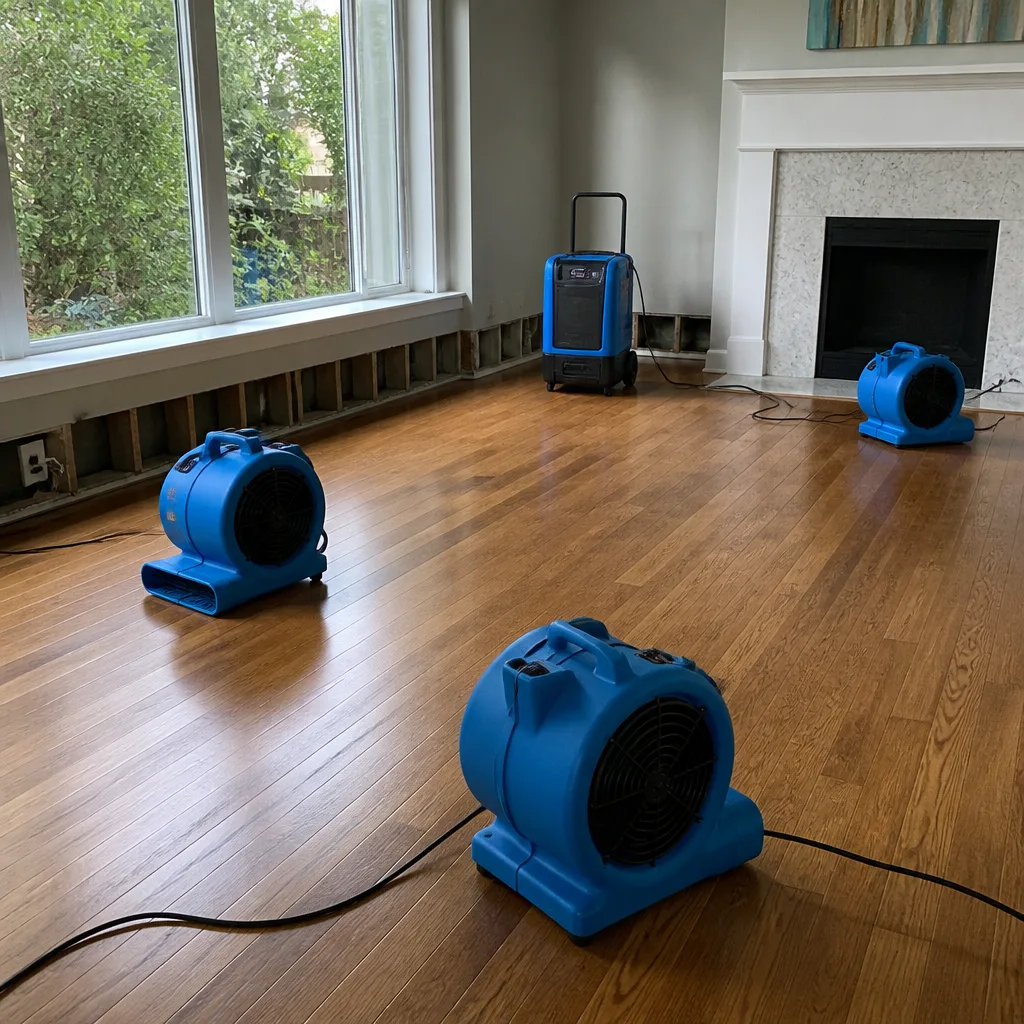
A serious restoration operation shows up with low-grain refrigerant (LGR) dehumidifiers rated by cubic feet per minute (CFM) of air processed, not by square footage of floor space. For a typical single-room water loss in a Paradise home, you should expect at least one LGR dehumidifier processing 130 to 180 CFM at AHAM conditions, paired with high-velocity air movers positioned for directed airflow across wet surfaces. For larger losses, multiple dehumidifiers and dozens of air movers. A generalist with rental gear from a hardware store will bring dehumidifiers rated for basements and hope for the best.
Beyond drying equipment, the tool list tells you everything:
- Moisture meters: Non-negotiable. A restoration professional uses penetrating and non-penetrating meters to establish baseline moisture readings, monitor drying progress, and document when materials hit dry standard. Without meters, “dry” is a guess.
- Thermal imaging cameras: Used to identify moisture behind walls and under flooring that isn’t visible to the eye. This is how a professional finds the full scope of damage, not just the puddle you can see.
- Air scrubbers with HEPA filtration: For any job with potential contamination, including Category 2 or 3 water and any mold presence, these filter airborne particulates and prevent cross-contamination.
- Injectidry or equivalent structural drying systems: This is the differentiator most homeowners never think to ask about. Injectidry systems force air into wall cavities and under floors without tear-out. Most basic crews skip this entirely and default to demolition because they don’t have the equipment to do otherwise.
- Hydroxyl generators or ozone machines: Used for odor control in fire and mold jobs. You’ll know quickly if a company doesn’t own these because they’ll tell you the smell will “air out on its own.”
The equipment question to ask on any assessment call in Paradise is simple: “What dehumidifiers do you run, and what’s the CFM rating?” If the answer is vague, you’re talking to a generalist. If they quote a brand and a rating, you’re talking to someone who knows their drying math. Valiant Water Damage runs professional-grade equipment from Valiant Water Damage home‘s fleet including Dri-Eaz, Phoenix, XPOWER, B-Air, and Injectidry, deployed on every job regardless of size.
Certification Hierarchy: IICRC Firms vs. Individual Techs and Why Both Matter
The Institute of Inspection, Cleaning and Restoration Certification (IICRC) is the restoration industry’s primary standards-setting body. Its certifications are the closest thing this trade has to a licensing board, because in Nevada, restoration contractors are not required to hold a specific “restoration license” separate from general contractor licensing. Certification is how serious operators distinguish themselves from the unregulated field.
There are two distinct IICRC credentials, and they mean different things:
- IICRC Certified Firm: This is a company-level credential. To maintain it, the firm must employ at least one certified technician, follow IICRC standards, participate in continuing education, and agree to the IICRC code of ethics. It’s a baseline signal that the company has invested in formal training and operates under a recognized standard.
- Individual technician certifications: These are earned by the person doing the work, through coursework and examination in specific categories: Water Damage Restoration Technician (WRT), Applied Structural Drying (ASD), Applied Microbial Remediation Technician (AMRT), Fire and Smoke Restoration Technician (FSRT), and others. A company can technically hold firm certification with minimal certified staff. A strong operation has multiple techs with multiple individual certifications.
Why both matter independently: firm certification without individually certified techs on your specific job means you might get the one uncertified crew the company happens to have available that week. Individually certified techs working for an uncertified firm means the company hasn’t committed to organizational standards. You want both: a certified firm and a certified tech on your job, every time.
Beyond IICRC, professional affiliations signal whether a company is connected to the broader restoration community or operating in isolation. The Restoration Industry Association (RIA) holds members to elevated industry benchmarks and provides ongoing education. IFA affiliation indicates a commitment to professional development and industry accountability. These memberships cost real money each year. Companies that maintain them are making a statement about how they operate. Valiant Water Damage holds affiliations with both RIA and IFA, and every job is performed by IICRC-certified technicians.
Online Review Red Flags Specific to Restoration Companies
Restoration companies are unlike restaurants or retail stores when it comes to reviews. A restoration job is almost always tied to a stressful event, often involves insurance adjusters and third parties, and the customer’s memory of the experience is inseparable from the trauma of the damage itself. This means review patterns reveal things that a star rating alone never will.
Here’s what to look for when you read restoration reviews in the Paradise area:
- The “claim handling” pattern: Reviews that mention the company “worked with insurance” or “handled everything with our adjuster” indicate a sophisticated operation. Reviews that mention the homeowner had to “constantly follow up” or “fight for documentation” indicate exactly the kind of disorganization that turns a two-week drying job into a six-month dispute.
- Communication cadence mentioned specifically: Positive restoration reviews often say something like “they sent daily updates” or “the project manager called every morning.” Negative ones say “nobody returned my calls for days.” This is the single most predictive review signal in restoration, more than any comment about the actual drying work.
- Scope dispute frequency: If multiple reviews mention the final bill was higher than the estimate without clear explanation, or that the company “found” additional work that was never documented, that’s a structural pattern, not an isolated incident. Look for reviews that describe photo documentation and written scope changes.
- Duration complaints: Reviews that say the job “took twice as long as promised” without explanation of why (new damage discovered, insurance delays) suggest an operation that over-commits and under-communicates. A legitimate extension with clear communication rarely generates a negative review.
- Technician name mentions: Reviews that name specific technicians (“Mike was great, he explained everything”) indicate a company with stable staffing and a customer-facing culture. Anonymous “the crew was fine” reviews are neutral. A pattern of reviews where the homeowner couldn’t name a single point of contact suggests high turnover or a relay-race approach to jobs.
The red flags are not about low star ratings, they’re about patterns across reviews that indicate how the company handles the parts of the job you can’t see from the street: documentation, communication, and insurance coordination.
How to Use a Single Assessment Call to Evaluate Depth
When damage strikes in Paradise, you don’t have weeks to vet companies. You have hours, sometimes less. That’s why the assessment call is your single highest-leverage evaluation tool. One phone call, three technical questions, and you’ll know within minutes whether you’re talking to a restoration specialist or a generalist who’s about to learn on your dime.
Here are the three questions that separate equipment-serious specialists from everyone else:
- “What dehumidifiers do you run, and what CFM rating are they?” A professional answers immediately: “We run Dri-Eaz LGR 2800i units, 140 CFM at AHAM, plus Phoenix 200 Max units depending on the job.” A generalist says something like “we bring the big ones” or “commercial-grade dehumidifiers.” If they don’t know the CFM, they don’t know drying science.
- “Do you use moisture meters and thermal imaging on every job, and will I see the readings?” The correct answer is yes to all three. A serious operation documents initial moisture content, monitors progress daily, and provides a final report showing materials hit dry standard. A company that says “we’ll know when it’s dry” is guessing. In Paradise’s climate, where monsoon season can spike indoor humidity rapidly, daily readings are the difference between a clean dry-out and a callback for mold.
- “How do you dry wall cavities and under-floor spaces without tearing everything out?” This is the Injectidry question. A sophisticated company describes targeted injection drying systems that force air into concealed spaces, preserving finished materials and reducing demolition. A basic crew says “we’ll have to open the walls up” as the default position. Sometimes demolition is genuinely necessary, but when a company’s only drying method is tear-out, you should question whether you’re paying for a demolition crew with dehumidifiers or a drying specialist.
A fourth, lighter question is worth adding: “Which of your techs will be on my job, and what certifications do they hold?” The answer reveals staffing depth. A company that says “whoever’s available” is managing a labor pool, not a service operation. A company that can name a lead tech and describe their credentials has an actual team.
Paradise-Specific Considerations: Climate, Building Stock, and Market Realities
Paradise, Nevada sits in the Las Vegas Valley, which means the restoration math here is different from what a national playbook might assume. The desert climate creates specific conditions that affect how water damage behaves and how it must be dried:
- Low ambient humidity, except when it isn’t: Most of the year, Paradise’s outdoor humidity is low, which helps evaporation. But monsoon season (typically July through September) brings sudden, dramatic humidity spikes that can stall a drying job if the tech isn’t monitoring environmental conditions daily. A drying plan built for a Phoenix-style climate will fail during a Paradise monsoon week.
- Slab-on-grade construction predominates: Many Paradise homes are built on concrete slabs, which changes how water migration works. Water on a slab floor travels downward and laterally through the concrete’s capillary action, but it doesn’t soak into a wooden subfloor the way it does in other regions. This affects both drying time and moisture meter interpretation. A tech trained on raised-foundation homes may misread the situation.
- Stucco exteriors and water intrusion patterns: The dominant exterior finish in Paradise is stucco over frame. Stucco cracks from the valley’s temperature swings let water in during the rare heavy rain events, and the damage often manifests inside the wall cavity long before it’s visible on the interior drywall. Thermal imaging is not optional here; it’s the only way to find these leaks before they become mold colonies.
- Hard water and mineral deposits: Paradise’s municipal water supply is hard, which leaves mineral scaling after drying. It affects everything from how carpets respond to extraction to how mineral deposits on concrete floors need to be addressed. A local operator has seen this thousands of times; an out-of-market franchisee might treat it as an anomaly.
For comprehensive water damage response specific to these conditions, see Water Damage Restoration in Paradise. The key takeaway: Paradise’s restoration market rewards local experience because the climate and construction patterns here produce damage profiles that a generic national playbook doesn’t fully account for.
Insurance Coordination: The Quiet Test of a Restoration Company’s Competence
Most Paradise homeowners will file an insurance claim for their damage. That means the restoration company you choose is, in practice, working for two clients: you and your insurance carrier. How a company handles that dual relationship reveals more about its professionalism than any marketing claim.
The best restoration companies understand that adjusters are professionals with their own documentation requirements and timelines. They provide photo-documented damage assessments, written scopes of work, daily moisture readings, and itemized equipment usage logs. They communicate with adjusters directly, proactively, and in the adjuster’s preferred format. They don’t make you the middle-person ferrying documents between two parties who won’t talk to each other.
What this looks like in practice:
- Photo documentation from minute one: Before any demolition begins, before any drying starts, the damage should be photographed comprehensively. These photos become the foundation of your claim. Companies that skip this step are making the claim harder for everyone.
- Written scope before work starts: You should know what will be done, what it will cost, and what might change, in writing, before a single air mover gets plugged in. Companies that start work on a verbal agreement are inviting scope disputes later.
- Direct adjuster communication: The restoration company’s project manager should be able to speak to your adjuster in their language, using their documentation standards. If the restoration company says “we don’t deal with insurance, you handle that,” you now have a second job: claims coordinator.
- Supplement handling: When additional damage is discovered mid-job (and it often is), the company should document it, get approval, and process a supplement professionally. This is where weak operations fall apart and homeowners get stuck with surprise bills.
This matters for mold and fire work just as much as water. For mold-specific insurance considerations, see Mold Remediation in Paradise. For fire damage, where contents claims and structural claims often interweave complexly, see Fire Damage Restoration in Paradise. The company’s insurance competence directly affects your out-of-pocket cost and stress level.
Common Mistakes to Avoid
- Choosing based on who answers the phone fastest. The first company to pick up isn’t necessarily the best; they might just be the least busy. A company with zero backlog in Paradise’s active restoration market often has zero backlog for a reason. Ask the technical questions before committing.
- Assuming the franchise name guarantees quality. A national brand’s marketing budget doesn’t stock the local franchisee’s equipment room. Evaluate the Paradise operation in front of you, not the television commercial you remember.
- Signing anything before seeing a written scope. A verbal estimate is not an estimate, it’s a conversation. You should have line-item detail of what will be done and what it costs before work begins. Companies that resist written scopes are inviting disputes later.
- Skipping the equipment question. “Do you have the right equipment?” is the wrong question because every company says yes. Ask for specifics: brand, CFM, meter types, injection drying. Specifics separate professionals from marketers.
- Waiting to verify certification. IICRC certification is easy to verify if you ask. It’s also easy to fake if you don’t. Get the technician’s name and check their certification before they start tearing out drywall.
- Letting insurance choose the company without your own evaluation. Your insurer may recommend a preferred vendor. You are not obligated to use them. You have the right to choose a restoration company you trust, and the best ones work productively with any insurance carrier.
- Ignoring the communication pattern in reviews. Restoration reviews are unusual because they comment heavily on process: communication, documentation, follow-up. A company with strong star ratings but consistent “nobody called me back” reviews will frustrate you exactly the same way during your claim.
When to Call a Professional
Some situations allow for a do-it-yourself response. A small, clean-water spill that you catch immediately and dry completely within 24 hours might be manageable with a wet vac and fans. But the threshold for professional help is lower than most homeowners in Paradise realize, because hidden moisture in this climate becomes mold faster than you’d expect once monsoon humidity arrives.
Call a restoration professional when: water has penetrated walls, flooring, or subflooring; water is from anything other than a clean supply line (sewage, dishwasher, washing machine overflow); you smell mustiness or see visible mold growth of any size; fire or smoke damage has affected structural materials; water has been standing for more than 24 hours; or you simply cannot verify that materials are dry beneath the surface. Valiant Water Damage offers free estimates in Paradise, call (844) 716-1094.
Frequently Asked Questions
Ask for the company’s IICRC firm certification number and the individual technician’s certification number, then verify both on the IICRC website. A legitimate company provides this information immediately and without hesitation. A company that hedges, says certifications are “in progress,” or claims certification without numbers is not certified. Valiant Water Damage is an IICRC-certified operation, and our technicians’ credentials are ours to stand behind.
A professional restoration estimate includes a line-item scope of work: specific areas affected, equipment to be deployed with quantities and days, expected drying timeline, moisture readings baseline, and a breakdown of labor, equipment, and materials. For deeper pricing context, see our Damage Restoration Cost Breakdown: The Paradise Homeowner’s Reference for 2026. It should also address how supplements will be handled if additional damage is discovered. An estimate that is a single number with no breakdown is not an estimate, it’s a starting bid for an undefined scope.
Most Paradise homeowners’ policies cover sudden and accidental water damage, fire damage, and often mold remediation when it results from a covered water event. The specifics depend on your policy’s cause-of-loss language and your deductible. A restoration company that documents properly and communicates directly with your adjuster makes your claim materially easier to process. Gradual leaks and long-standing mold are often excluded, which is why prompt response matters both for your home and your claim.
You should begin professional drying within 24 to 48 hours wherever possible. After that window, the risk of mold colonization increases significantly, especially during Paradise’s monsoon season when ambient humidity spikes. The clock starts when the water event occurred, not when you discovered it. If standing water has been present for more than a day, treatment for potential contamination becomes more involved.
Mold remediation addresses the root cause, the moisture source, and follows a defined protocol: containment to prevent cross-contamination, HEPA air filtration, physical removal of affected materials, antimicrobial treatment of remaining surfaces, and verification that the moisture problem is resolved. “Mold removal” is a marketing phrase, mold spores exist everywhere in the environment. The goal is to eliminate the active growth and correct the conditions that allowed it, which is what certified remediation does.
Yes, when the company is a full-spectrum restoration specialist with certified technicians trained in each category. Water, mold, and fire each require distinct protocols, equipment, and expertise: IICRC WRT and ASD certifications for water, AMRT for mold, FSRT for fire. The advantage of one qualified company across all three is continuity: the same team documents the original water event, handles the mold that follows if drying was delayed, and coordinates the structural restoration if fire compounds the loss. You’re not managing three contractors and three sets of documentation.
The Bottom Line
In Paradise’s restoration market, the brand name on the van is the least reliable signal of what you’ll actually get. The reliable signals are boring and verifiable: certification numbers you can check, equipment specs the tech can quote from memory, moisture readings you can see, written scopes you can hold, and review patterns that consistently describe clear communication and professional claim handling. A nationally franchised operation and an independent local specialist are evaluated on exactly the same criteria. When damage strikes in Paradise, the company that answers your technical questions with specifics and handles your insurance with documentation discipline is the brand worth choosing, whatever its logo says. Valiant Water Damage brings IICRC-certified technicians, professional-grade equipment, and full-spectrum water, mold, and fire capability to every Paradise job. Call (844) 716-1094 for a free estimate and a written scope before any work begins.
Written by the team at Valiant Water Damage, serving Paradise since 2016.
See the difference
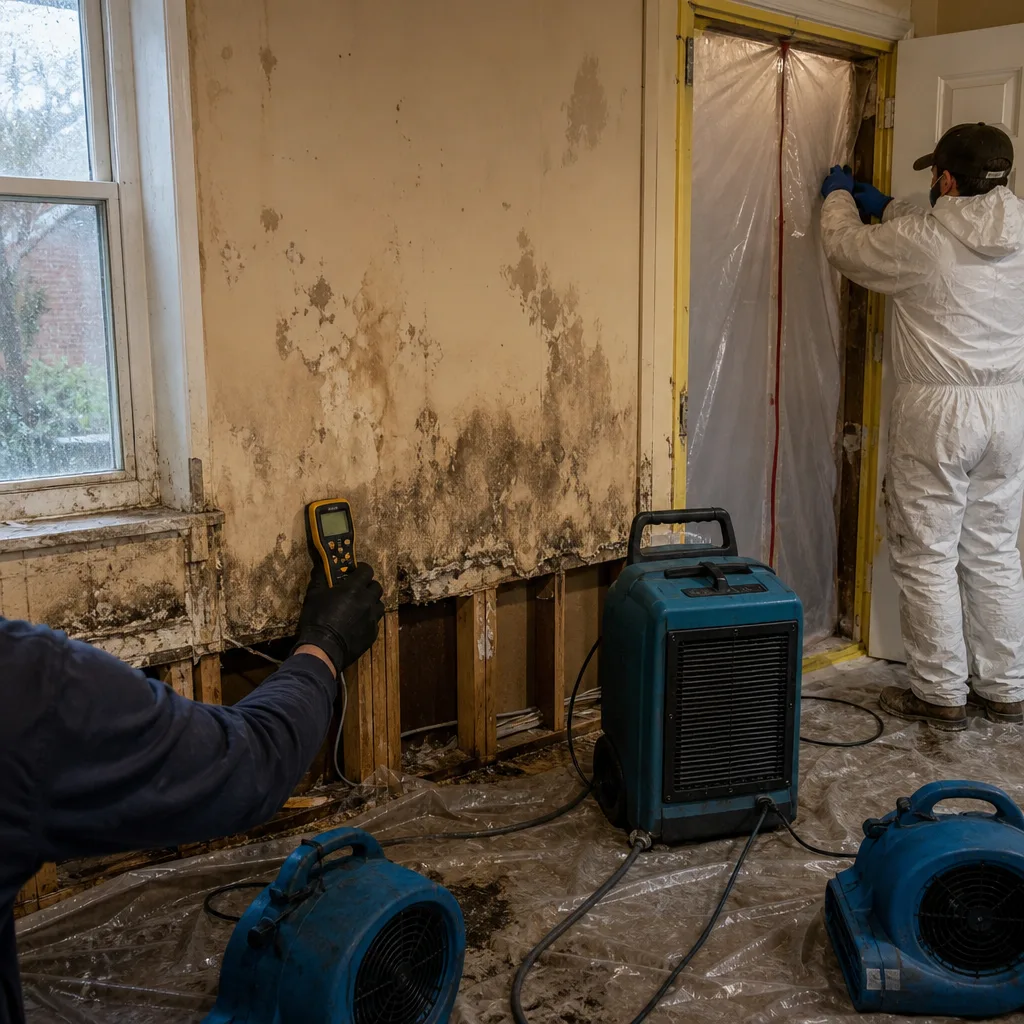 Before
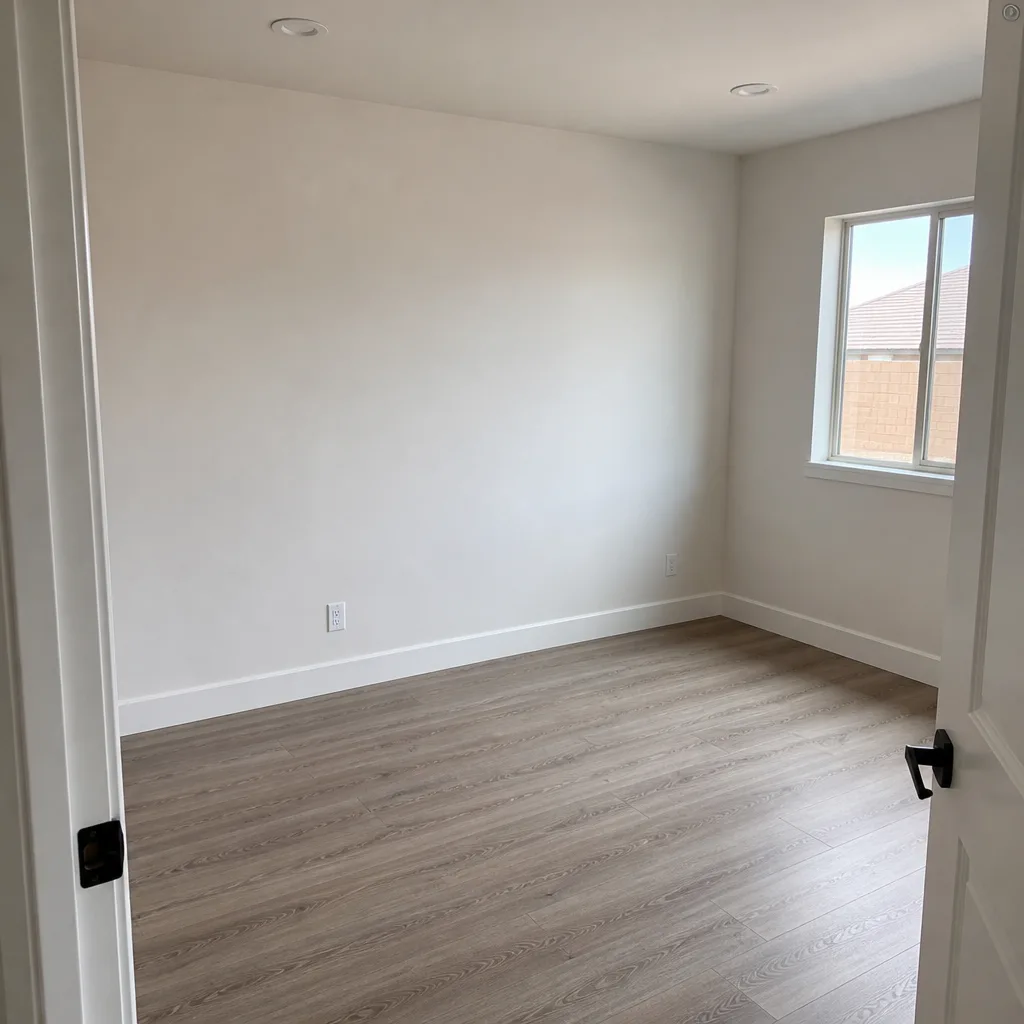 After
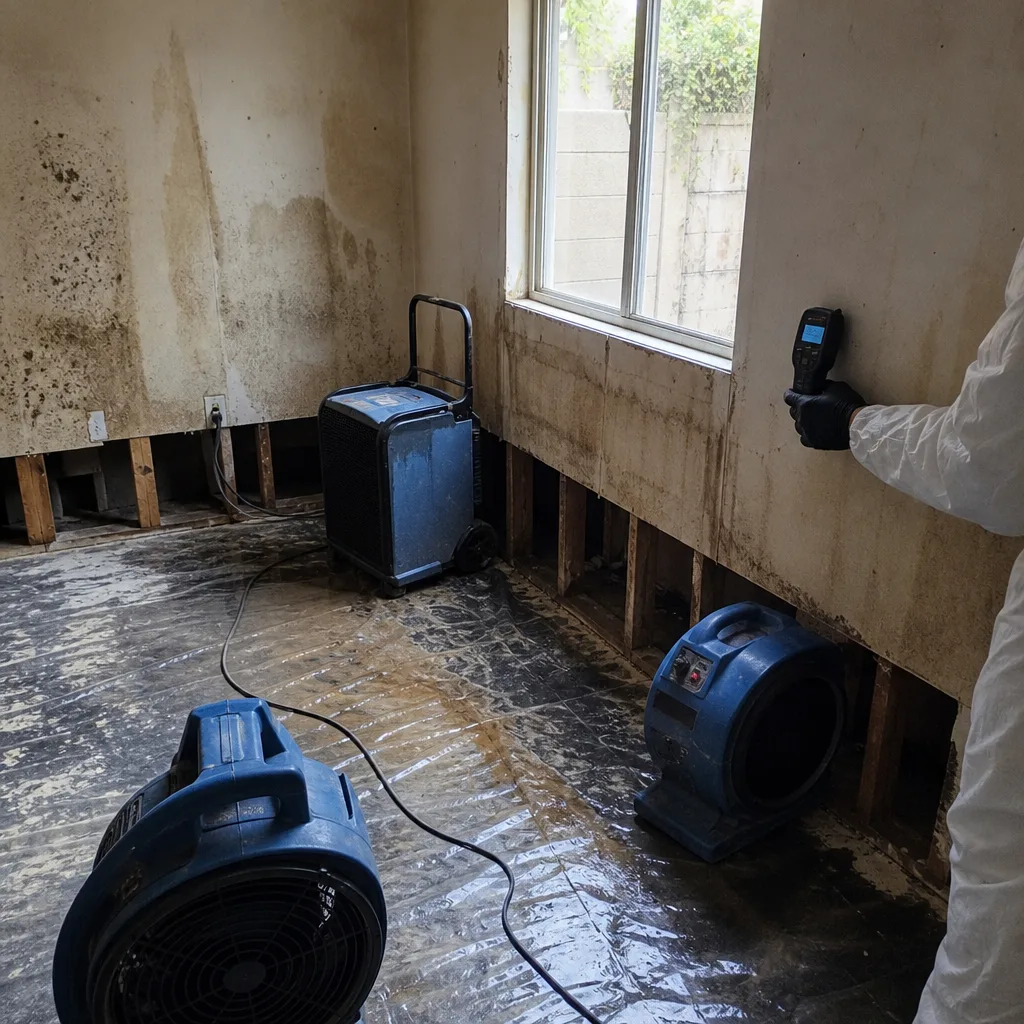 Before
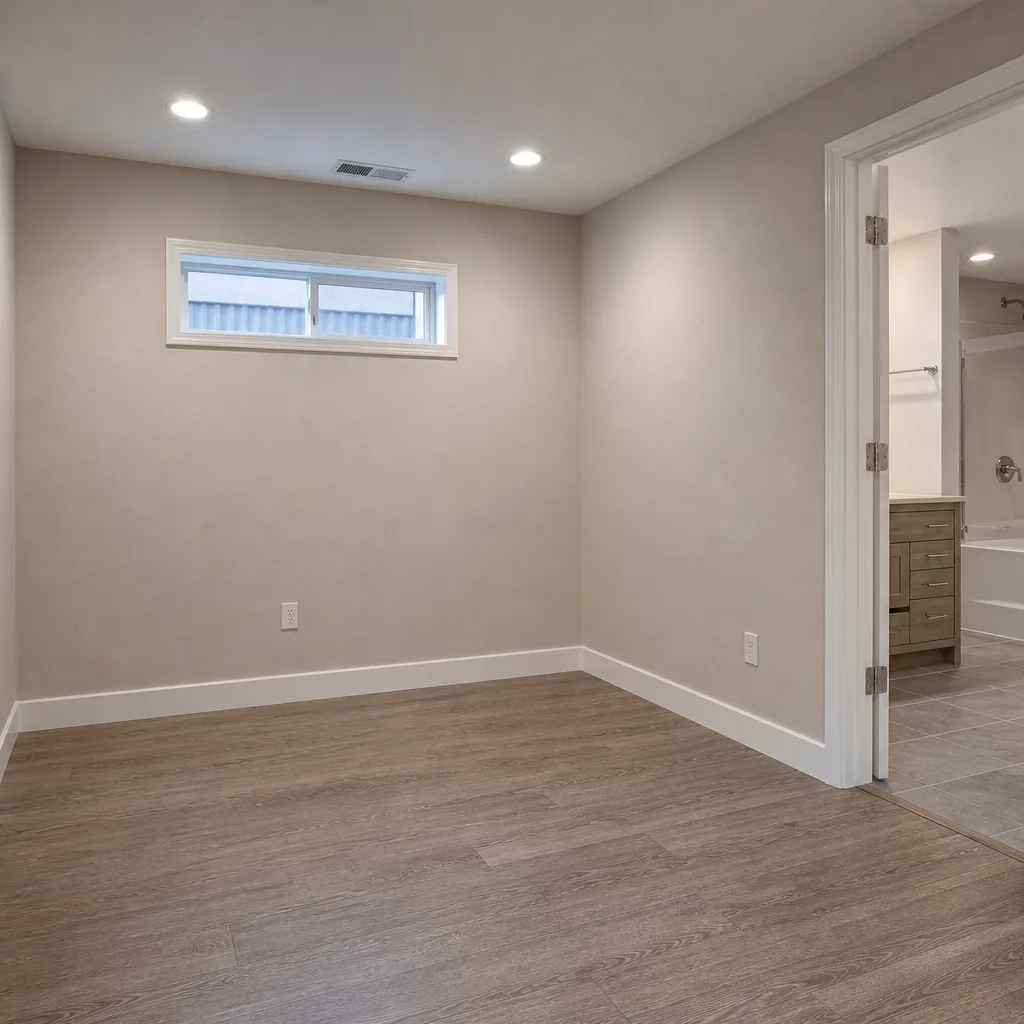 After
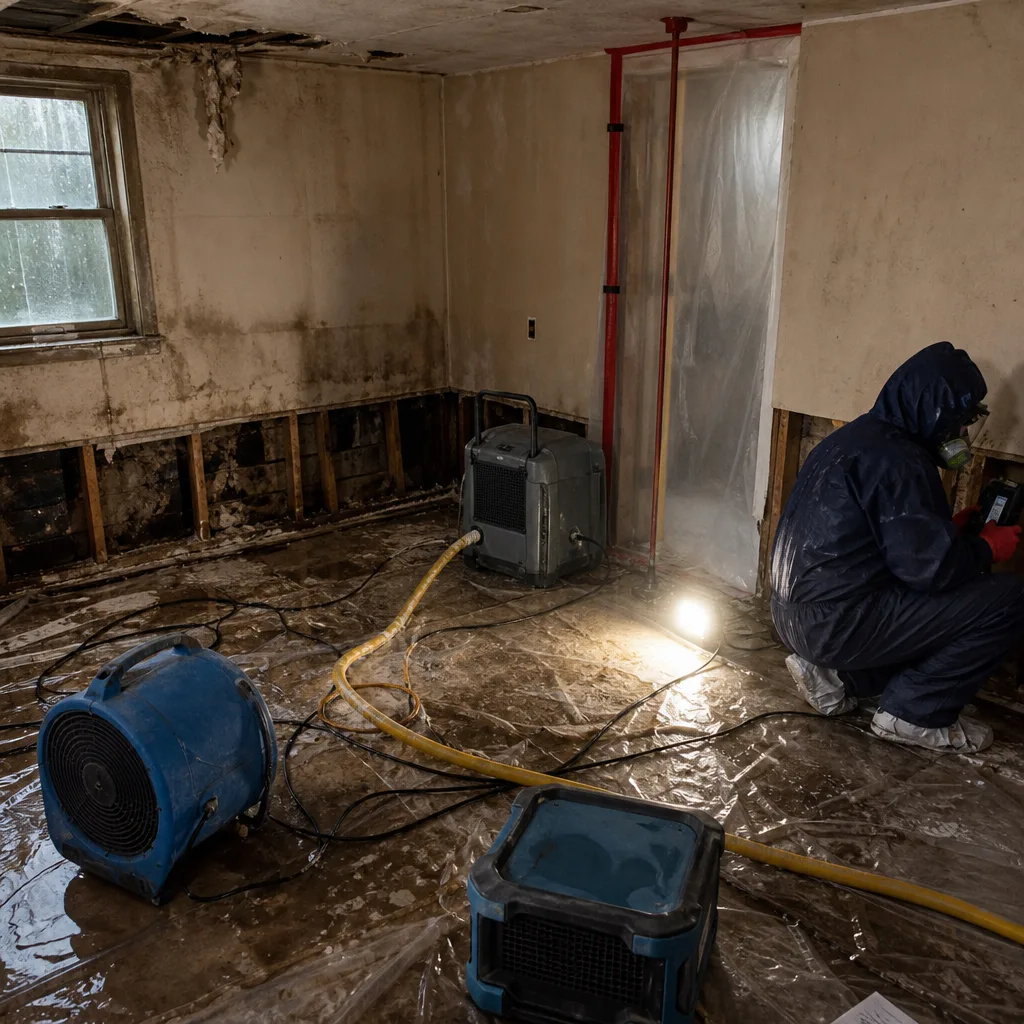 Before
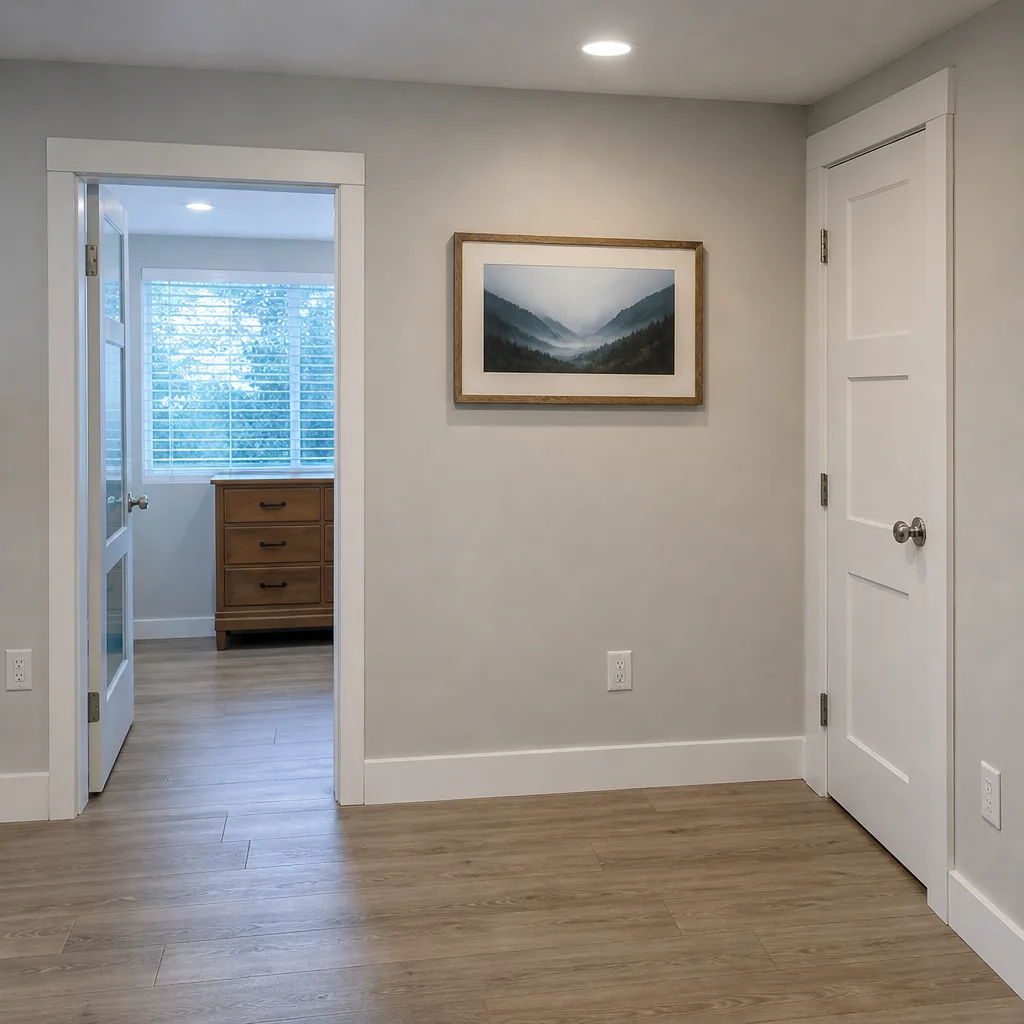 After