Last updated October 30, 2026
 Water damage drying
 Fire & smoke cleanup
 Mold remediation
 Storm response
 Sewage cleanup
 Reconstruction
Free visual inspection and a written scope of work before any mitigation begins - photos, moisture readings, and drying logs go in your claim file
The scope we write is the scope we bill. Anything new gets shown to you, in writing, before we touch it.
Get your free estimateDamage Restoration Permits, Codes & Inspections in NV: What You Need to Know
If a contractor tells you “we don’t need a permit for this” after replacing water-damaged drywall that touched electrical or structural framing, that’s not a time-saver. It’s a resale and insurance liability you’ll discover at the worst possible moment. Nevada’s permitting rules for post-damage repairs are specific, and they hinge on what got wet, what got cut, and what got rewired. This guide walks through the actual Clark County and Paradise thresholds for permits, the inspection sequence after water intrusion, how unpermitted work affects your homeowner’s insurance and title, and the contractor licensing rules that determine who can legally touch your home. By the end, you’ll know exactly which questions to ask before anyone swings a hammer.
Quick Answer
In Paradise and across Clark County, restoration work requires a permit when repairs touch structural framing, electrical systems, plumbing lines, or HVAC ductwork beyond cosmetic replacement. Simple surface work like paint, trim, and flooring replacement is typically exempt. Permit responsibility falls on the licensed contractor performing the work, but the legal and financial consequences of unpermitted work fall on the property owner. Always get the permit number in writing before demolition starts.
Restoration work we handle
Table of Contents
- When Clark County Requires a Permit for Restoration Work
- Repairs That Are Exempt: The Actual Thresholds
- Nevada Contractor Licensing and Restoration Scope
- The Inspection Sequence for Water-Damaged Homes
- How Unpermitted Work Affects Insurance and Title
- How to Request Permit Records and Inspection Sign-Offs
- Common Mistakes to Avoid
- When to Call a Professional
When Clark County Requires a Permit for Restoration Work
Clark County Building Department governs permitting for Paradise and the rest of unincorporated Clark County, including the Las Vegas Strip corridor. The permitting threshold for restoration work is not a gray area. It’s defined by the scope of repair, not the cause of damage.
A permit is required when any of the following are part of the restoration scope:
- Structural alteration or repair: Cutting into, replacing, or reinforcing any load-bearing wall, beam, header, ceiling joist, or floor joist.
- Electrical work: Replacing wiring, outlets, switches, or panels beyond device-for-device swaps. If water reached an electrical panel, the panel replacement itself triggers a permit.
- Plumbing repairs: Replacing supply lines, drain lines, or water heaters. A water heater replacement in Paradise requires a permit and a final inspection, every time.
- HVAC ductwork: Replacing or modifying duct runs, air handlers, or furnace components after water or fire damage.
- Fire-rated assemblies: Any repair to a firewall, fire-rated door, or fire-rated ceiling assembly after fire damage.
- Window and door openings: Changing the size of any exterior opening, even if you’re repairing damage around it.
In our experience in Paradise, the most common permit trigger after water damage is drywall removal that exposes electrical wiring. Clark County inspectors interpret “touching” electrical broadly. If a restoration crew removes drywall to dry a wall cavity and the wall contains wiring, the drying itself does not require a permit, but any repair to that wiring, or any relocation of outlets during rebuild, does. The distinction matters because homeowners often don’t know the difference until an inspector flags it.
A good rule for Paradise homeowners: if the damage requires cutting into a wall, ceiling, or floor beyond a small access hole, ask the contractor to put the permit determination in writing before work starts. A contractor who won’t put it in writing is making a decision they don’t want to own later.
Repairs That Are Exempt: The Actual Thresholds
Nevada law and Clark County’s administrative code exempt certain cosmetic and surface-level repairs from the permit requirement. Understanding these exemptions helps you spot when a contractor is stretching the truth.
Work that does NOT require a permit in Paradise:
- Paint, wallpaper, and cosmetic finishes regardless of square footage.
- Replacement of flooring materials: carpet, tile, vinyl plank, laminate, or hardwood, as long as the subfloor is not being replaced.
- Trim, baseboards, crown molding, and cabinet refacing.
- Countertop replacement in the same footprint.
- Replacement of plumbing fixtures (faucets, toilets, sinks) in the same location with no piping change.
- Cabinet hardware, door hardware, and non-structural door replacement in the same opening.
- Insulation replacement in accessible wall cavities where no structural or electrical work occurs.
- Drywall patch and repair of small areas (under one 4-foot by 8-foot sheet equivalent) where no structural or MEP systems are touched.
Here’s the nuance Paradise homeowners miss: the exemption applies to the specific task, not the entire job. A water damage restoration project can include both exempt and non-exempt work. Replacing wet drywall in a bathroom wall that has no plumbing or wiring behind it? Exempt. Replacing wet drywall in the same bathroom where the wall contains supply lines that got replaced? That portion is exempt, but the plumbing replacement is not. One permit may cover the whole job, or the plumber pulls a separate permit. If the general restoration contractor says “no permit needed for any of this,” they’re wrong as soon as plumbing, electrical, or structural work is in scope.
Climate matters here too. Paradise’s dry climate after a water event can create a false sense of security: surfaces dry quickly, but the moisture that wicked into framing, subfloors, and wall cavities creates conditions where hidden damage goes undetected. We rarely see a water loss in Paradise where the remediation scope stops at surface cosmetics once professional equipment is actually deployed. That means most real-world restoration projects in this market touch at least one system that triggers a permit.
Nevada Contractor Licensing and Restoration Scope
Nevada’s contractor licensing system is the least understood part of the restoration permitting picture, and it’s the part that creates the most liability for homeowners. The Nevada State Contractors Board (NSCB) issues licenses by classification and subclassification. Restoration work spans multiple classifications, which is why the contractor you hire matters as much as the permit itself.
Here’s how Nevada licensing actually intersects with a typical Paradise water loss:
- Water extraction and structural drying: No specific Nevada contractor classification covers emergency water mitigation on its own. However, any contractor performing mitigation work as part of a contract valued at $1,000 or more (including materials and labor) must hold a valid Nevada contractor’s license. The NSCB does not have a “water damage restoration” classification; most restoration firms operate under a general building (Class B) or specialty classification that covers the repair work.
- Mold remediation: Nevada does not issue a standalone “mold remediation” contractor license. Mold work falls under the general building or specialty contractor classification. The key requirement: anyone who both tests and remediates mold on the same property creates a conflict of interest under IICRC standards, and many Nevada insurers will reject claims handled that way. We’re an IICRC-certified operation, and we follow the industry standard: independent assessment first, then remediation.
- Fire damage repair: Requires a general building contractor license for any structural rebuild. Electrical, plumbing, and mechanical subcontractors need their own Nevada specialty licenses. A single “handyman” cannot legally coordinate these trades unless they hold the general building license themselves.
- Handyman threshold: In Nevada, a handyman (someone without a contractor’s license) can legally perform work under $1,000 total including materials and labor, and that work must be non-structural and non-MEP. The moment water damage requires drywall replacement, insulation, electrical assessment, or plumbing work, the $1,000 threshold is crossed essentially always in the Paradise market.
The practical takeaway for Paradise homeowners: anyone who shows up to handle a multi-room water loss with a pickup truck, a wet vacuum, and no contractor’s license is either breaking Nevada law or about to cross the $1,000 threshold illegally. That’s not a minor technicality. It determines who carries the liability if something goes wrong.
The Inspection Sequence for Water-Damaged Homes
When a water-damaged home in Paradise requires permits, the inspection sequence follows Clark County’s standard building permit process. Knowing what to expect reduces the chaos during an already stressful period.
Here’s the typical sequence for a permitted water damage repair in Paradise where electrical or structural work is involved:
- Permit application and plan review: The licensed contractor submits the permit application. For structural work, Clark County may require a structural engineer’s letter or stamped drawing before approval. For panel replacement, the electrician’s scope goes on the permit.
- Rough-in inspection: After demolition is complete and before drywall is installed, the inspector checks the exposed framework. This covers framing integrity, electrical rough-in (if rewiring happened), plumbing rough-in (if pipes were replaced), and mechanical work (if ducts were touched). The inspector is looking for code compliance in the systems that will soon be hidden behind drywall.
- Insulation inspection: If insulation was replaced, Clark County may require an insulation inspection before drywall goes up. This is especially common in exterior wall cavities and attics.
- Final inspection: After all repairs are complete, the inspector does a final walk-through. This confirms everything built matches what was permitted and that all systems function.
- Certificate of Occupancy or final sign-off: For single-family homes, the final inspection sign-off is the close-out document. Your contractor should provide you a copy.
One point many Paradise homeowners don’t realize: if water reached the electrical panel and the panel was replaced, the utility (NV Energy) can’t reconnect service until the electrical final inspection passes. We’ve seen this delay occupancy by days when a contractor didn’t pull the electrical permit early in the project. The same holds true for gas line work after a fire: Southwest Gas requires the mechanical inspection sign-off before relighting.
When we handle restoration projects that touch these systems, we coordinate inspections as part of the job file. The homeowner receives a copy of every inspection sign-off before we close the project. It’s standard practice for us, but it’s not standard practice across the Paradise restoration market.
How Unpermitted Work Affects Insurance and Title
This is the section that most guides skip, and it’s the one that saves Paradise homeowners real money. Unpermitted restoration work has three distinct consequences that compound over time.
1. Current-claim insurance complications. Most Nevada homeowner’s policies include language requiring the homeowner to mitigate damage and complete repairs “in accordance with all applicable laws and codes.” If your restoration claim includes unpermitted work and a subsequent loss occurs in the same area, the insurer can cite the unpermitted work as a coverage defense. We see this most often with water damage claims where a homeowner filed a claim, the contractor skipped the permit, and a year later a pipe leaked in the same wall. The second claim gets denied or reduced because the original repair wasn’t code-compliant.
2. Future-policy underwriting issues. Nevada insurers have access to building permit records through data aggregators. When you change carriers or renew, the underwriter may pull the permit history for your address. A water loss with no corresponding permit is a red flag. It doesn’t automatically disqualify you, but it triggers questions, and in a tightening Nevada insurance market, questions lead to higher premiums or non-renewal.
3. Title transfer disclosure requirements. Nevada is a full-disclosure state. Sellers must disclose known material defects and unpermitted work on the Seller’s Real Property Disclosure Form (SRPD). “Known” is the operative word. If you knew unpermitted work was done and didn’t disclose it, the buyer’s recourse is real and Nevada courts have consistently sided with buyers on this. Even if you genuinely didn’t know, the buyer’s home inspector will likely flag evidence of recent repairs, and the title company may request permit records. A clean permit file smooths the sale. An absent permit file is a negotiating weapon for the buyer.
Paradise has a high volume of rental and investment properties. For landlords, unpermitted work carries an additional risk: Nevada landlord-tenant statutes require habitability, and an unpermitted electrical or plumbing repair that later fails creates liability exposure that a permitted, inspected repair would not.
How to Request Permit Records and Inspection Sign-Offs
Pulling your permit history is free, and it’s one of the smartest due-diligence moves a Paradise homeowner or prospective buyer can make. Here’s the process.
- Start online. Clark County’s building department has an online permit search portal. You need the property address. The system shows all permits tied to that address, including building, electrical, plumbing, and mechanical permits.
- Request inspection records. If a permit shows as issued but not finaled (meaning inspections were never completed), that’s a red flag. An “open” permit on your property means the work was never officially approved. You can request the inspection history for any permit.
- Request paper copies if needed. For insurance or title purposes, you can request certified copies of the permit and final inspection sign-offs. There’s a small fee, and it takes a few business days.
- Add everything to your home file. Keep the permit, the final inspection sign-off, and the contractor’s license number together. When you sell, this file answers the disclosure question definitively. When you file an insurance claim, it proves the prior work was code-compliant.
- For open permits on a property you’re buying: Ask the seller to close them before closing. If they won’t, the cost of closing the permit falls on you, and that cost includes whatever repairs or corrections the inspector requires.
In Paradise, we’ve helped clients order their permit records before listing their homes for sale. A five-minute portal search frequently turns up open permits from years earlier. It’s far better to discover that before a buyer’s inspector does. For a full picture of what a restoration contractor should be providing you in that file, see our service pages on Water Damage Restoration in Paradise and for the broader scope of what gets inspected after a loss, Fire Damage Restoration in Paradise covers the inspection sequence for fire loss specifically.
Common Mistakes to Avoid
- Trusting “we don’t need a permit” without verification. The contractor saying this is not the one who bears the liability if they’re wrong. Call Clark County’s building department yourself or ask for the exemption in writing.
- Paying in full before final inspections pass. Once you’ve paid, your leverage to get the contractor to close out the permit disappears. Hold a reasonable retainage until the final inspection sign-off is in your hand.
- Allowing a handyman to coordinate a multi-trade restoration. When water damage requires electrical, plumbing, and drywall work, a handyman without a Nevada contractor’s license cannot legally pull the permits. You end up with no permits and no recourse.
- Thinking mitigation is the same as repair. Water extraction and drying usually don’t need permits. Rebuilding after the drying does. A contractor who handles mitigation but not rebuild should be clear about where the permit line falls.
- Skipping the permit to keep an insurance claim moving faster. The claim won’t move faster if the work fails inspection after the fact, or if the insurer flags the missing permit. Slow down once, get it right once.
- Assuming the insurance adjuster handles permits. Adjusters process claims. They do not pull permits, and they are not responsible for code compliance. That responsibility sits with the contractor and, ultimately, with you.
- Not asking for the permit number before demolition. The permit number is your proof the process is running. No permit number, no demolition. It’s that simple in Paradise.
When to Call a Professional
Some restoration permit situations are clear enough for a homeowner to navigate alone, but most are not. Call a licensed restoration contractor when water has entered wall cavities, ceilings, or floors where electrical wiring, plumbing, or ductwork is present. Call when a fire has touched any structural member, even if the surface char looks minor. Call when mold is visible on more than 10 square feet of material, or when the moisture source is unknown. And call when your insurance adjuster is asking for an IICRC-certified, licensed contractor. Valiant Water Damage offers free estimates in Paradise: call (844) 716-1094. We’re an IICRC-certified operation that handles water, mold, and fire restoration, and we pull permits the right way, every time. For mold-specific guidance, see Mold Remediation in Paradise and for more on how we approach restoration from the first call, visit the Valiant Water Damage home page.
See the difference
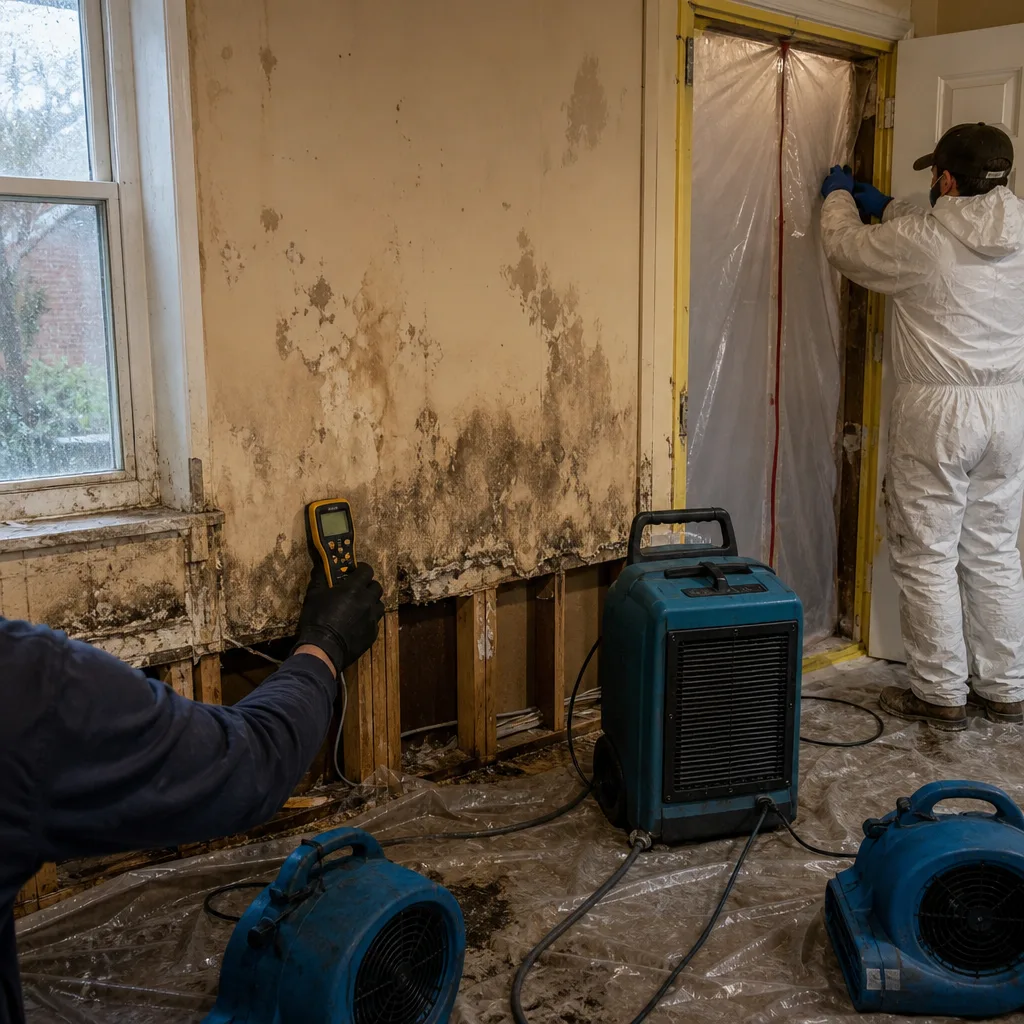 Before
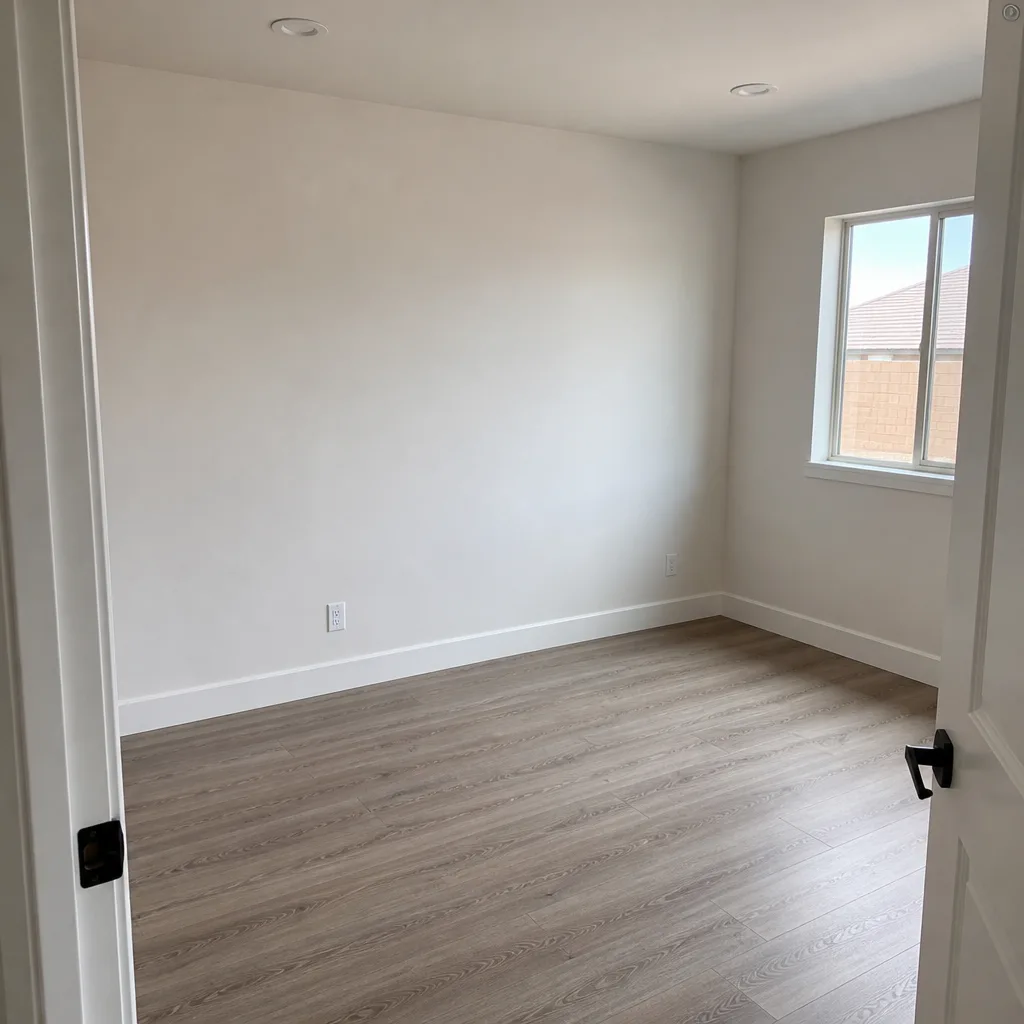 After
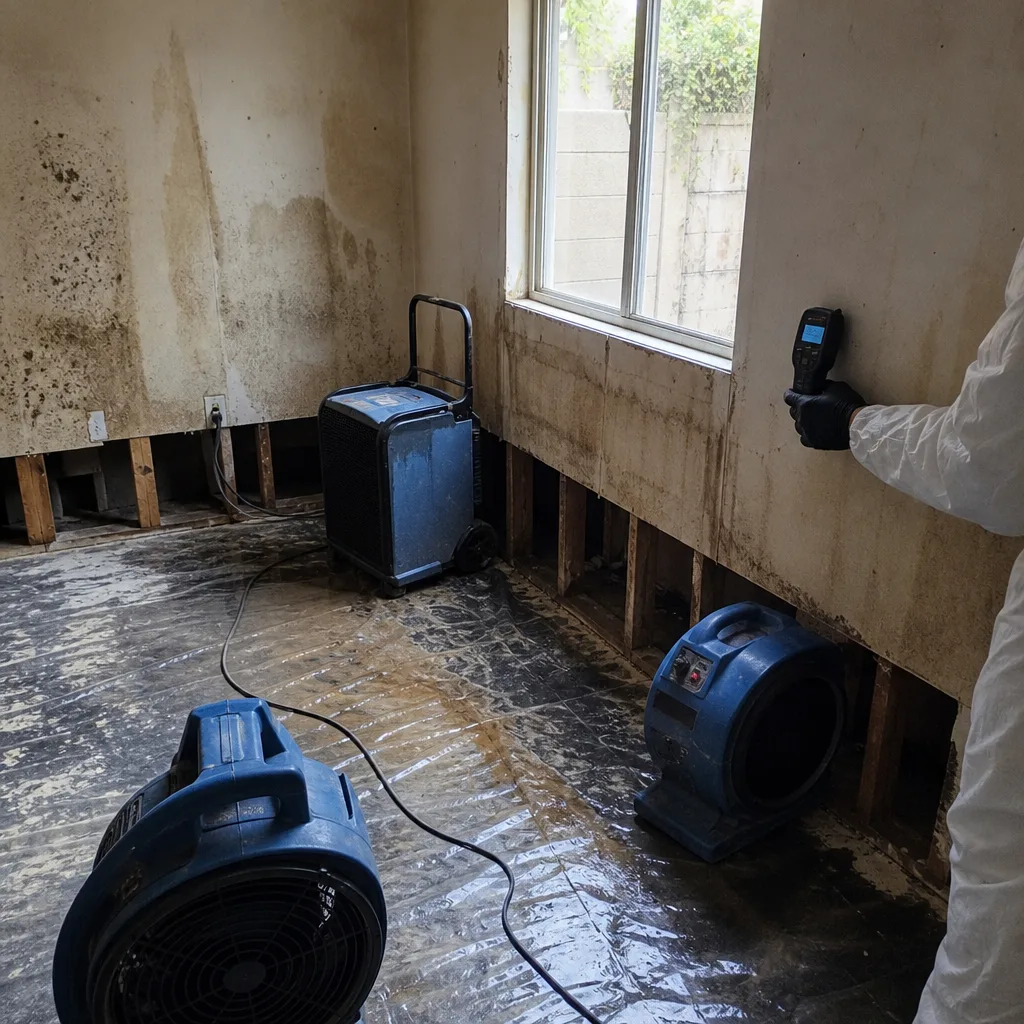 Before
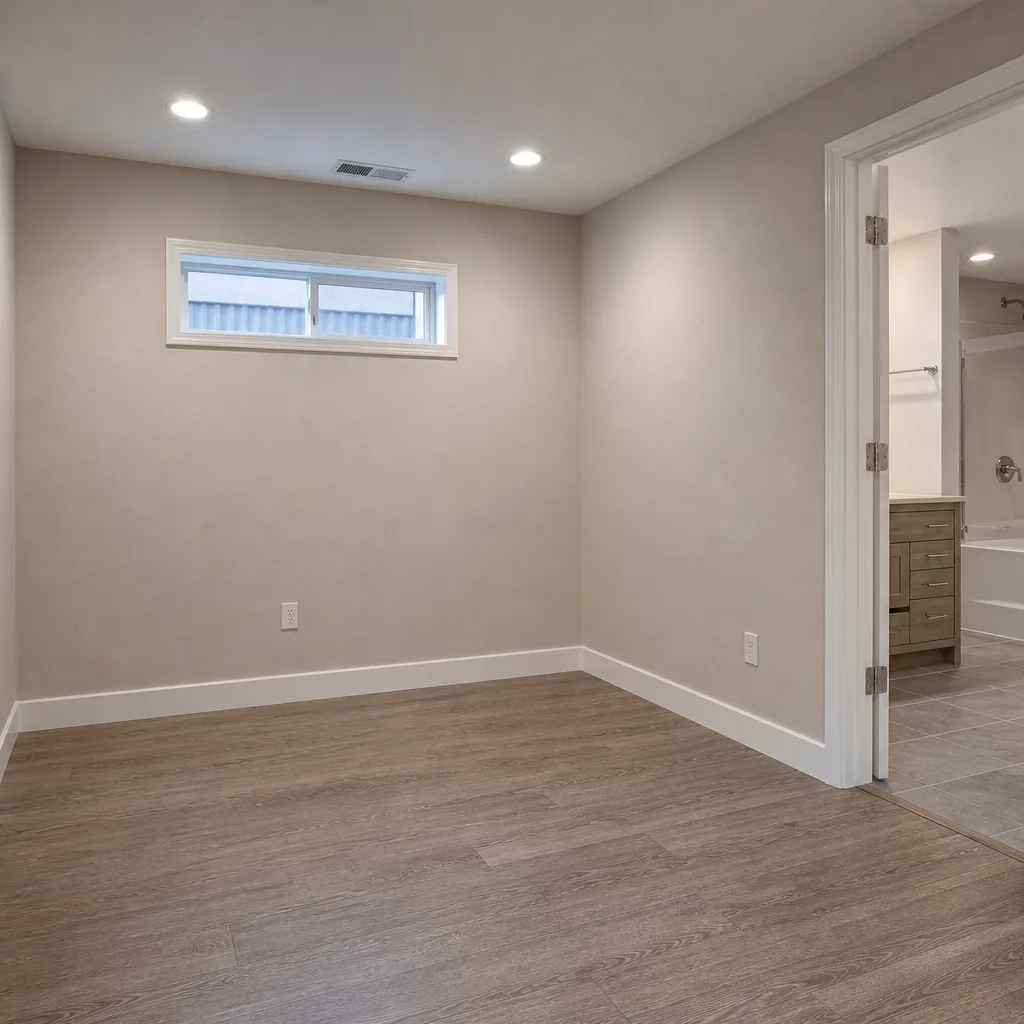 After
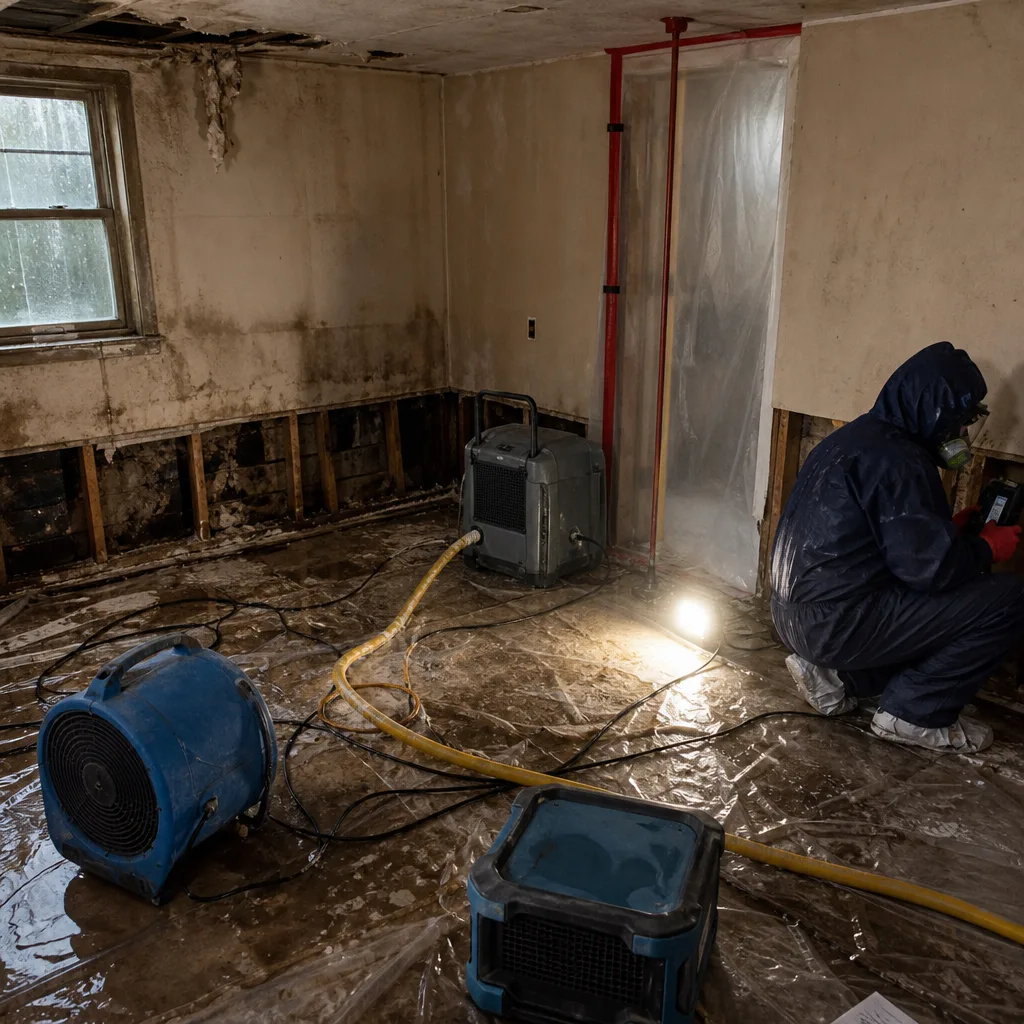 Before
 After
Frequently Asked Questions
You need a permit if the restoration scope includes structural repair, electrical work, plumbing replacement, or HVAC ductwork modification. Cosmetic surface repairs like paint, trim, and flooring replacement are exempt. Most real-world water losses in Paradise cross the permit threshold once drywall is removed to expose wiring or plumbing.
In Nevada, the licensed contractor performing the work is responsible for pulling the permit and scheduling inspections. If a contractor asks you to pull the permit as the homeowner, that’s a red flag. It usually means the contractor is not properly licensed for the scope of work. The property owner remains legally responsible for the permit’s existence regardless of who pulls it.
Your insurer can cite the unpermitted work as a coverage defense if the claim relates to the same area or system. Even if the current claim is in a different area, the underwriter may review your permit history at renewal and adjust your premium or decline to renew. The safest path is to verify permit status now and correct any gaps before you need to file again.
Permit fees in Clark County are calculated based on the valuation of the work being performed. A small electrical repair permit may cost under $100, while a full structural rebuild after fire damage can run into the thousands. Your contractor should include permit fees as a line item on the written scope of work you receive before any work starts.
Mold remediation itself does not have a standalone permit type in Clark County. However, if the remediation requires removing and replacing drywall that contains wiring or plumbing, or if the moisture source repair involves plumbing work, the underlying repair work triggers the permit requirement. The cleaning and containment portion alone typically does not.
Search the Nevada State Contractors Board website by the contractor’s name or license number. Confirm the license is active, check the classifications listed, and verify there are no disciplinary actions. For restoration work in Paradise, the contractor should hold a license classification that covers the specific repair scope they’re proposing.
The Bottom Line
Nevada’s permitting rules for restoration work are not obstacles; they’re protections. The homeowner who understands when permits are required, who verifies the contractor’s license, and who keeps a clean permit file emerges from a damage event with a safer home, a stronger insurance position, and a cleaner resale picture. The homeowner who skips the permit saves a few hundred dollars today and risks tens of thousands later. In Paradise, with its specific mix of older housing stock, high temperatures, and a restoration market crowded with unlicensed operators, the difference between a permitted and an unpermitted repair is the difference between a closed chapter and a ticking clock. When damage strikes, Valiant answers, and we answer with permits pulled, inspections passed, and paperwork in hand.
Written by the team at Valiant Water Damage, serving Paradise since 2016.