Last updated October 30, 2026
 Water damage drying
 Fire & smoke cleanup
 Mold remediation
 Storm response
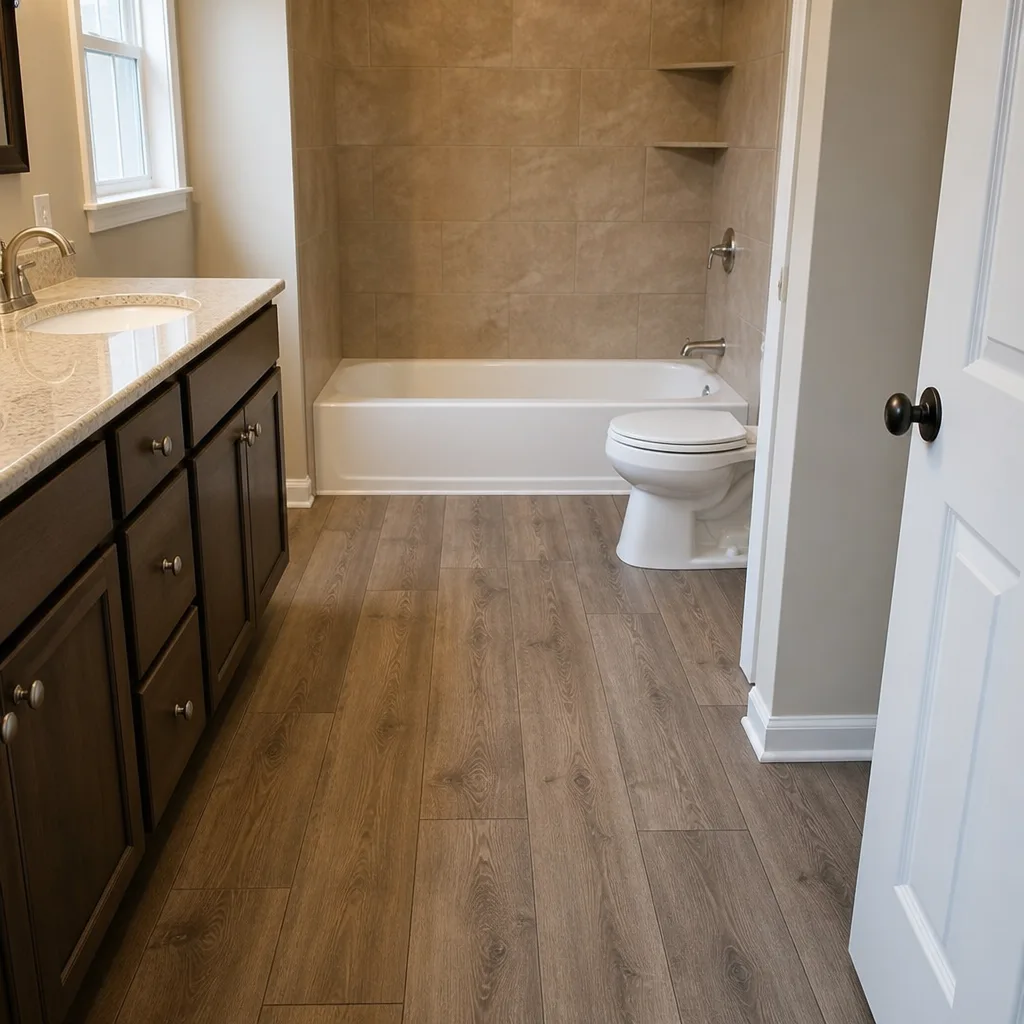 Sewage cleanup
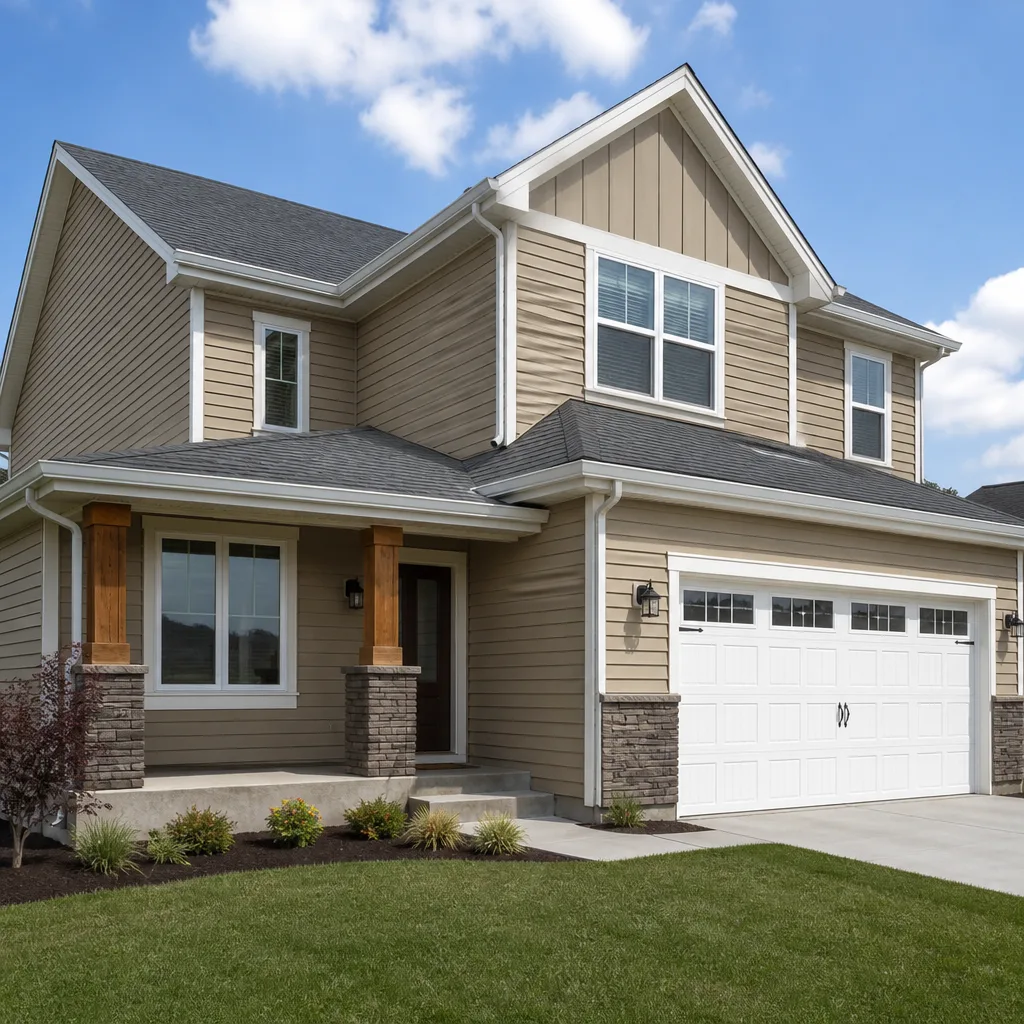 Reconstruction
Free visual inspection and a written scope of work before any mitigation begins - photos, moisture readings, and drying logs go in your claim file
The scope we write is the scope we bill. Anything new gets shown to you, in writing, before we touch it.
Get your free estimateDIY vs Professional Damage Restoration: The Paradise Homeowner’s Decision Guide
In Paradise, Nevada, a water leak that starts at 9 a.m. can trigger visible mold growth by Thursday afternoon. That’s not fearmongering – it’s the physics of the Mojave. Our summers hold 110°F for weeks, and when that heat meets trapped moisture behind drywall, the clock runs faster than homeowners expect. The DIY question isn’t about how handy you are. It’s about whether you know exactly where the water went, how deep it soaked, and what’s growing in the dark right now. This guide gives you a decision framework – honest about what a homeowner can reasonably handle, and blunt about where the financial math flips hard against self-performing the work – alongside a water damage restoration maintenance checklist for Paradise homeowners.
Restoration work we handle
Quick Answer
DIY damage restoration in Paradise is reasonable only for Category 1 water that stayed on non-porous surfaces and dried within 24 hours. Once water saturates drywall, carpet padding, or any concealed cavity, professional extraction and structural drying equipment becomes the only financially sound choice – because in this climate, incomplete drying turns a two-day cleanup into a mold remediation that costs four to seven times more. The containment threshold matters more than the size of the puddle.
Table of Contents
- When DIY Is Actually Reasonable
- The Containment Threshold: Where DIY Fails
- Why Rental Fans Make Moisture Worse in Paradise
- The 48 – 72 Hour Mold Window
- DIY and Insurance: What Carriers Actually Do
- The Real Cost of Partial DIY
- The Paradise Decision Matrix
- Common Mistakes to Avoid
- When to Call a Professional
- Frequently Asked Questions
- The Bottom Line
When DIY Is Actually Reasonable
We’re not going to tell you every drop of water needs a commercial team. That’s dishonest, and it erodes trust. There are scenarios in Paradise where a homeowner with a shop vac, some towels, and decent attention to detail can genuinely handle the job.
The line between DIY-appropriate and professional territory depends on three factors: the water source, the materials it touched, and the time before you discovered it. Clear water from a supply line – clean, potable water with no sewage or chemical contamination – on tile, concrete, or sealed hardwood that you caught within the hour? A thorough homeowner can manage that. The water never absorbed into anything that traps moisture.
Here’s the honest checklist for self-performing a small water incident:
- Source is Category 1 clean water – supply line, faucet overflow, or rainwater. No sewage, no appliance discharge with detergent, no exterior groundwater.
- Materials are non-porous – tile, sealed concrete, vinyl plank with no gaps. If it reached drywall, baseboards, or carpet pad, stop and reassess.
- You found it within the hour – not “sometime last night.” You saw the leak happen or caught the puddle while it was still visibly spreading.
- You can fully dry the area within 24 hours – unassisted airflow, no fans, no dehumidifier. If you need equipment to finish the job, the job already escaped the DIY lane.
- No electrical outlets or fixtures were submerged – water and wiring doesn’t care how careful you’re being.
If all five boxes check, you can reasonably handle this yourself. If any one of them fails, the containment threshold has moved. And in Paradise, the margin for error on that threshold is thinner than almost anywhere else in the country.
The Containment Threshold: Where DIY Fails
The moment water penetrates a porous building material – drywall, carpet pad, particle board, acoustic ceiling tile – the nature of the job changes. You’re no longer doing water removal. You’re doing structural drying, and structural drying requires measuring moisture content inside materials, not just surface conditions. A dry-looking wall can hold 25% moisture inside its cavity for weeks.
This is the threshold homeowners consistently underestimate. Drywall paper is engineered cellulose. It’s food for mold. Once the paper layer wicks moisture upward from the base, the wall becomes a vertical sponge. Even if the surface feels dry to the touch, the gypsum core and the paper backing behind the baseboard are actively encouraging microbial growth. A professional moisture meter reads what your fingers can’t. This is the same reason rental fans are deceptive – they dry the surface, which makes you believe the problem is solved, while the core of the wall stays wet.
Once water enters a wall cavity, the correct protocol involves controlled demolition of affected sections, drilling holes to inspect insulation and framing, and running targeted drying systems inside the void. This isn’t something anyone can do with a box fan and optimism. It requires pressure gauges, moisture mapping, and an understanding of drying dynamics that only comes from working with actual structural drying systems.
At this stage, the financial risk inverts. A homeowner trying to “save money” by not opening a wall will spend more on the mold remediation later than the original water restoration would have cost. We’ve watched this happen across Paradise neighborhoods. The conservation instinct is understandable, but with water inside a wall, it’s like ignoring a toothache because x-rays are expensive.
Why Rental Fans Make Moisture Worse in Paradise
This is the single most counterintuitive part of DIY damage restoration, and it’s specific to desert climates. You’d think extra airflow always helps. It doesn’t. In Paradise’s ambient conditions – low humidity, high heat – rental air movers without commercial-grade dehumidification can actually drive moisture deeper into building assemblies.
Here’s the mechanism: an air mover accelerates evaporation at the surface. That’s its job. Water molecules leave the material and enter the air. The problem is, low-humidity desert air can only hold so much water vapor before it reaches saturation within a confined space like a wall cavity. When a fan forces that continuous evaporation without removing the moisture from the air, the vapor migrates toward cooler areas – which, in a 110°F Paradise home with even one functioning AC vent, means inside walls, under cabinets, and into insulation. The moisture doesn’t disappear because you blew air across it. It relocates to the places you’re not watching.
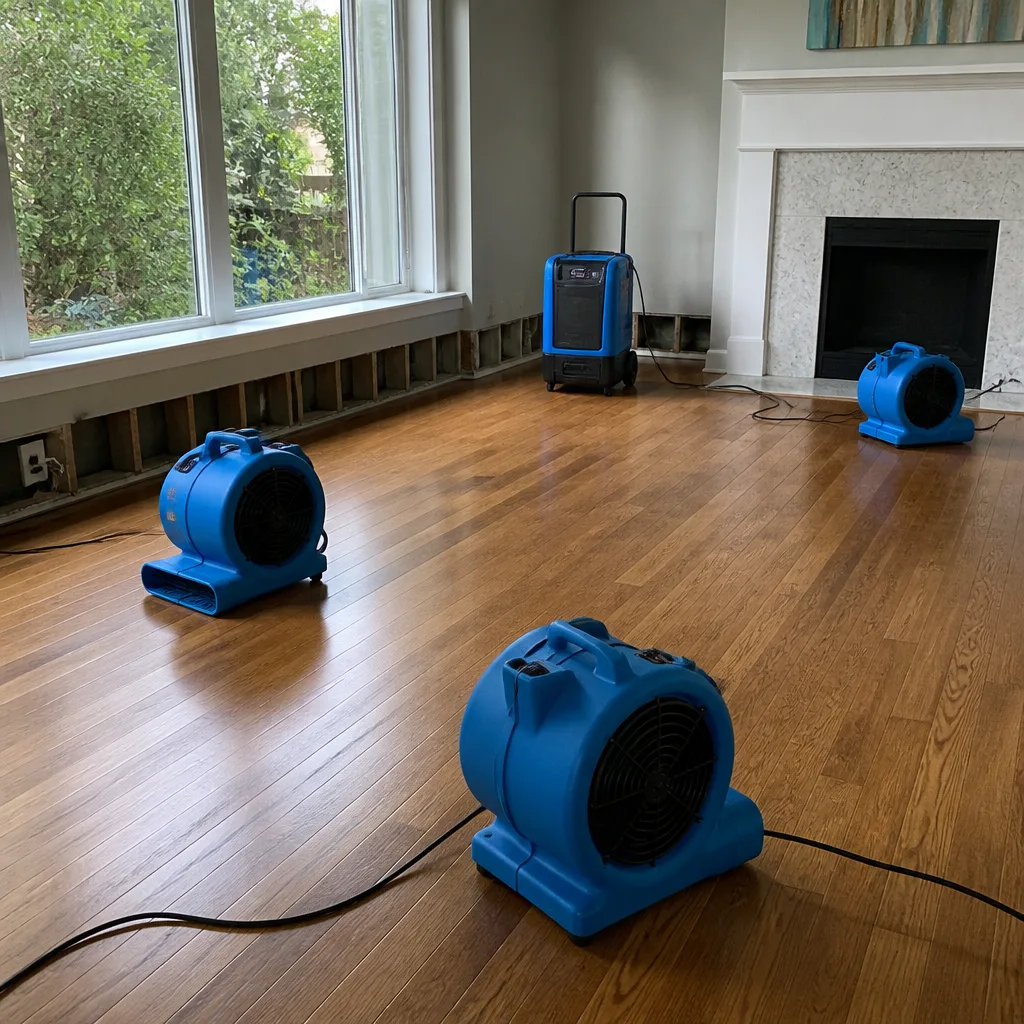
Professional structural drying pairs every air mover with a dehumidifier rated for the cubic footage of the affected area. A Dri-Eaz or Phoenix commercial-grade dehumidifier removes 40 to 70 pints of water from the air per day, measured at AHAM standards. A rental fan removes zero. Without the dehumidification balance, the fan is creating evaporation pressure with nowhere for the vapor to go.
In humid climates, this problem is obvious because the air itself feels wet. In Paradise, the low outdoor humidity masks it. Homeowners believe the desert will “cure” their wall the same way it dries a wet towel off a pool. But inside an enclosed property, the desert doesn’t help. It just makes the air greedier – and that greed pushes moisture deeper into dry construction materials.
This is also where the Injectidry distinction matters. When moisture is trapped inside a wall cavity behind intact drywall, the professional answer is not demolition. It’s precision injection drying – placing controlled airflow into the void through small, sealed ports so the wall dries in place. Most rental setups can’t do this, and most DIY attempts don’t know it exists. The result is unnecessary demolition for the professionals who don’t have the equipment, or incomplete drying for the homeowner who doesn’t know the cavity is still wet.
The 48 – 72 Hour Mold Window
Active moisture in drywall can produce visible mold growth in 48 to 72 hours when ambient temperatures exceed 85°F. Paradise spends June through September well above that threshold. What this means practically: a slab leak that soaks the bottom six inches of a wall on a Tuesday in July will show visible fungal growth by Friday. This isn’t a worst-case scenario. It’s the documented biological timeline for mold colonization under ideal conditions – and Paradise summers are near-perfect for it.
The window doesn’t start when you notice the water. It starts when the water contacted the material. A leak behind a kitchen cabinet or under a bathroom vanity can run for days before any visible sign appears on the finished surface. By the time you see a stain, the material may have been wet for 72 hours already – meaning the mold clock has already expired. Staining itself is often a late indicator, not an early warning.
This is the practical argument for moisture metering after any incident where water may have reached concealed materials. A professional moisture assessment reads elevated levels through the surface, identifying water damage before it becomes visible. In a climate where the window is this narrow, early detection isn’t a luxury. It’s the only way to stay ahead of the biology.
The summer window is especially unforgiving because of AC cycles. When your air conditioner runs, it lowers indoor humidity – which sounds helpful, but it also lowers the surface temperature of building materials. That temperature differential pulls water vapor toward those cool surfaces, and the condensation cycle accelerates wall-cavity saturation. The AC isn’t drying your soaked wall. It’s helping water vapor find it.
DIY and Insurance: What Carriers Actually Do
Insurance carriers have seen every version of DIY water damage. They recognize patterns. A homeowner who shops vacs the obvious water, reports the loss honestly, and genuinely didn’t realize the wall was still wet is one thing. A homeowner who attempted structural drying with rental equipment, failed, and then filed a claim for the resulting mold is another. The carrier’s position matters for your coverage decisions.
Most homeowner policies require “reasonable mitigation” after a water event. You’re obligated to prevent further damage. The question carriers care about: did your actions prevent further damage, or did they delay professional response and enlarge the loss? If a later mold claim shows evidence of incomplete drying – meaning a professional would have identified and corrected the moisture at the time of the original event – the carrier can argue that the mold was a secondary event caused by inadequate mitigation. That gives them a coverage defense.
If you handle any portion of the work yourself, documentation is non-negotiable. What you’ll need:
- Photographs of the original damage before any cleanup begins – wide shots and close-ups.
- A written log of when you discovered the water, the source, your response actions, and the time each action occurred.
- Receipts for any rented or purchased equipment, with brand and model information.
- Moisture readings if you own or borrow a meter – before and after your drying attempt.
- Any communication with a restoration company, even if you didn’t hire them.
Carriers view self-performed work as unverified. A professional company produces a drying log, moisture map, and photo documentation that meets adjuster expectations – an industry-standard record that survives coverage review. A homeowner’s phone photos and good intentions don’t carry the same weight in a disputed claim.
The one thing that consistently helps homeowners after a DIY attempt is honesty about scope. If you found water behind drywall, say so. If your rental fan ran for three days but the baseboard still looks swollen, say so. Concealing the failed attempt because you’re embarrassed is the fastest way to give your carrier a legitimate reason to deny the amplified loss.
The Real Cost of Partial DIY
Let’s put actual numbers on the table for Paradise. These are our market’s current ranges, not national averages.
| Item | DIY / Rental Cost | Professional Cost (Paradise Range) |
|---|---|---|
| Shop vac rental (24 hrs) | $35 – $60 | Included in professional service |
| Air mover rental (each, per day) | $25 – $45 | Included in professional service |
| Dehumidifier rental (each, per day) | $60 – $90 | Included in professional service |
| Moisture meter (basic consumer model) | $30 – $80 | Professional-grade included |
| Time off work (estimated 2 – 3 days) | $300 – $700 | Minimal – we work while you work |
| Replacing materials you couldn’t save | $150 – $500 | Salvaged where safe, replaced where not |
| Mold remediation if DIY drying fails | $1,800 – $4,500 | Avoided through proper initial drying |
The math looks like this: a homeowner who rents two air movers, a dehumidifier, buys a moisture meter, and takes a day or two off work has spent $400 to $1,200 before replacing a single piece of material. A professional response for the same Class 2 water loss in Paradise typically runs $1,500 to $3,000 for extraction, drying, and minor structural restoration. The “savings” of DIY is mostly an illusion created by not accounting for the risk-adjusted cost of failure.
The real killer is the mold scenario. If the DIY drying doesn’t fully address the cavity moisture and mold appears six weeks later, you’re now facing a Mold Remediation in Paradise scope that runs four to seven times the original water restoration cost. That’s not a scare tactic. That’s our actual claims history in this market.
The insurance implication adds another layer: a failed DIY attempt that leads to mold can complicate or reduce your coverage, while a professional Water Damage Restoration in Paradise with proper documentation supports your claim from day one. The cost difference isn’t between $400 and $2,500. It’s between $400 and $6,000 with a possible coverage denial in between.
The Paradise Decision Matrix
Here’s a simple decision framework for homeowners in Paradise, Nevada. Run through it when you discover water.
- Is the water clean? Yes, go to 2. No – sewage, exterior floodwater, or appliance discharge – call a professional. This is a Category 2 or 3 event, and the microbial load is already dangerous.
- Did it touch porous materials? No, go to 3. Yes – drywall, carpet, hardwood, insulation – call a professional. Porous material means structural drying is required.
- Can you dry it in under 24 hours without equipment? Yes, you’re in DIY territory. No, go to 4.
- Has it been wet longer than 24 hours already? Yes – call a professional. The mold clock is already running in Paradise’s heat.
- Is the water near electrical, HVAC, or plumbing penetrations? Yes – call a professional. Confined spaces with utilities are how injuries and hidden damage happen.
Run this honestly. If you reach step 2 and say yes, the containment threshold is crossed, and no amount of fan rental or surface drying will pull that moisture out of the material. You need extraction, moisture mapping, and structured drying – and you need it before the 72-hour mark arrives with visible mold.
This isn’t a self-serving rule. We’re the ones who get called after the DIY fails, and the work is always bigger and more expensive than it would have been on the first day. The decision matrix exists because we’ve watched the other path play out too many times across Paradise.
Common Mistakes to Avoid
- Trusting surface dryness. A wall or floor that feels dry to the touch can still be holding 15 – 25% moisture content inside. Without a moisture meter, you’re guessing. In Paradise’s dry air, surface evaporation creates a false “dry” signal while the core stays wet.
- Running fans without dehumidification. As covered above, air movers in a contained space without commercial dehumidification relocate moisture rather than remove it. Rental setups rarely include the right pairing.
- Waiting to see if it “dries on its own.” Every hour of wait time in Paradise is an hour against the 48 – 72 mold window. A leak in July has already used up a quarter of the clock before you even notice it.
- Using household bleach on mold. Bleach kills surface mold but leaves the root system intact, and it adds moisture to porous materials. It doesn’t address the moisture source, which is the actual problem. Proper remediation is about removal and condition correction, not surface disinfection.
- Filing an insurance claim without documentation. If you did any DIY work before calling the carrier, and you don’t have photos and a written log, the adjuster will assume the worst. Documentation is the difference between a covered claim and a dispute.
- Ignoring water that touched a shared wall. In attached Paradise properties, a wall cavity shared with a neighbor’s unit creates a double liability. Water migration into common walls affects property lines, HOA responsibilities, and neighbor relations. This is never a DIY situation.
- Assuming a small stain means a small problem. Visible staining is the tip. The water traveled along framing, under baseplates, and through insulation before it showed up on your wall.
When to Call a Professional
Call a professional when water has touched drywall, carpet pad, insulation, or any concealed space; when the source is gray or black water; when more than 24 hours have passed since the event; when the property is multi-story or attached; or when you simply don’t know where the water went and don’t own the tools to find out. In Paradise’s heat, every hour of hesitation works against you. A professional assessment with a moisture meter takes 30 to 45 minutes and tells you exactly what you’re facing. Valiant Water Damage offers free estimates in Paradise – call (844) 716-1094. If you’re on the fence, the assessment answers the question honestly.
Frequently Asked Questions
Professional water damage restoration in Paradise typically ranges from $1,500 to $3,000 for a Class 2 water loss involving one or two rooms, depending on the extent of structural drying required and the amount of material that needs replacement. A free estimate will give you an exact number based on your specific situation. Call (844) 716-1094 – we’ll assess it honestly and tell you if it’s something you could handle yourself.
Yes, if the water is clean, the surfaces are non-porous, and you can fully dry everything within 24 hours without equipment. No, if the water touched drywall, carpet pad, insulation, or any concealed cavity. Nevada doesn’t require a license for drying your own floor, but it also doesn’t reset the mold clock or change the physics of moisture migration in desert heat.
Most policies exclude mold that resulted from inadequate mitigation, and a carrier can argue your DIY attempt failed to properly address the original water event. If you’ve already attempted DIY work, document everything – photos, receipts, moisture readings, and a written timeline. Honest, thorough documentation is your best protection when the adjuster reviews the claim.
Visible mold can appear in 48 to 72 hours when drywall stays wet and ambient temperatures exceed 85°F – which is most of June through September in Paradise. The clock starts when water contacts the material, not when you see the stain. A leak hidden behind a cabinet can be past the window before it’s visible.
You need dehumidification. Paradise’s low outdoor humidity is deceptive – inside a wall cavity, the air saturates quickly and the vapor migrates to cool surfaces rather than leaving the structure. Outdoor desert conditions don’t cure interior moisture. In fact, the temperature differential created by your AC can make migration worse. A professional setup pairs air movers with commercial dehumidifiers rated for the space, not just the room’s square footage.
Water damage restoration addresses the moisture event: extraction, structural drying, and replacement of saturated materials. Mold Remediation in Paradise addresses the biological consequence: containing, removing, and correcting the conditions that caused fungal growth. Many water events in this climate require both if the drying window was missed. A full-spectrum restoration specialist – one that handles water, mold, and Fire Damage Restoration in Paradise – means you’re not managing multiple contractors during an already demanding event. One call covers water, mold, and fire. Call (844) 716-1094 to speak with a certified technician.
The Bottom Line
The DIY vs professional decision in Paradise comes down to one question: did the water stay on surfaces you can dry, or did it enter materials that hide moisture? Clean water on tile you caught immediately is yours to handle. Water in drywall, carpet pad, insulation, or any concealed cavity is a professional job – not because you lack capability, but because you lack the metering and drying equipment to verify the outcome. In a climate where mold grows in two to three days, guessing wrong costs four to seven times more than the original restoration would have. If you’re unsure, get a professional moisture assessment. It’s free. The knowledge you gain in 45 minutes will save you from the outcome we’ve watched too many times. Valiant Water Damage is here when you need us – and honest when you don’t.
Written by the team at Valiant Water Damage, serving Paradise since 2016. Explore more guides & resources on protecting your home.
See the difference
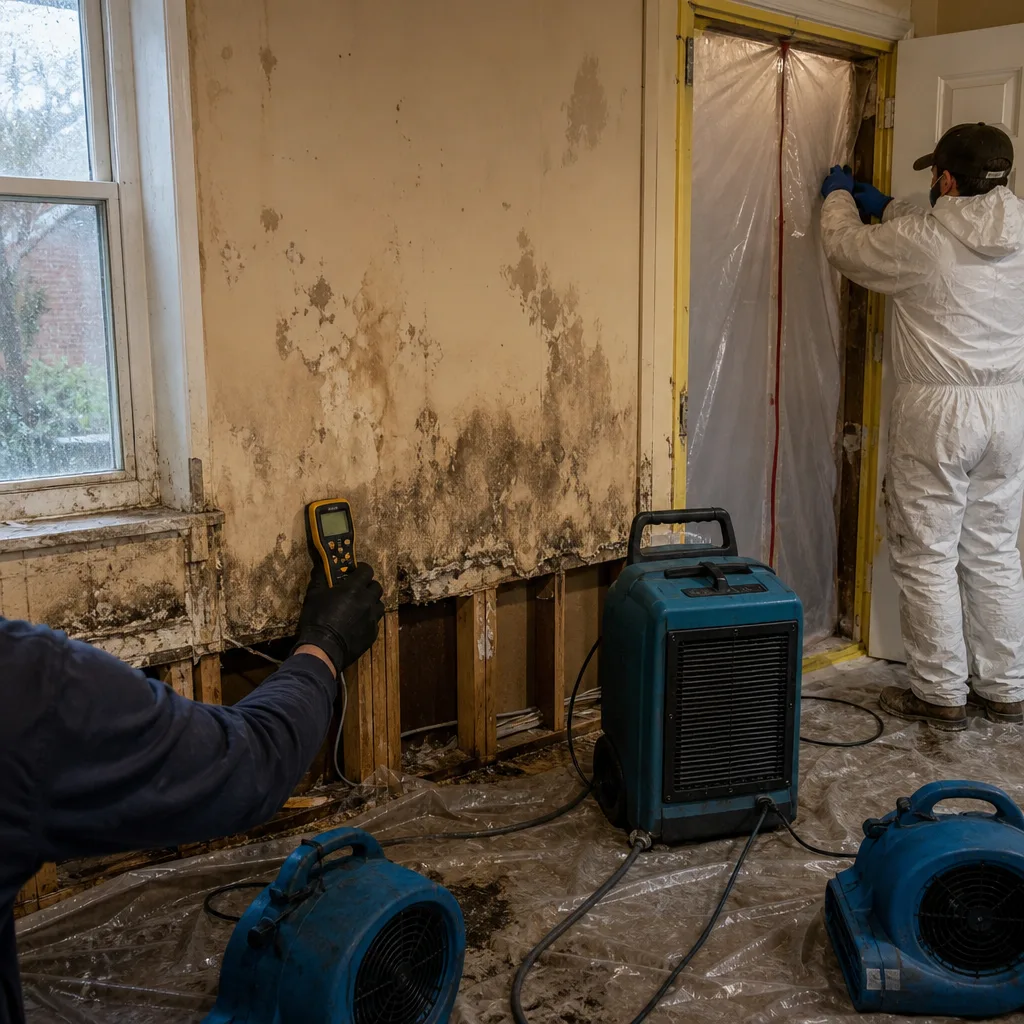 Before
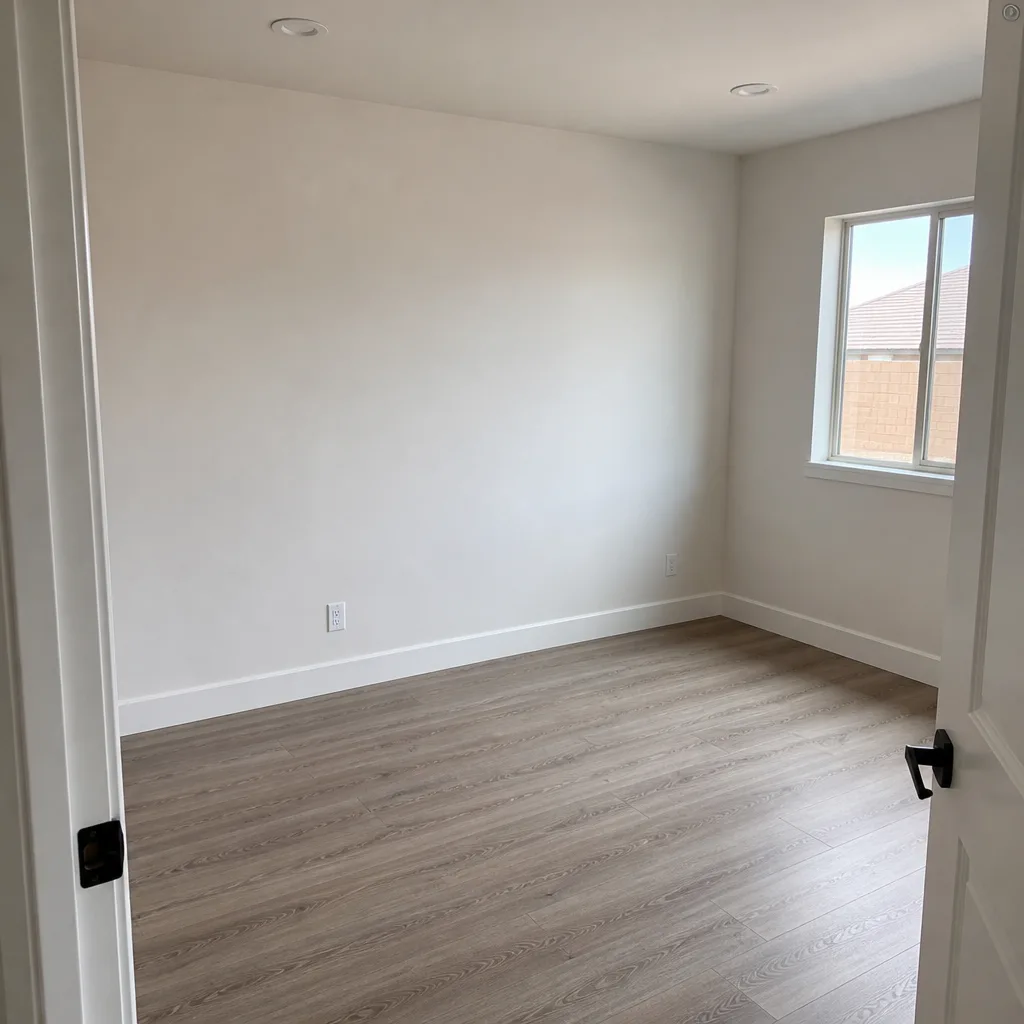 After
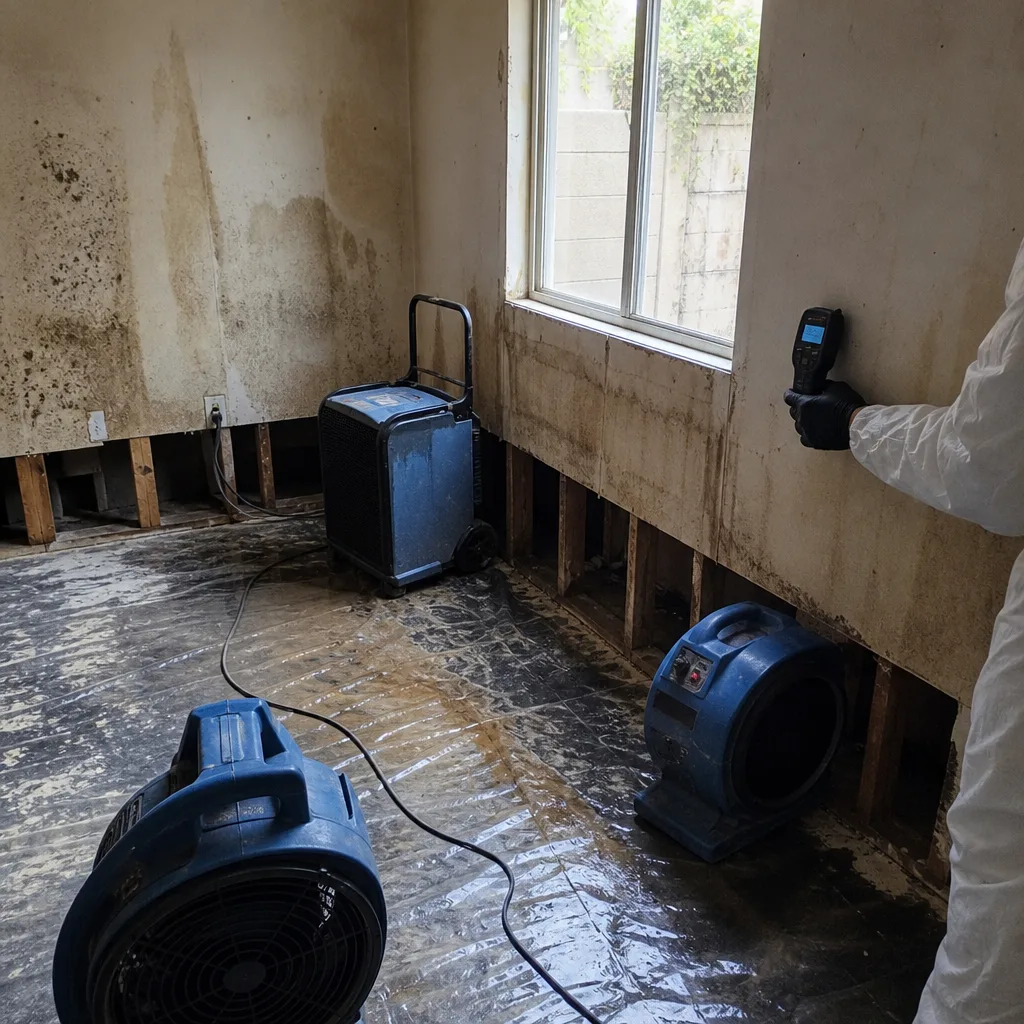 Before
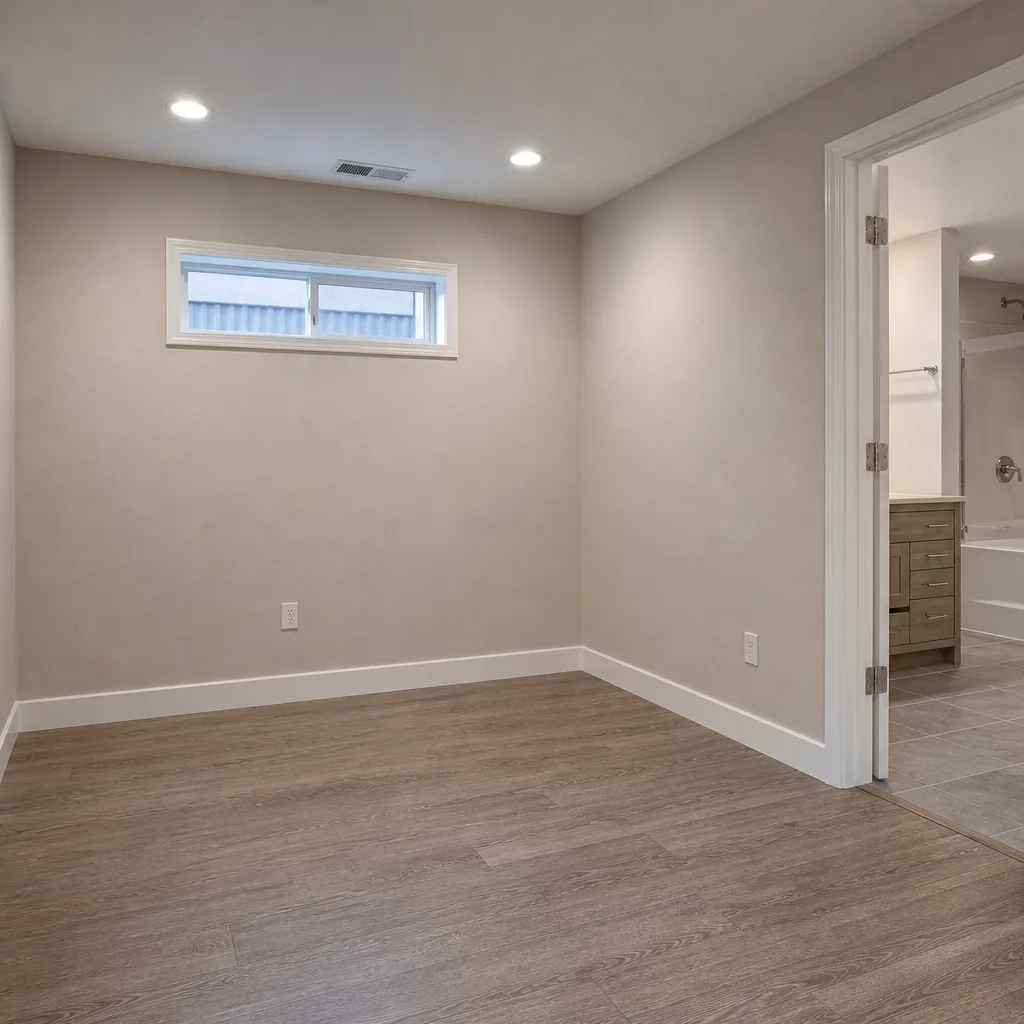 After
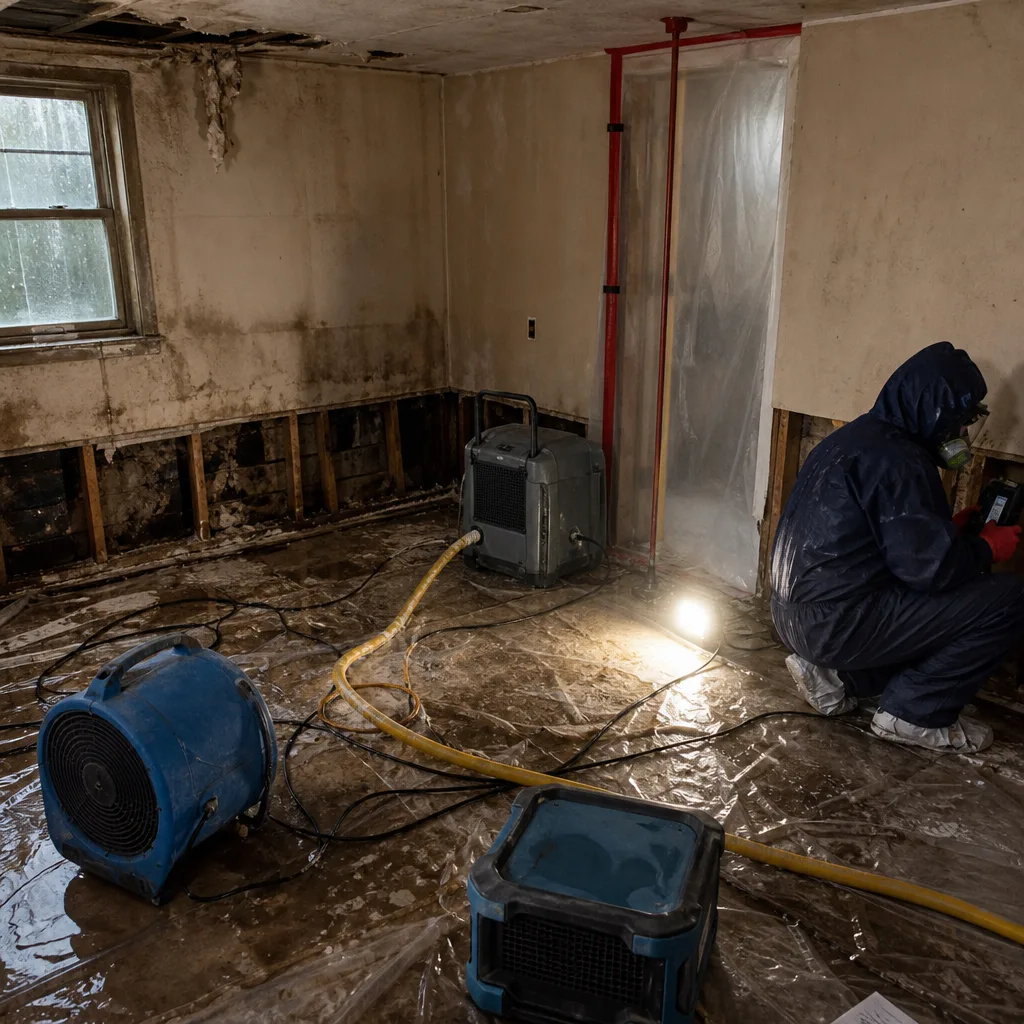 Before
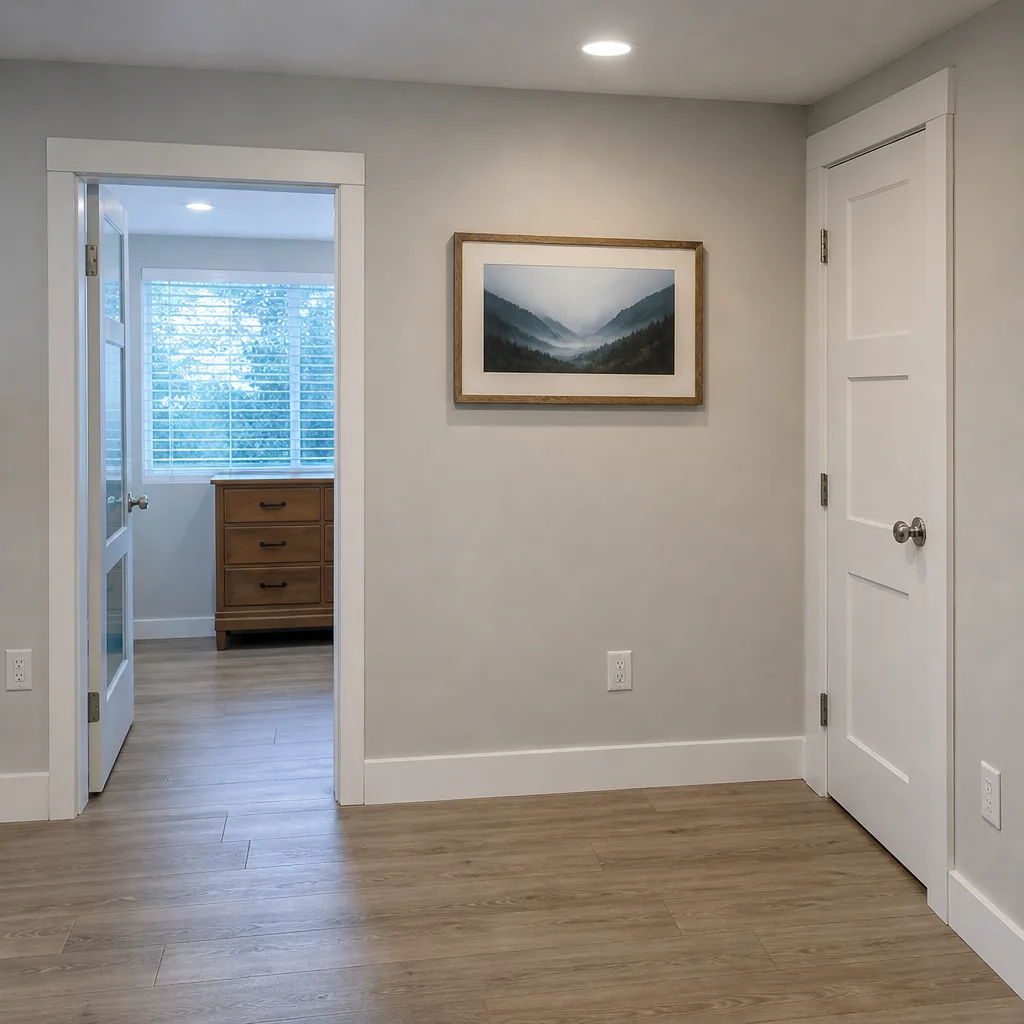 After