
Last updated October 30, 2026
 Water damage drying
 Fire & smoke cleanup
 Mold remediation
 Storm response
 Sewage cleanup
 Reconstruction
Free visual inspection and a written scope of work before any mitigation begins - photos, moisture readings, and drying logs go in your claim file
The scope we write is the scope we bill. Anything new gets shown to you, in writing, before we touch it.
Get your free estimateWater Damage Restoration Maintenance Checklist for Paradise Homeowners
Here’s a truth that surprises most people we meet: the number-one source of water damage here isn’t flash floods or monsoon rain. It’s the quiet, boring failures we all ignore: a washing machine supply hose that gives out at 2 a.m., an AC condensate line clogged with caliche dust, a water heater pressure valve that’s been leaking into the garage for months. Paradise’s dry heat doesn’t eliminate water risk; it concentrates it into hidden, slow-motion points of failure. This guide is a maintenance checklist built for how homes actually fail in Paradise, Nevada, so you catch problems before you need our Water Damage Restoration services.
Quick Answer
Water damage prevention in Paradise comes down to quarterly checks of your AC condensate lines, washing machine hoses, water heater relief valves, and irrigation manifolds, plus a simple water-meter test for silent slab leaks. Most catastrophic water damage claims we see start small and get ignored for months. Fifteen minutes of inspection per season catches nearly all of them before they require professional restoration from full-spectrum specialists like Water Damage Restoration in Paradise crews.
Restoration work we handle
Table of Contents
- Why Paradise Homes Fail Differently
- The Two-Minute Water Meter Leak Test
- Quarterly Inspection Checklist for Paradise Homes
- Supply Line Materials: What Actually Lasts in the Desert
- AC Condensate Lines: The Silent Flood Source
- Irrigation Manifolds and Over-Pressured Systems
- Post-Storm Checklist for Paradise Monsoons
- Documenting Your Baseline: The Insurance File That Pays Off
Why Paradise Homes Fail Differently
Paradise sits in the Las Vegas Valley, which means two things for your plumbing and water systems: extreme temperature swings and extremely hard water. Neither gets talked about enough in generic home-maintenance articles written for a national audience. The temperature swings matter because supply lines, seals, and fittings expand and contract hundreds of times per year. The hard water matters because calcium and mineral scale build up inside every water-bearing component in your home, narrowing diameters and increasing pressure on connections. Add caliche dust from the surrounding desert floor working its way into condensate drains and irrigation valves, and you have a specific maintenance profile that a homeowner in Seattle or Chicago simply never faces.
In our experience responding to water damage calls throughout the Valley, Paradise homes share predictable failure patterns. Slab leaks in older construction. Supply line bursts in laundry rooms. AC pan overflows in upstairs mechanical closets. Irrigation manifold cracks at exterior walls. These aren’t random acts of bad luck. They’re physical responses to heat, minerals, and pressure, and they show up on a schedule if you know what to look for. The rest of this checklist teaches you exactly that schedule. For a deeper look at how water intrudes and spreads through desert construction, see our page on Valiant Water Damage home restoration practices.
The Two-Minute Water Meter Leak Test
This is the single highest-value maintenance habit a Paradise homeowner can develop, and almost nobody does it. Your water meter is a diagnostic instrument sitting at the edge of your property. If you know how to read it, you can detect slab leaks, pinhole leaks in walls, leaking toilet flappers, and underground irrigation leaks before any of them show visible signs.
How to Run the Test
- Find your water meter. In most Paradise neighborhoods, it’s in a concrete or plastic box near the street, often at the property line. Clear away any sand or debris covering the dial.
- Make sure no water is running. That means no washing machine cycles, no irrigation timers active, no ice makers refilling, no one showering. Complete household stillness.
- Note the position of the sweep hand or the digital readout. On analog meters, the small triangle or sweep hand is your leak detector. On digital meters, write down the exact reading.
- Wait 15 to 20 minutes. Don’t use any water during this window.
- Check the meter again. If the sweep hand moved or the digital reading changed, water is flowing somewhere in your system.
If your meter moves with everything off, you have a leak. The next step is isolation: shut off the main water valve inside the house. If the meter stops, the leak is indoor plumbing. If it keeps moving, the leak is between the meter and the house, often in the buried supply line. That underground line runs through some of the most punishing soil conditions in the country, and in Paradise’s older neighborhoods it may be original galvanized or copper that’s been degrading for decades. A slab leak or buried line failure can easily become a $40,000 problem before you see a wet spot on the floor. The meter test catches it for free. This is the kind of early detection that prevents needing full Water Damage Restoration in Paradise work, which is far more involved and costly than the repair itself would have been.
Quarterly Inspection Checklist for Paradise Homes
Four times a year. That’s the maintenance cadence that matches how Paradise homes actually fail. Each season brings its own stress profile, from winter temperature dips to July’s sustained 110-degree heat to August’s monsoon humidity spikes. The checklist below takes about 20 minutes once you know where to look.
Every Quarter, Check These Six Points
- Water heater pressure relief valve: The valve at the top or side of your water heater is your home’s pressure safety release. In Paradise’s high-heat summers, water heaters work harder and pressure relief valves can develop slow drips that quietly rot the platform or floor beneath. Look for moisture, mineral crust, or damp flooring around the tank base.
- Washing machine supply hoses: Squeeze the hoses. If they feel stiff, brittle, or show cracks, replace them immediately. Check the connection points for any moisture or corrosion. Laundry room floods are among the most common water damage calls we respond to in Paradise.
- Under-sink supply lines and shutoff valves: Open cabinet doors under kitchen and bath sinks. Look for water staining on the cabinet floor, corrosion on the valves, or dampness around compression fittings. Turn each valve off and on once to make sure it still works; a valve that seizes is a valve that can’t stop a flood.
- AC condensate drain line and drain pan: Locate your air handler, usually in a closet, garage, or attic. Check the drain pan for standing water. Check the drain line opening for crusty white or brown buildup, which is the signature of caliche-heavy dust mixing with condensation. A clogged condensate line is one of the most common sources of water damage in Las Vegas Valley homes.
- Irrigation manifold and exterior hose bibs: Walk your exterior walls and find the irrigation manifold, usually a cluster of valves in a landscape box or on a wall. Look for wet spots, cracked valve bodies, or damp soil that stays wet for days. Tighten any hose bib connections and look for signs of slow drips at the wall penetration.
- Toilet connections and floor seal: Check the supply line behind each toilet and the base seal around the floor. A failing wax ring or a loose supply line connection leaks slowly, often into the subfloor where you won’t see it until the flooring warps or the ceiling below stains.
Keep a simple log. Note the date, what you found, and any repairs you made. That log becomes part of your documentation file, which we’ll cover later in this guide. If any inspection point shows signs of moisture you can’t explain, don’t wait for your quarterly reminder. Call someone who handles this professionally every day, or check out our Water Damage Restoration Troubleshooting: Common Problems and How to Fix Them for guidance. We’re an IICRC-certified operation, which means our technicians train to the restoration industry’s most recognized standard for precisely this kind of assessment.
Supply Line Materials: What Actually Lasts in the Desert
Most Paradise homeowners don’t think about what their supply lines are made of until one fails. By then, hundreds of gallons may have already found their way into walls, flooring, and the space between floors. Here’s what you need to know about supply line materials and why braided stainless steel is the only material we recommend for this climate.
The classic rubber supply line, still found in many older Paradise homes, is a time bomb. Rubber degrades under the extreme temperature swings we experience between winter nights in the 30s and summer afternoons above 110. The material becomes brittle, cracks form at the connection points, and eventually the line lets go under pressure. These failures often happen when nobody is home, because the pressure in the municipal water system stays constant whether you’re using water or not. When the line lets go, the water runs until someone finds it or the water company notices unusual usage.
Plastic and PEX lines hold up better than rubber but still degrade under sustained UV exposure if they’re anywhere near a window or exterior wall, and some older plastic fittings become brittle with repeated temperature cycling. Braided stainless steel supply lines are the standard we recommend for every connection point in a Paradise home. The stainless steel braid resists abrasion and temperature fatigue, and the interior lining is engineered for pressure spikes. They’re not indestructible, and we recommend replacing them every five to seven years regardless of appearance, but they dramatically reduce the failure rate compared to rubber or basic plastic lines.
Here’s the schedule we suggest. Replace all washing machine hoses with braided stainless steel immediately if you have rubber. Replace every supply line in your home on a five-year cycle, even if nothing looks wrong. The cost is trivial compared to what a single rupture costs in restoration and disruption. And when you’re replacing lines, label each one with the install date using a paint pen or label maker. Your future self will thank you. This is the kind of practical prevention we emphasize in more guides & resources for every homeowner we work with as a full-spectrum damage restoration specialist.
AC Condensate Lines: The Silent Flood Source
In Paradise, your air conditioner runs more hours per year than almost any appliance in your home. All that runtime produces condensation, and all that condensation needs somewhere to go. Your condensate drain line is supposed to carry that water outside or into a drain, but it doesn’t take much to clog it. Given the amount of dust and airborne minerals in the Las Vegas Valley air, condensate lines here clog faster than in almost any other climate.
The failure sequence goes like this: dust and caliche particles collect in the drain line, where they mix with biological growth encouraged by the warm, moist environment. The diameter of the drain narrows. Eventually, the line clogs completely, and the drain pan under your air handler fills. If your drain pan has a secondary shut-off float switch, the AC may shut down and alert you. If it doesn’t, or if the switch has failed, the pan overflows. That water goes wherever gravity takes it, which in many Paradise homes means through the ceiling of the room below the air handler.
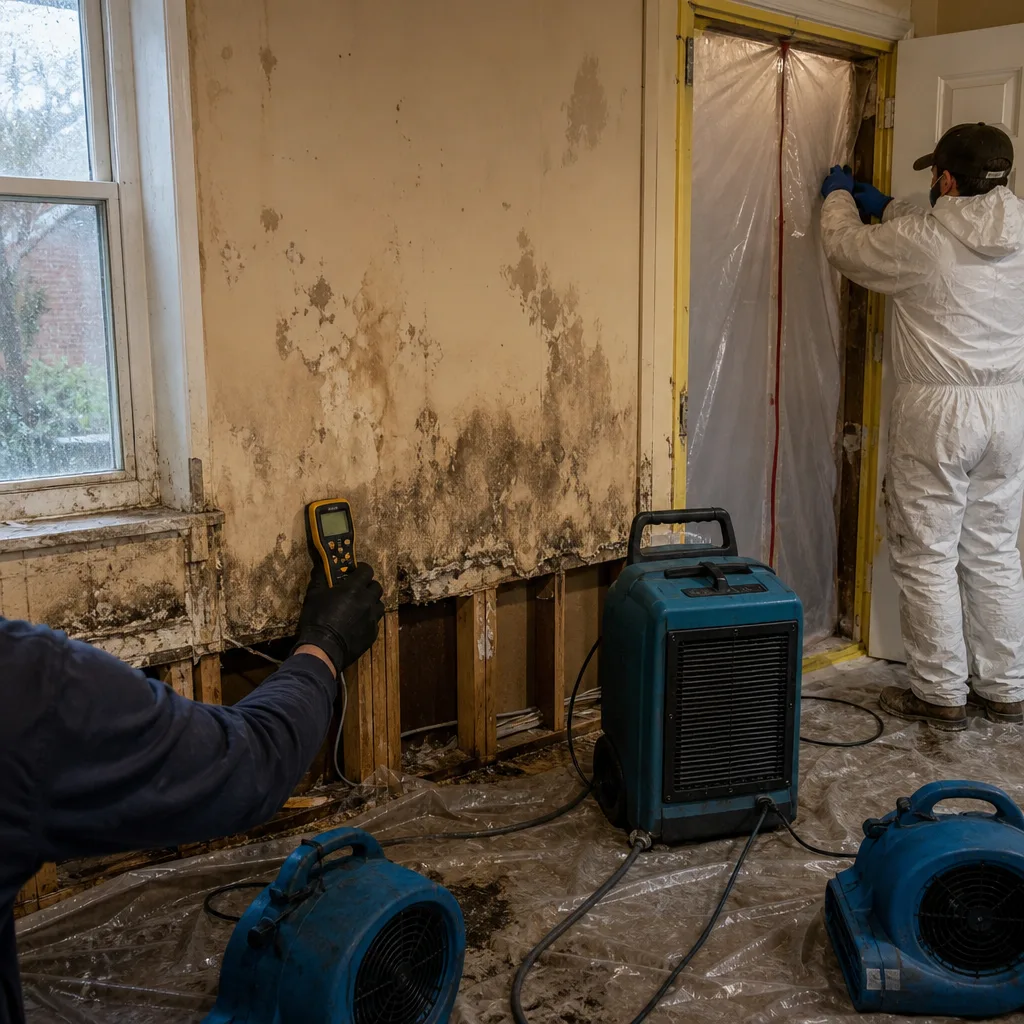
Check your condensate line quarterly. Pour a cup of white vinegar down the drain opening to slow mineral and biological buildup. If you see standing water in the pan or water staining around the air handler, you have a developing clog that needs professional attention. For homeowners with air handlers in the attic or in an upstairs mechanical room, this quarterly check is non-negotiable. A pan overflow in an upstairs location means damage to ceilings, insulation, and drywall below, and by the time you see the stain on the ceiling, the water has already saturated structural materials and likely needs professional drying. This is the precision drying territory where Mold Remediation in Paradise becomes relevant, because saturated building materials in our warm climate start growing mold quickly if they aren’t dried properly and promptly.
Irrigation Manifolds and Over-Pressured Systems
Paradise homeowners love their landscaping, and they should. But your irrigation system is a pressurized water network running around the entire perimeter of your home, often fed by valves that were installed years ago and never inspected since. In Paradise Valley’s municipal water system, water pressure can spike well beyond what residential irrigation components are rated for, especially during off-peak hours when demand drops across the grid. Those pressure spikes stress every fitting, valve, and connection in your irrigation manifold.
The typical failure pattern we see is a hairline crack in a PVC valve body or a fitting that lets go under pressure. Because irrigation systems run on timers, these failures often happen when no one is watching, and the water runs until someone notices a swampy area in the landscape or water seeping toward the home’s foundation. In the dry heat of a Paradise summer, a wet spot that persists for hours is a warning sign that your irrigation system is leaking continuously.
Check your irrigation manifold every quarter. Look for cracks in valve bodies, especially at the threaded connections. Tighten any loose fittings by hand or with a wrench, but be careful not to over-torque, which can crack the plastic. If your system doesn’t have one, consider installing a pressure regulator on the irrigation feed line. This is an inexpensive component that protects the entire irrigation network from municipal pressure spikes. Also check your exterior hose bibs. A hose bib that’s been in the Paradise sun for a decade can develop internal corrosion, and a bib that leaks behind the wall is a leak that wets your framing from the inside. If you see any sign of dampness or staining at a wall penetration, take it seriously.
Post-Storm Checklist for Paradise Monsoons
Paradise doesn’t get a lot of rain, but when it rains, it rains with intensity. Monsoon season typically runs from July through September, and a single storm can dump more water in an hour than the valley sees in most months, with powerful wind driving rain horizontally against walls and windows. Homes designed for dry conditions don’t always handle that kind of water loading well, and penetration points that go unnoticed all year become obvious during a monsoon.
After Any Significant Storm, Run This Checklist
- Walk the exterior perimeter of your home. Look for water pooling against the foundation, especially on the uphill side of the lot. In Paradise’s flash-flood events, water can flow toward a home from neighboring properties or from street drainage that backs up.
- Inspect roof penetrations. Check around vent pipes, skylights, chimneys, and any place where the roofline changes direction. Look for water staining on the underside of eaves or in the attic space if accessible. Wind-driven rain exploits even small gaps around penetrations.
- Check window wells and basement entries. If your home has below-grade windows or a basement access, make sure drainage is functioning and that no water has accumulated. Paradise homes rarely have basements, but below-grade patios and window wells are common enough to warrant a check.
- Clear debris from all drains and scuppers. Monsoon winds blow sand, leaves, and trash into roof drains, balcony drains, and scuppers. A single clogged drain during the next storm can reroute water into your walls. Clean them all, even the ones that look clear.
- Inspect exterior wall penetrations. Look at the areas around any pipes, conduit, cables, or vents that enter the home through exterior walls. Check for water staining, bubbling paint, or soft spots in stucco or siding. These are signs that water found a way in during the storm.
- Check interior ceilings and walls near exterior corners. Water that penetrates at roof or wall intersections often shows up as discoloration on ceilings or walls on the leeward side of the storm. Mark any new stains with painter’s tape and the date, and monitor them over the next few days.
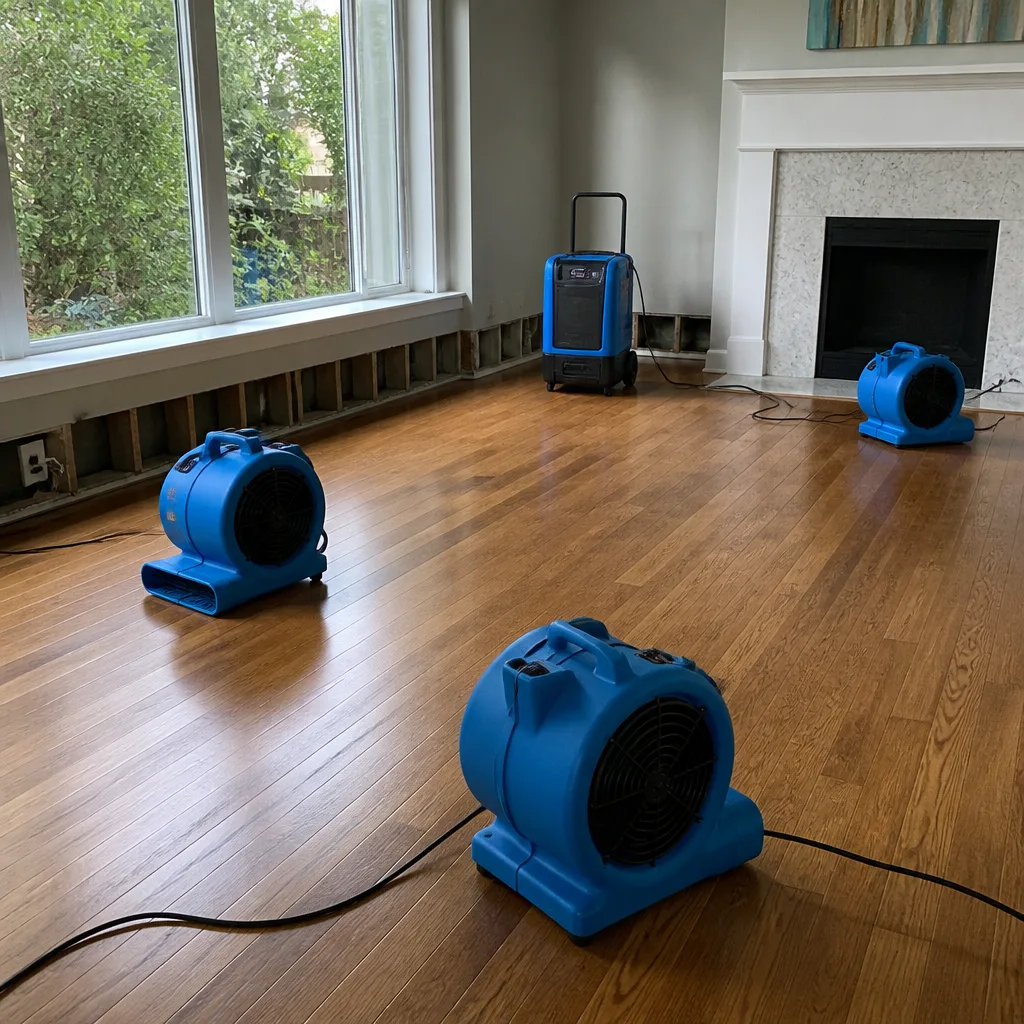
If you find evidence of water intrusion after a monsoon, don’t wait to see if it dries on its own. Hidden moisture in wall cavities and under flooring doesn’t dry efficiently in Paradise’s low-humidity environment, it just sits there and supports mold growth. The professional approach is to dry the structure properly with the right equipment. We use the same equipment brands trusted on large commercial losses: Dri-Eaz dehumidifiers, Phoenix air movers, and XPOWER ventilation. These aren’t box-store rentals. They’re professional-grade tools that dry structures fast enough to prevent secondary damage. Our Injectidry system capability also allows us to dry wall cavities and under-floor spaces with targeted precision, often avoiding demolition entirely. That’s the approach we use when Paradise homeowners call us after a monsoon event.
Documenting Your Baseline: The Insurance File That Pays Off
The most valuable maintenance habit you can develop in Paradise isn’t a wrench skill; it’s a camera habit. Every homeowner should maintain a baseline documentation file of their property’s condition before anything goes wrong. When water damage happens, the quality of your documentation directly impacts how smoothly your insurance claim goes and how quickly you get back to normal.
Insurance adjusters work from evidence. If you can show what a room looked like before the water damage, you have a much stronger position than if you’re trying to prove damage from memory. The same principle applies to any restoration professional you hire; clear before-and-after documentation establishes scope and supports a fair assessment. Here’s the documentation system we recommend to every Paradise homeowner.
Building Your Baseline File
- Photograph every room, every wall, every ceiling, and every floor. Wide angle shots plus close-ups of any existing wear, cracks, or imperfections. You want a record of what was already there so damage claims focus on actual damage, not pre-existing conditions people forgot about.
- Photograph all water-bearing fixtures and appliances. Water heater, washing machine connections, under-sink plumbing, AC condensate pan, irrigation manifold, hose bibs. Include the serial and model numbers where visible.
- Record your water meter reading and your water pressure at a known test point. You can buy a water pressure gauge for under $20 at any hardware store. Record the pressure at an exterior hose bib. Repeat this quarterly. A rising pressure reading over time signals developing issues with a pressure regulator.
- Store digital copies in two locations. Cloud storage is ideal. Email the files to yourself as a backup. If you ever need to make a claim, you can access your documentation from anywhere.
- Update the file any time you make a repair or replacement. New water heater? Photograph it and the installation. Replaced supply lines? Photograph the new lines and note the install date. Your file should reflect the current condition of your home.
This documentation file is also invaluable if you ever need to file a claim for fire or mold. Many Paradise homeowners assume insurance companies will be reasonable without documentation; in practice, claims go faster and more smoothly for homeowners who have clear baseline records. Our team coordinates directly with insurance adjusters on every job, and we’ve seen the difference a good documentation file makes. If you have a question about what to document in your specific Paradise home, we’re happy to walk you through it. This is part of what it means to work with a full-spectrum damage restoration specialist rather than a generalist.
Common Mistakes to Avoid
- Ignoring a slow-draining AC condensate line. A drain that’s draining slowly is a drain that’s about to stop draining completely. In Paradise, where AC runs constantly from May through October, a fully clogged line can overflow a pan in less than a day of operation.
- Using rubber washing machine hoses in a Paradise garage. Garages in the Las Vegas Valley can exceed 120 degrees in summer, and rubber hoses degrade faster in heat. Replace them with braided stainless steel now, not when you get around to it.
- Assuming a wet spot outside means an irrigation leak you can ignore. A wet spot that persists is water going somewhere it shouldn’t. If it’s near the foundation, that water can wick into framing and start a rot or mold problem you won’t see until it’s expensive.
- Relying on smell to detect mold. By the time you smell mold, it’s established and spreading. Paradise’s low humidity doesn’t prevent mold; it just means mold grows more slowly while you’re not looking. Hidden moisture from a small leak can support mold growth in wall cavities for months before you notice anything.
- Not knowing where your main water shutoff is. When a supply line bursts, every second counts. Find your main shutoff valve now, label it, and make sure everyone in the household knows where it is and how to turn it off. The difference between a hundred dollars of cleanup and a full restoration project is often measured in minutes.
- Skipping the quarterly meter test because nothing looks wrong. Slab leaks don’t look like anything until they’ve done tens of thousands of dollars in damage. The meter test is the only way to catch them early.
See the difference
 Before
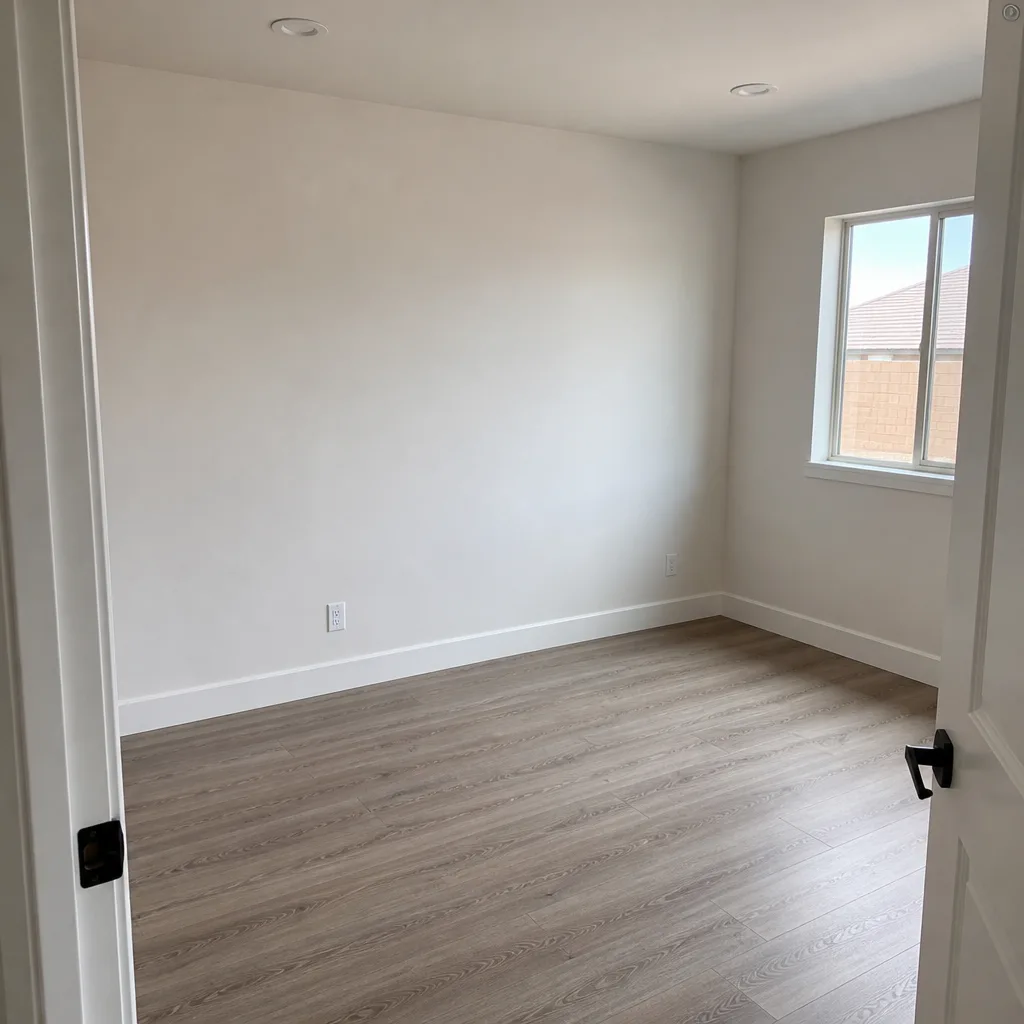 After
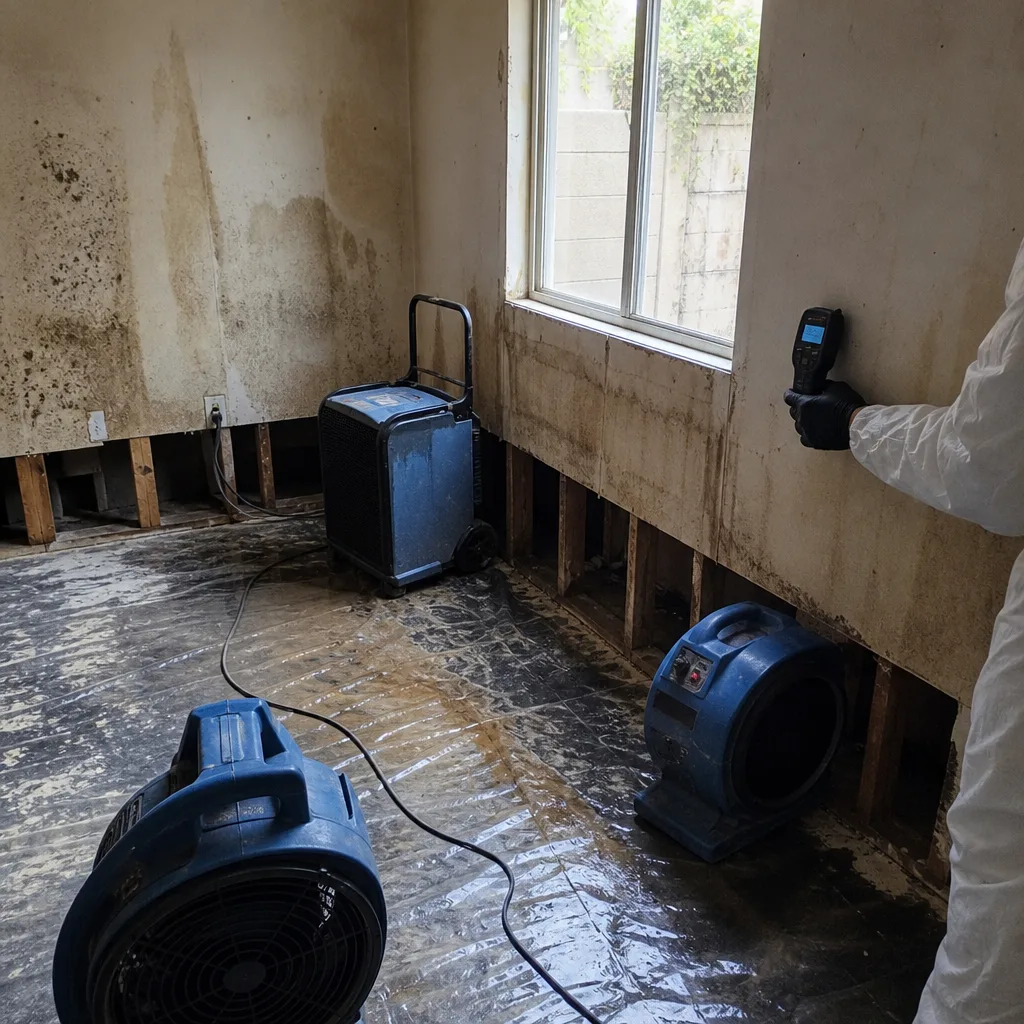 Before
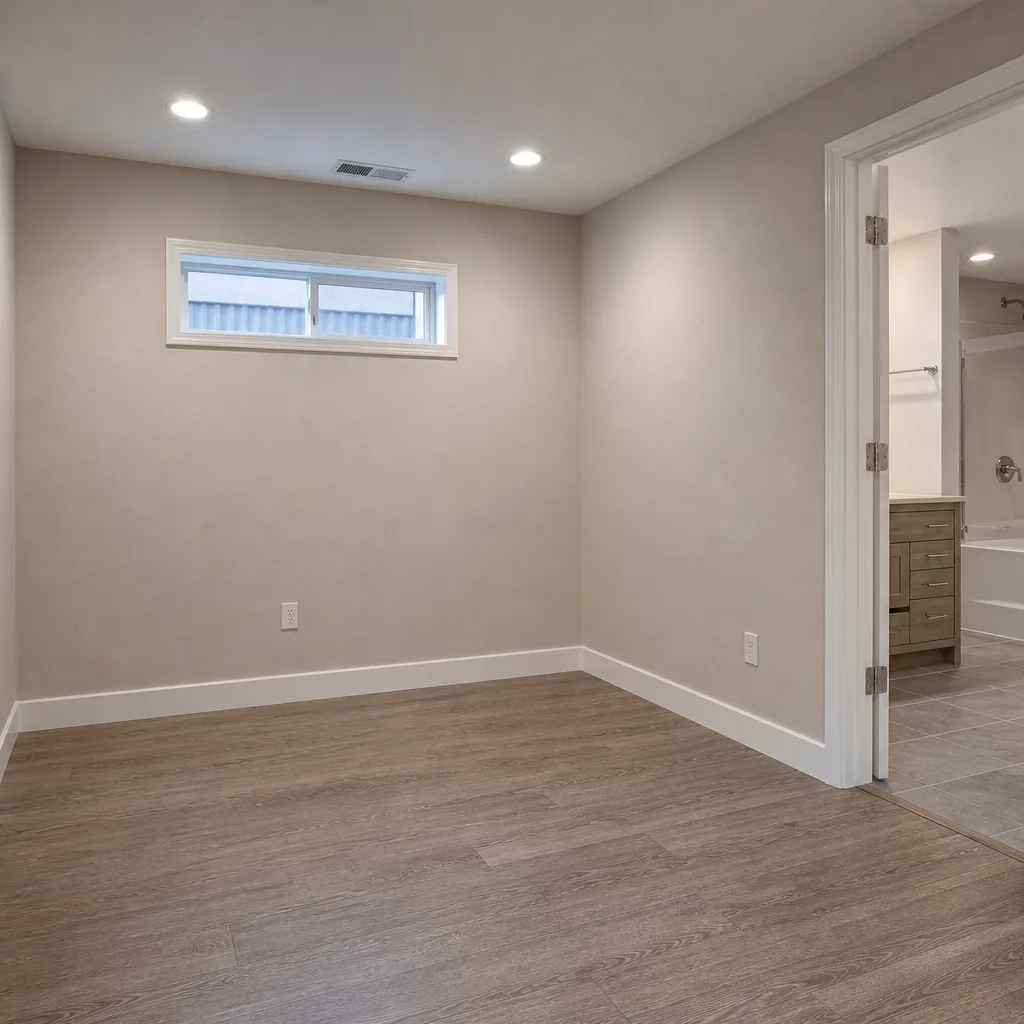 After
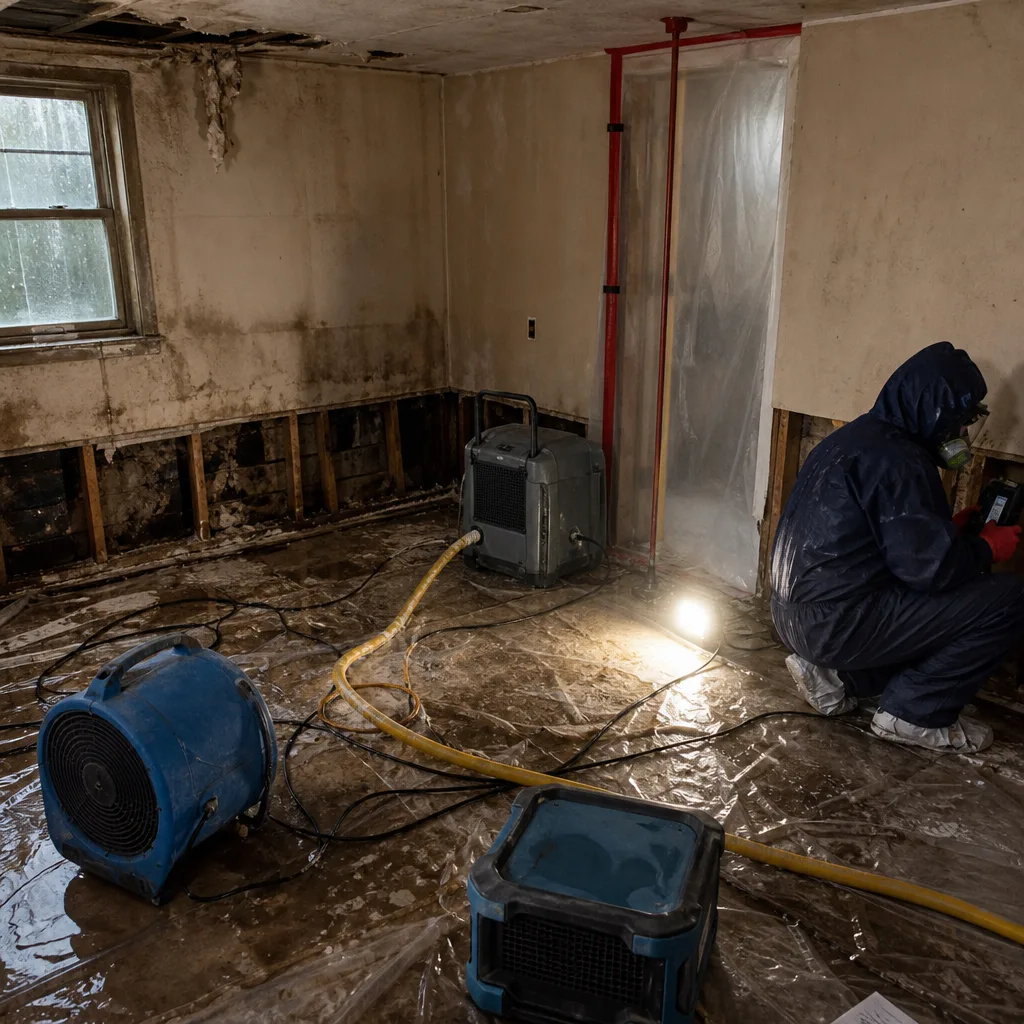 Before
 After
When to Call a Professional
Some situations call for a professional assessment, and the sooner the better. If your water meter test shows movement with everything off and you can’t identify the source, call us. If you see water staining on a ceiling or wall, especially after a monsoon or during heavy heat, call us. If you’ve had a supply line burst, a water heater leak, or an AC pan overflow that soaked into flooring or drywall, call us the same day. If you smell any mustiness or see visible mold growth, call us before you disturb the area, because disturbing mold colonies spreads spores. If you’re an insurance adjuster or property manager handling water damage in Paradise residential or commercial properties, call us for assessment and documentation. Valiant Water Damage offers free estimates in Paradise. Call (844) 716-1094 and we’ll send an IICRC-certified technician to evaluate the situation with the same professional-grade equipment and expertise we’d bring to any commercial loss.
Frequently Asked Questions
You should run a formal inspection quarterly, and every trip to the garage or mechanical room is an opportunity for a quick visual check. The quarterly cadence matches the seasonal stress cycles Paradise homes experience, from winter temperature drops to summer heat to monsoon season.
In our experience, washing machine supply hose failures and AC condensate line overflows are the two most common sources of water damage calls in Paradise. Both are preventable with quarterly attention and the right materials.
The water meter test is the most reliable early indicator of a slab leak. If your meter moves with all water off, and you’ve isolated your main shutoff valve without stopping the movement, the leak is likely in the buried line under the slab. Other signs include warm spots on the floor, the sound of running water when nothing is on, and unexplained increases in your water bill.
Yes. Rubber and plastic supply lines degrade from the inside out, accelerated by Paradise’s temperature extremes and hard water. We recommend braided stainless steel supply lines replaced on a five-year cycle regardless of how they look. The cost of replacement is insignificant compared to the cost of a rupture.
Most homeowners insurance policies cover sudden and accidental water damage from these sources, but coverage details vary by policy and carrier. Your documentation file matters: photographs, maintenance logs, and water pressure readings all support your claim. Our team coordinates directly with insurance adjusters on every job, which simplifies the process for homeowners.
We prioritize emergency response for active water intrusion and damage events, and our technicians respond throughout the Las Vegas Valley including all Paradise neighborhoods. The most important thing you can do while you wait is shut off the water source and take photos. Call (844) 716-1094 and we’ll get someone moving immediately.
The Bottom Line
Paradise homeowners don’t face the same water risks as other parts of the country, but the risks they do face are consistent, predictable, and preventable. Supply line failures, AC condensate overflows, irrigation manifold cracks, and water heater pressure valve leaks account for the vast majority of water damage in the Las Vegas Valley. A 20-minute quarterly inspection catches nearly all of them before they become emergencies. Add a two-minute water meter test, a braided stainless steel replacement schedule, and a thorough documentation file, and you’ve built a defense that covers the failure modes that actually happen in Paradise. When something does go wrong, whether it’s a post-monsoon intrusion or a supply line that let go overnight, the Fire Damage Restoration in Paradise team and our full water restoration crews are equipped to respond with professional-grade drying, targeted structural drying via Injectidry, and direct insurance coordination. One call covers water, mold, and fire. When damage strikes, Valiant answers.
Written by the team at Valiant Water Damage, serving Paradise since 2016.